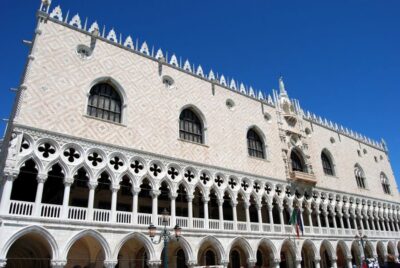
Venice looks better at an easy pace. This afternoon walk links the big names—St. Mark’s Square and Rialto Bridge—with quieter architecture that you’d miss on your own, all guided end-to-end by someone who actually explains what you’re seeing.
Two things I really like: the way you get a clear, human-scale read on Venetian landmarks (not just photos), and the payoff of seeing Scala del Bovolo and Palazzo Contarini del Bovolo, where the details are the whole point. One possible drawback: the tour doesn’t include entrances to museums or attractions, so if you want to go inside places like the basilica or theater, you’ll need to plan that separately.
In This Review
- Key moments you’ll enjoy on this Venice walking tour
- Why this 90-minute Venice walk works (and why it’s not just sightseeing)
- Starting point: Piazzetta dei Leoncini (and the easiest way to find it)
- St. Mark’s Square: where the tour sets your “Venice lens”
- Teatro La Fenice (reconstructed after the 1996 fire): learning the story behind the façade
- Calle della Vida and the Palazzo Contarini del Bovolo: where the architecture feels handmade
- Scala del Bovolo: why that staircase deserves your full attention
- Rialto Bridge over the Grand Canal: engineering plus drama
- Private vs shared: picking the best fit for your travel style
- Guides make the difference: what to expect from the human side
- Practical details that affect your day (more than you think)
- Is $70 per person worth it?
- Should you book Afternoon Discover Venice?
- FAQ
- How long is the Afternoon Discover Venice tour?
- Where do we meet the guide?
- Is this tour private or shared?
- What are the main sights included?
- Are museum or attraction entrances included?
- What language options are available for the guide?
- Is free cancellation available?
- Can I reserve now and pay later?
- What is the general walking route?
- What’s the best time of day to do this tour?
Key moments you’ll enjoy on this Venice walking tour
- St. Mark’s Square meeting with a focused start at Piazzetta dei Leoncini, between the two small marble lions
- Fenice Theatre story in context, including its destruction in 1996 and reconstructed reopening in 2003
- Gothic architecture near Campo Manin, including the unusual courtyard setting for Palazzo Contarini del Bovolo
- Scala del Bovolo views, where you can appreciate the staircase’s line and its decorative details
- Rialto Bridge at close range, built 1588–1591 by Antonio da Ponte, plus classic Grand Canal views
- Choose your format: private or shared, depending on your travel style
Why this 90-minute Venice walk works (and why it’s not just sightseeing)
If Venice can feel like a maze, this tour gives you a sensible route and a reason to slow down. You’ll cover a tight loop through the historic core, but you’re not sprinting from stop to stop. The goal is a relaxing afternoon stroll with an expert guide who helps you understand how the city looks—and why it looks that way—while you’re actually standing in the spaces.
I also like the pace because it fits real Venice problems: you’ll hit sun, shade, stairs, bridges, and that classic “what street am I on?” feeling. With guidance, you spend less mental energy finding your bearings and more energy noticing details. In particular, this tour treats the small streets and architectural quirks as full-on sights, not filler between the major monuments.
The price—$70 per person for about 1.5 hours—lands in the middle for Venice guide tours, but the value comes from what you get for that time: an informed walk that includes both the famous sights and a couple of lesser-known architectural highlights. Since entrance fees aren’t included, you also avoid the common issue where you’re paying guide money plus ticket costs you didn’t budget for.
Still choosing? Line this one up next to a few Venice favourites.
- Venice: Doge’s Palace Reserved Entry Ticket★ 4.6 · 42,716 reviews
- Venice: Grand Canal Gondola Ride with App Commentary★ 4.1 · 23,020 reviews
- Venice: Grand Canal Gondola Experience with Live Commentary™★ 4.2 · 16,504 reviews
- Boat Trip: Glimpse of Murano, Torcello & Burano Islands★ 4.3 · 15,699 reviews
Starting point: Piazzetta dei Leoncini (and the easiest way to find it)
You’ll meet in St. Mark’s area at Piazzetta dei Leoncini, right between the two small marble lions. That’s a smart setup. St. Mark’s Square is big, crowded, and full of landmarks; using the lions as a reference helps you orient fast.
When you arrive, take a minute to stand back and confirm the exact spot before you join the group. That saves you from that annoying Venice start where you’re asking strangers for directions while everyone else is already moving. Also, since this is a walking tour, comfortable shoes matter immediately—Venice can turn a pleasant afternoon into sore feet without warning.
St. Mark’s Square: where the tour sets your “Venice lens”
Your afternoon begins at St. Mark’s Square, and you’ll get the chance to admire St. Mark’s Basilica from the square itself. Even without going inside, the basilica’s presence anchors the whole area. The guide helps you read the façade and understand how this place became the symbolic heart of Venice.
What I like about starting here is that it gives you a “reference frame.” Once you’ve got the big picture in your head, the rest of the walk makes more sense. You’re not just collecting buildings—you’re tracking a shift from grand, public Venice to the more intimate, street-level Venice you’ll experience around Teatro La Fenice and the Rialto area.
One practical note: St. Mark’s Square can be busy. If you want photos, look for moments when the guide pauses the group so you can step aside and shoot without blocking anyone. It’s also a good place to notice light and weather changes, because the rest of the walk moves through narrower lanes where the light behaves differently.
Teatro La Fenice (reconstructed after the 1996 fire): learning the story behind the façade
From the square area, the walk continues toward Teatro La Fenice. The key point isn’t just the building—it’s the comeback story. The theater was destroyed by a devastating fire in 1996, then reconstructed in 2003, and it bears the motto The Way it Was, Where it Was.
This is where an expert guide pays off. You’ll hear what was lost, what was rebuilt, and why the reconstruction matters culturally—not just architecturally. Venice has plenty of surviving monuments, but this theater adds an extra layer: it shows that the city also rebuilds, and it rebuilds with intention.
You’ll also see the reconstructed Fenice Theatre and Opera House from the outside. Since museum or attraction entrances aren’t included, plan on viewing this as a visual and storytelling stop rather than a ticketed event. If you’re hoping for inside access, treat that as a separate add-on.
The tour format works well here because 90 minutes isn’t long enough for deep museum time. Instead, you get the best use of your limited time: context. And in a city like Venice, context is what turns a photo into a memory.
Calle della Vida and the Palazzo Contarini del Bovolo: where the architecture feels handmade
Next comes one of the most fun parts of the route: Calle della Vida and the Palazzo Contarini del Bovolo. This is the kind of stop that makes you understand why Venice rewards people who slow down.
The Palazzo Contarini del Bovolo dates to 1499, and it’s described as a superb example of Gothic architecture. What makes it especially worth your attention is the building’s variety of arcades and the way the staircase line connects with decorative details. The parapet includes small columns that follow that staircase’s prominent line—so it’s not just a structure, it’s a design system.
Here’s the practical twist: it’s not easy to find on your own. The tour brings you there, and you also get help spotting it correctly, because it sits inside the interior of a small courtyard close to Campo Manin. That means you’ll experience a different Venice mood: quieter, more contained, and less like an open-air postcard.
I also love how this stop changes your walk. After seeing St. Mark’s grandeur and thinking about public Venice, you suddenly get private-courtyard Venice. It’s a shift in scale, and the guide makes it easy to notice.




Scala del Bovolo: why that staircase deserves your full attention
Right along with the Palazzo Contarini del Bovolo, you’ll focus on Scala del Bovolo itself—often called one of Venice’s staircase “jewels.” The staircase is famous not because it’s big, but because it’s distinctive in form and ornament.
When you’re standing here, the value is in seeing the structure as a work of design. The guide’s job is to make sure you look beyond the obvious silhouette and notice the specific architectural cues: how the staircase creates rhythm up the space, how the decoration aligns with the form, and how Venetian Renaissance architecture expresses elegance without needing to shout.
Also, because the courtyard setting can feel semi-protected from the street noise, it’s easier to slow down and actually study what you’re looking at. That alone makes this one of the best stops on a short afternoon itinerary—especially if you like architecture or you want a break from chasing only the most famous monuments.
Rialto Bridge over the Grand Canal: engineering plus drama
The tour ends with Rialto Bridge, built between 1588 and 1591 by Antonio da Ponte. This is one of those Venice sights where the bridge becomes a stage. You’ll marvel at Venetian engineering and then naturally shift your attention to the canals—the water traffic, the angles, and the layered views of buildings facing the Grand Canal.
What I like here is that the guide helps you “see it properly.” Rialto isn’t just a crossing; it’s a landmark that organizes a view. From the right angles, you’ll notice how the bridge sits in relation to the canal’s curves and how the surrounding architecture frames the passage of boats.
Because the tour is short, you’ll likely spend less time wandering around Rialto than you would if you had half a day. But the trade-off is worth it. You leave with an informed view and a good idea of what you’d want to revisit on your own afterward—especially if you want to linger for photos or pick a nearby place for an early dinner.
Private vs shared: picking the best fit for your travel style
This experience offers a choice between a private or shared tour. Here’s how I’d think about it:
- Choose shared if you want the friendly energy of a group walk and don’t need your guide to move at your exact pace.
- Choose private if you want flexibility—extra time for questions, slower photos, or a more tailored pace if you’re traveling with kids or you just prefer quieter attention.
Either way, you’re still in the same general geographic area and time window. The difference is mostly how personalized the guidance feels.
If you’re traveling as a couple or with family, I also like that the guides can be comfortable interacting with different ages. In one prior experience, Carlotta was noted as being friendly toward children and able to answer plenty of questions—exactly what you want for a short walking tour.
Guides make the difference: what to expect from the human side
The tour includes a live tour guide, and languages include English, French, German, Italian, and Spanish. That matters in Venice, where details can be lost if the explanation is thin.
In practice, good guidance shows up in small things: pointing out what you wouldn’t notice from the street, explaining why a reconstruction mattered, and making sure you understand what you’re seeing at each stop. Some guides also seem to bring a personal Venice angle. For example, Glorai was described as being able to share firsthand information, and the walk included plenty of explanations about how Venice is built.
And yes, you can also get practical extras that make your afternoon feel more useful than touristy. One guide even provided a restaurant recommendation away from the main drag—helpful if you want something good after you’re done walking.
Practical details that affect your day (more than you think)
A few details can make or break comfort on a Venice walking tour like this:
1) Time is tight (about 90 minutes)
You’ll see a focused set of highlights, not every major monument. That’s the point, but you should enter with reasonable expectations.
2) No entrances included
The tour is designed for viewing and understanding from the outside, plus stops where the architecture is the attraction. If you want indoor access, budget that separately.
3) Weather and footwear matter
Venice streets can be uneven and slick. Even if the walk sounds short, you’ll still cover real ground with bridges and steps.
4) Meeting point clarity helps
Staying oriented at the start—Piazzetta dei Leoncini between the two small marble lions—reduces stress fast.
5) Language options are real
You’re not limited to English only, which is a big deal in a multiday trip when you want your guide to match your comfort level.
Is $70 per person worth it?
In Venice, $70 doesn’t automatically mean cheap or expensive—it means you’re paying for time with an expert guide and for an efficient route through the historic core. The key value here is not just that you’ll see St. Mark’s and Rialto. It’s that you also get access to the reasoning behind what you’re seeing, plus the chance to find and understand architectural details like those at Palazzo Contarini del Bovolo and Scala del Bovolo.
Because entrances aren’t included, your total costs depend on what you choose to add later. If you’re the type who enjoys short guided walks and wants the rest of your time to be flexible, this pricing structure makes sense. If you’re hoping to combine it with lots of ticketed museum time, you may feel like you’re paying for a tour that stops at the threshold.
Should you book Afternoon Discover Venice?
I think you should book it if you want a low-stress afternoon that balances famous Venice with more specific architectural stops. This is especially good if:
- you’ve already seen some major sights and want a second kind of Venice look
- you enjoy architecture and small details, not just large monuments
- you prefer guidance for finding the places that are hard to locate on your own
Skip it (or plan to pair it with more time) if:
- you strongly want indoor access at specific attractions on this same schedule
- you need a longer tour to cover more neighborhoods
If your goal is to see Venice smartly in about an hour and a half—without exhausting yourself—you’ll likely come away feeling like the afternoon had purpose, not just walking.
FAQ
How long is the Afternoon Discover Venice tour?
It lasts about 1.5 hours, with a guided walking time of around 90 minutes.
Where do we meet the guide?
You meet in St. Mark’s Square at Piazzetta dei Leoncini, between the two small marble lions.
Is this tour private or shared?
You can choose between a private tour or a shared tour.
What are the main sights included?
You’ll see highlights including St. Mark’s Square (with views of St. Mark’s Basilica), Teatro La Fenice, Scala del Bovolo and Palazzo Contarini del Bovolo, and Rialto Bridge.
Are museum or attraction entrances included?
No. Entrance to museums/attractions is not included.
What language options are available for the guide?
The guide is available in English, French, German, Italian, and Spanish.
Is free cancellation available?
Yes. Free cancellation is available up to 24 hours in advance for a full refund.
Can I reserve now and pay later?
Yes. You can reserve now and pay later to keep plans flexible.
What is the general walking route?
It’s a relaxed afternoon stroll starting in St. Mark’s Square and continuing toward the Rialto Bridge, passing major highlights and key architectural stops along the way.
What’s the best time of day to do this tour?
The experience is designed specifically as an afternoon walk, so it’s best scheduled for that part of your day when you want a lighter pace rather than a full-day plan.
More Tour Reviews in Venice
- Venice: Doge’s Palace Reserved Entry Ticket
★ 4.6 · 42,716 reviews - Venice: Grand Canal Gondola Ride with App Commentary
★ 4.1 · 23,020 reviews - Venice: Grand Canal Gondola Experience with Live Commentary™
★ 4.2 · 16,504 reviews - Boat Trip: Glimpse of Murano, Torcello & Burano Islands
★ 4.3 · 15,699 reviews - Venice: La Fenice Opera House Entry Ticket with Audio Guide
★ 4.6 · 11,742 reviews - Murano & Burano: Boat Tour with Guide & Glass Factory Visit
★ 4.3 · 10,716 reviews