
Review · VENICE PHOTOSHOOTS
Discover Venice’s most Photogenic Spots with a Local
Venice is made for great photos. This small-group walk helps you find the angles locals use, with photo tips and a tight group of up to 8 people so you actually get guidance.
You’ll cover major landmarks and also stop where the light, the texture of stone, and the canal views make your pictures look like they belong on a postcard. The only real catch: it’s a lot of walking, including uneven ground and some stairs, and it’s not recommended for impaired mobility.
In This Review
- Key things that make this photo tour work
- Venice photo tour value: why land beats wandering alone
- Rio Terà Lista di Spagna start: the Grand Canal footbridge angle
- Rialto Bridge: the classic view plus the local “how to shoot it” notes
- Palazzo Contarini del Bovolo and Scala del Bòvolo: stairs, spirals, and detail shots
- Piazza San Marco and Porta della Carta: big stone drama with smarter timing
- St. Mark’s Basilica mosaics and the Bridge of Sighs: golden interior and enclosed emotion
- Canal Grande + carnival culture: finish with local context, not just a view
- How a local guide changes your photos (not just the stops)
- Price and value: $164.43 for 1.5 hours in Venice
- Who should book this photo tour, and who should skip it
- Should you book this Venice photo tour?
- FAQ
- How long is the Venice photogenic spots tour?
- How many people are in the group?
- What languages is the tour offered in?
- Where does the tour start and end?
- What is included in the price?
- What is not included?
- Is the tour suitable for people with mobility issues?
- Can I cancel for a full refund?
Key things that make this photo tour work
- Hands-on guidance for better shots: your guide coaches you on where to stand and how to frame scenes at each stop.
- A small group size that stays flexible: up to 8 travelers, with the route able to adapt to your interests and walking pace.
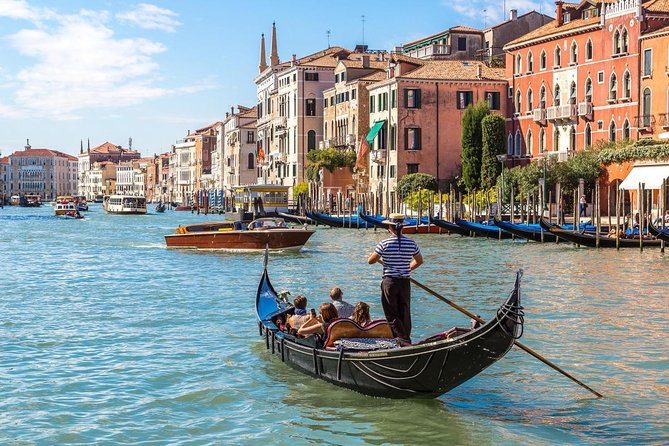
- Iconic Venice in a smart order: Grand Canal views, Rialto Bridge, Scala del Bòvolo, St. Mark’s area, Bridge of Sighs, and Canal Grande.
- Local rhythm, not just monuments: you’ll learn what to notice beyond the obvious sights, including local culture around the canals.
- An end point that makes continuing easy: it finishes at Fondamenta de Fazza l’Arsenal so you can keep exploring without backtracking.
Venice photo tour value: why land beats wandering alone
If you’ve ever walked Venice with a camera and thought, I’m seeing it, but my photos look flat, this is the fix. Venice’s best visuals are timing + placement. A local guide can put you at the right spot at the right moment, and help you avoid spending your limited time chasing the same viewpoint everyone else uses.
I also like the pace. This is only about 1 hour 30 minutes, so you get a concentrated hit of the city’s most camera-friendly areas without turning it into a full-day marathon. And because it’s a small group experience, you’re not stuck watching from behind.
One more advantage: the itinerary is designed for photos, not checkboxes. Yes, you hit the big names, but you also get explanation on what makes each place photogenic—stone patterns, reflections, canal angles, and details you’d normally miss.
More frames against the canals and San Marco
- Venice: Photoshoot at Piazza San Marco and the Canals★ 4.8 · 763 reviews
- Venice: St Mark’s Square and Canals Photoshoot★ 4.8 · 274 reviews
- Venice: Photoshoot at The Grand Canal & Rialto Bridge★ 4.9 · 268 reviews
- Fabulous photoshoot in the Canals of Venice★ 5.0 · 122 reviews
Rio Terà Lista di Spagna start: the Grand Canal footbridge angle
You begin at Rio Terà Lista di Spagna, 122I, at a stone footbridge over the Grand Canal. That matters more than it sounds. Starting here gives you a wide canal context right away—boats, water reflections, and the facades that Venice is famous for. It’s a good first lesson: don’t just photograph buildings. Photograph the relationship between buildings and water.
This opening stop is also ideal for getting your bearings fast. The guide’s early advice helps you see what to look for before you move into the denser, more crowded landmark zones. If you’re bringing a phone, listen closely here—small tweaks like stepping slightly to the side, lowering your camera just a bit, and watching how the light hits stone can change everything.
Practical tip: decide early whether you want vertical architecture shots (tall facades and bridge lines) or horizontal story shots (canal + boats + skyline). The guide will help you choose positions that match your style.
Rialto Bridge: the classic view plus the local “how to shoot it” notes
Next up is Rialto Bridge, the must-see hub where people gather because the photo is so good. What you can’t always learn on your own is how to manage the crowd energy. You’ll want composition ideas that keep the bridge as the star while still capturing Venice’s movement—water texture, passing boats, and the geometry of arches.
A strong guide will also help you avoid the two common pitfalls:
1) standing too close and cutting off the important framing, and
2) shooting from the wrong angle so the bridge becomes a flat symbol instead of a scene.
You’ll get help finding your shot without feeling rushed. And because the tour is small (up to 8), you can wait for a cleaner moment rather than being trapped behind a wall of tourists.
If you’re traveling with only a short time in Venice, Rialto is worth prioritizing, but it’s even better when you understand how to photograph it. This tour gives you that.
Palazzo Contarini del Bovolo and Scala del Bòvolo: stairs, spirals, and detail shots
Then you move to Palazzo Contarini del Bovolo and get acquainted with the famous Scala del Bòvolo (the exterior spiral staircase). This stop is where Venice photography shifts from grand views to architectural texture.
The spiral design creates natural lines that pull your eye upward. That’s why it works so well in photos: your camera can capture the staircase like a sculpture, and you can also include surrounding walls and windows to show scale. If you like detail photos—stone, curves, worn edges—this is a great moment.
Possible drawback here: this is one of those stops where you might find yourself wanting to climb for more angles. The tour isn’t listed as a heavy hike, but Venice architecture often comes with stairs. Wear shoes that won’t slip on uneven surfaces, and keep your attention on where you’re stepping while you frame your shots.
For anyone who loves “Venice in close-up,” this is the kind of stop that makes the whole tour feel worth it beyond the headlines.
Piazza San Marco and Porta della Carta: big stone drama with smarter timing
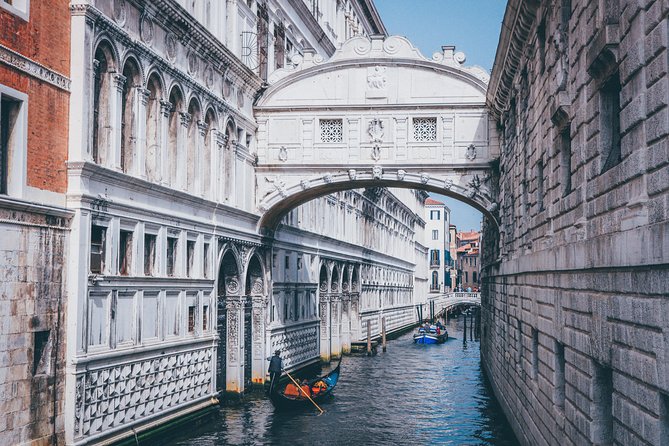
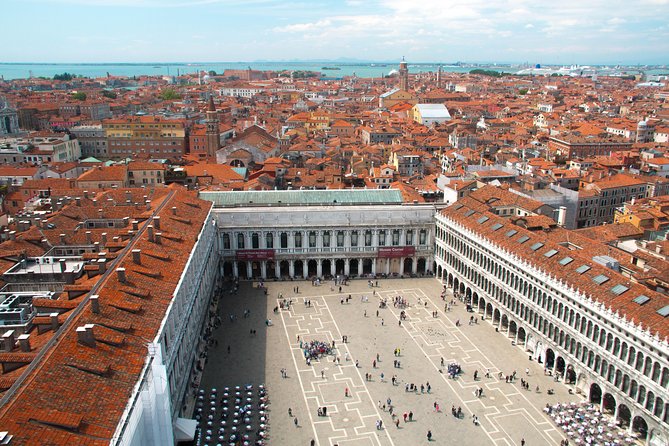
You’ll visit Venice’s largest and most important piazza, tied to Napoleon’s famous drawing room of Europe line, and you’ll also stop at Porta della Carta.
These aren’t just monuments. They’re photo sets. Piazza San Marco is wide open compared to most Venice streets, so it’s easier to get a clean composition. But because it’s also famous, it’s busy. A local guide helps you time your shots and reposition before you commit your camera settings.
Porta della Carta adds variety. It’s more detailed and architectural, so it breaks up the “grand square” feeling. Think of it as your transition from wide scenes to more textured subjects. If your camera roll so far is mostly skyline and bridges, Porta can add the kind of medium-distance “look at this” shot that makes a Venice album feel curated without needing to plan every step yourself.
Practical photo idea: when you’re photographing entrances and facades, watch for glare on pale stone. If you see harsh reflections, step a little and reframe. Even small position changes matter here.

St. Mark’s Basilica mosaics and the Bridge of Sighs: golden interior and enclosed emotion
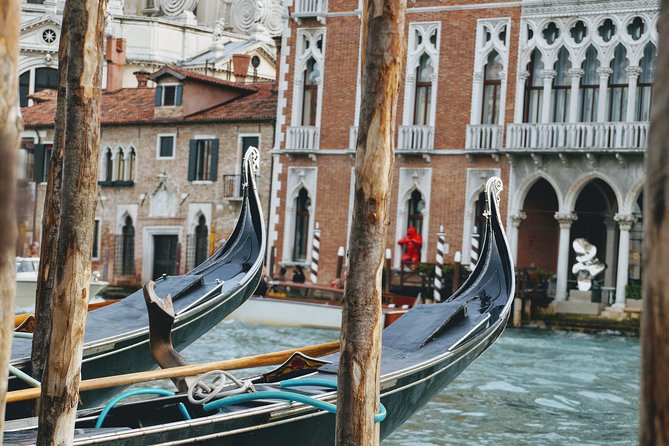
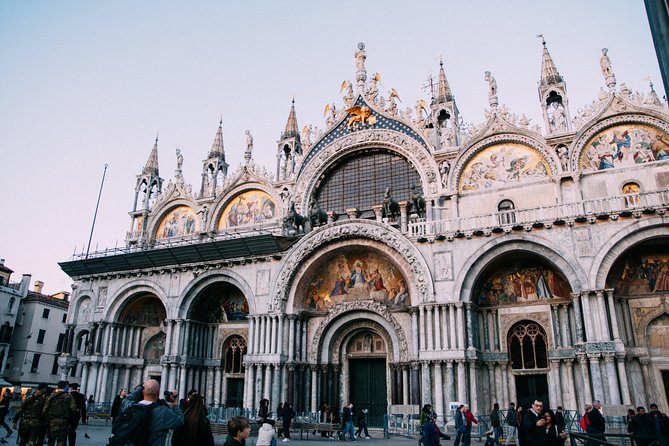
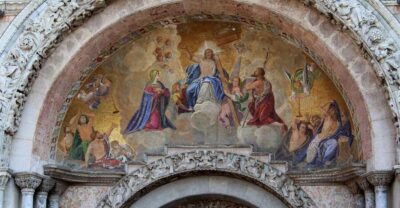
The tour then heads to the Byzantine basilica with golden mosaics inside, one of Venice’s signature visual experiences. Golden mosaics photograph beautifully, but they also tempt you into overexposure if your camera (or phone) fights the light. The value of a guide at this point is simple: they can help you understand how to capture the glow without losing the small details that make mosaics feel alive.
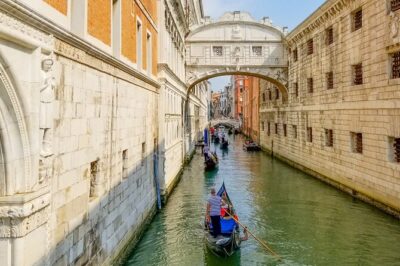
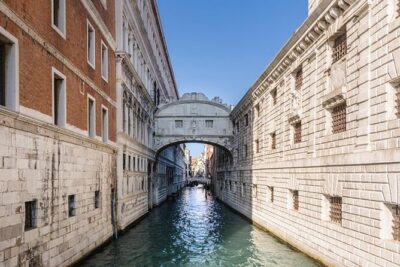
Next is the enclosed passageway named for the sighs of the prisoners—you’ll recognize the vibe the moment you see it. The enclosed feel changes the photo rules. You’re no longer photographing open sky and reflections; you’re working with depth, stone corridors, and a sense of story.
This is a great stop for people who want more than “architecture porn.” The enclosed passage has mood. You can frame it to emphasize the hallway perspective, which makes your photo feel cinematic even if you’re just holding a camera.
Two practical notes:
- Interiors often mean less flexibility with where you can stand, so pay attention to your guide’s framing suggestions.
- Don’t force the shot if access seems restricted. Stay where you’re allowed and focus on composition rather than breaking rules.
Canal Grande + carnival culture: finish with local context, not just a view
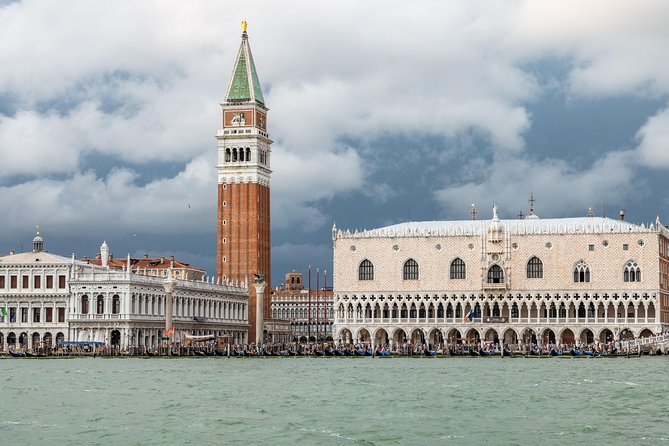
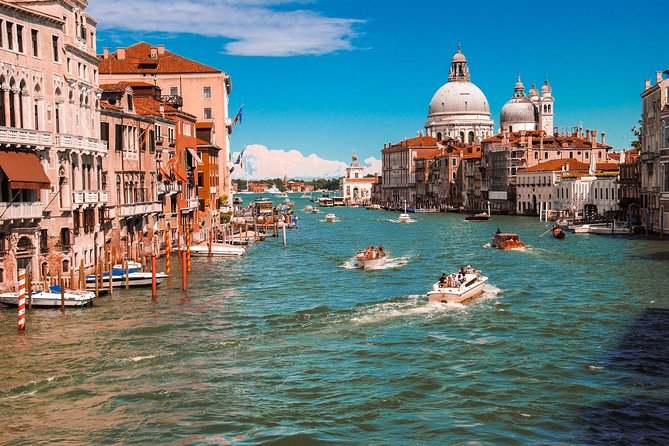
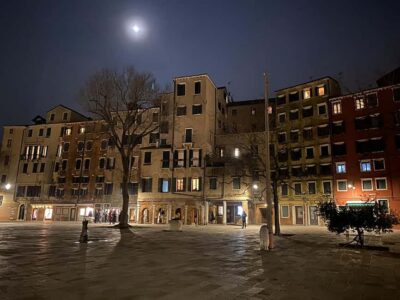
Finally, you return to the Canal Grande and you’ll hear more about Venice carnival and local culture. This part is important because it connects what you’re seeing to how Venice lives, not just how it looks. Carnival isn’t only costumes; it’s about Venice’s theatrical relationship with public spaces, water, and street life.
You’ll end at Fondamenta de Fazza l’Arsenal, which is a smart way to close. Instead of finishing back in the most tourist-clogged area, you step into a waterfront location that makes it natural to continue on your own—slow stroll, more photos, and time to grab a drink without feeling like your tour is dragging you onward.
If you want to keep the momentum going, use the canal-cultural context your guide gives you here. It’ll help you notice details during your next walk—small signs of celebration, local rhythms, and the way Venetian life moves along the water.
How a local guide changes your photos (not just the stops)
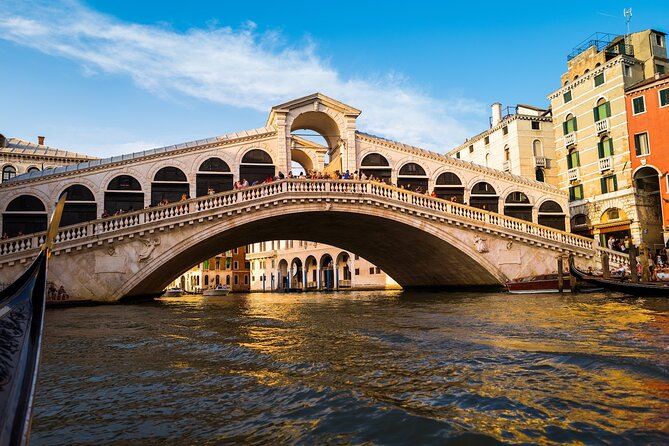
The tour is hosted by an independent local, and the most praised aspect of this kind of experience is control: you get hands-on help when you need it, and you can adapt when your interests change mid-walk.
I especially value two guide skills that show up again and again in this experience format:
- Route thinking for photos: choosing positions so you get depth and reflections, not just flat facades.
- Explanation that makes you look longer: when someone points out what to notice, your pictures stop looking like random snapshots.
You’ll also find that English communication matters. Some local hosts, like Vittorio and Margherita, are specifically called out for strong English and for mixing photo coaching with history and practical context. Even if your guide isn’t one of those names, you can still use this as a checklist: you should feel guided, not lectured.
And because the route adapts to your walking pace and interests, you’re less likely to get stuck in the rigid, hurry-up-and-move mode that kills good photos.
Price and value: $164.43 for 1.5 hours in Venice
At $164.43 per person for about 1 hour 30 minutes, you’re paying for something that’s hard to replicate alone: structured photo guidance from a local and an efficient sequence of high-value stops.
Here’s how I think about the value:
- If you’re spending time in Venice and want your photos to look better fast, paying for coaching can be cheaper than losing half a day to trial-and-error.
- The included small group experience (up to 8) matters. Solo wandering is chaotic in peak zones; a guide helps you move smart and keep your shots intentional.
- You also get personalised recommendations, which can mean where to stand, what to crop for, and how to adjust for light and crowds.
What’s not included also affects value. Entrance fees for museums and monuments, plus public transportation entry tickets, and personal expenses are not included. So if you plan to go inside multiple places on your own that day, budget those costs separately.
In short: this is best value when you want a concentrated, photo-first morning or afternoon, and when you trust the guide to set the pace and order.
Who should book this photo tour, and who should skip it
This is a strong match for you if:
- You care about photos and want practical help, not just a list of sights.
- You’re short on time and want the big landmarks plus less-obvious photo moments.
- You like small groups where you can actually hear instructions.
It may not be ideal if:
- You have impaired mobility or need a fully flat, low-stair route.
- You expect a purely off-the-beaten-path experience with no major landmarks. This tour mixes famous stops with local-known angles, and that’s part of the design.
Should you book this Venice photo tour?
I’d book it if you want to leave Venice with photos that look intentional. The combination of a local photo-focused guide, a small group size, and a route that hits Rialto, Scala del Bòvolo, St. Mark’s area, and the Bridge of Sighs makes this a high-leverage use of time.
Before you go, wear comfy shoes and treat this like a sightseeing walk with a camera assignment. If you’re comfortable walking and you want guidance on where to stand and how to frame, you’ll get real value out of the coaching.
FAQ
How long is the Venice photogenic spots tour?
The duration is about 1 hour 30 minutes.
How many people are in the group?
It’s a small group with a maximum of 8 travelers.
What languages is the tour offered in?
The tour is offered in English.
Where does the tour start and end?
It starts at Rio Terà Lista di Spagna, 122I, 30121 Venezia VE, Italy and ends at Fondamenta de Fazza l’Arsenal, 30122 Venezia VE, Italy.
What is included in the price?
Included items are a knowledgeable local, a small group experience, and personalised recommendations.
What is not included?
Personal expenses are not included, and entry tickets for public transportation, museums and monuments are not included.
Is the tour suitable for people with mobility issues?
It is not recommended for guests with impaired mobility.
Can I cancel for a full refund?
Yes. You can cancel up to 24 hours in advance for a full refund.
More Tour Reviews in Venice
- Venice: Doge’s Palace Reserved Entry Ticket
★ 4.6 · 42,716 reviews - Venice: Grand Canal Gondola Ride with App Commentary
★ 4.1 · 23,020 reviews - Venice: Grand Canal Gondola Experience with Live Commentary™
★ 4.2 · 16,504 reviews - Boat Trip: Glimpse of Murano, Torcello & Burano Islands
★ 4.3 · 15,699 reviews - Venice: La Fenice Opera House Entry Ticket with Audio Guide
★ 4.6 · 11,742 reviews - Murano & Burano: Boat Tour with Guide & Glass Factory Visit
★ 4.3 · 10,716 reviews
Sharper Shots Along the Canals
- Venice: Photoshoot at Piazza San Marco and the Canals
★ 4.8 · 763 reviews - Venice: St Mark’s Square and Canals Photoshoot
★ 4.8 · 274 reviews - Venice: Photoshoot at The Grand Canal & Rialto Bridge
★ 4.9 · 268 reviews - Fabulous photoshoot in the Canals of Venice
★ 5.0 · 122 reviews - Cinematic Photoshoot in Venice: Capture Venice Hidden Gems
★ 5.0 · 109 reviews - Luxurious Photoshoot in Venice
★ 5.0 · 103 reviews
Fresh Off the Vaporetto: New Venice Reviews
Venice Photoshoots, compared.
 ★ 4.8Photoshoot at Piazza San Marco and the CanalsFrom $65763 reviews
 ★ 4.8St Mark’s Square and Canals PhotoshootFrom $67274 reviews
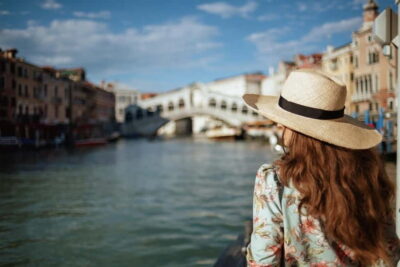 ★ 4.9Photoshoot at The Grand Canal & Rialto BridgeFrom $65268 reviews
Fabulous photoshoot in the Canals of VeniceFrom $71122 reviews
★ 4.9Photoshoot at The Grand Canal & Rialto BridgeFrom $65268 reviews
Fabulous photoshoot in the Canals of VeniceFrom $71122 reviews
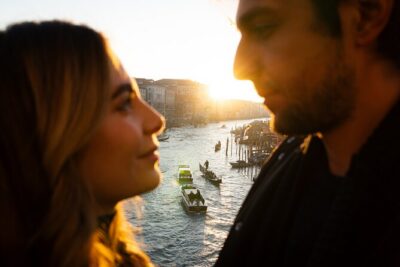 ★ 5.0Cinematic Photoshoot in Venice: Capture Venice Hidden GemsFrom $71109 reviews
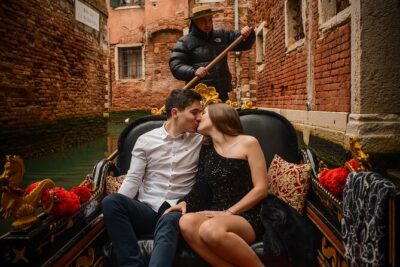 ★ 5.0Luxurious Photoshoot in VeniceFrom $362103 reviews
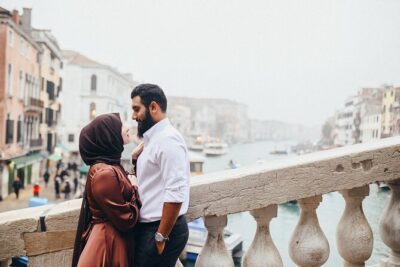 ★ 5.0Private Photo Shoot in Venice with Gondola Ride IncludedFrom $43590 reviews
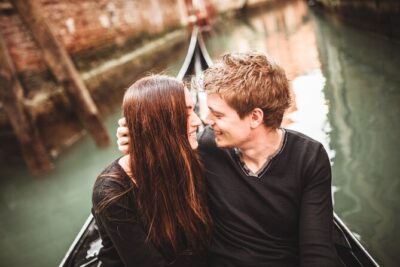 ★ 5.0Private Photoshoot on Personal Gondola in VeniceFrom $34882 reviews
Browse the lists this tour appears in