
Review · TOURS
Giudecca Island Discovery Tour
Giudecca feels like a side door to Venice. This 2-hour small-group tour guides you around a lesser-visited lagoon island, connecting what you see to the forces that shaped it: exile, industry, and today’s makers. I love that you move through real local spaces, not just postcard viewpoints. You’ll also learn why the name Giudecca matters, and how artists ended up here when central rents got out of reach.
What I like most is the compact route with meaningful stops—you hear the story at each place, then you keep walking. I also love that you’ll get a gentle small-group vibe (maximum 10 travelers), with guides who keep the details clear and the tone friendly, often with humor. One thing to consider: the itinerary is mostly an outdoor walk, and Giudecca can feel colder or windier than central Venice, especially in the shade.
If you want Venice’s famous sights, you can get those any day. If you want a quieter, more human Venice, Giudecca is the move.
In This Review
- Key Things to Know Before You Go
- Why Giudecca Is Such a Smart Choice in Venice’s Lagoon
- Meeting at Zattere and the Giudecca Water Bus Reality Check
- A 2-Hour Walk That Actually Explains What You’re Seeing
- Giudecca’s Name and the Exile Thread You’ll Keep Noticing
- Fondamenta Sant’Eufemia and a Veneto-Byzantine Church Story
- Molino Stucky to Hilton Molino Stucky: When Factories Become Landmarks
- Hidden Waterfronts: Fondamenta de le Convertite and the Island’s Hard Edges
- Ex Convento Santissimi Cosma e Damiano: Monastery Spaces Now for Makers
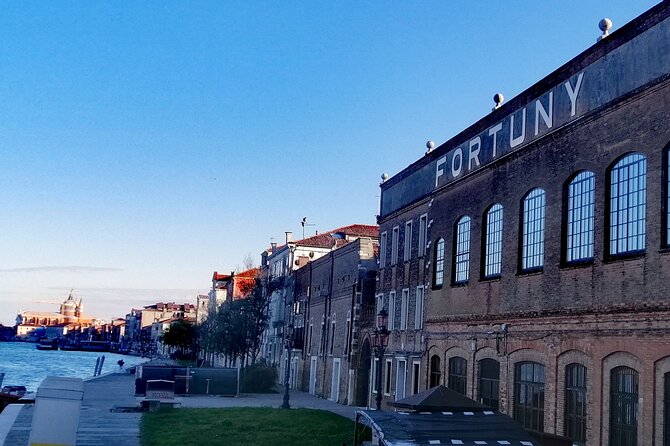
- Teatro Junghans: Glassworks Turned Into Living and Performance
- Palladio’s Chiesa del Santissimo Redentore and the July Pontoon Tradition
- Villa Heriot and the Southern Lagoon Views You’ll Appreciate More Than Photos
- Ending at Le Zitelle: Casa dei Tre Oci and the Three-Arched Facade
- Price and Value: Is $163.64 Worth It?
- Who Should Book This Giudecca Tour (and Who Might Not)
- Should You Book the Giudecca Island Discovery Tour?
- FAQ
- How long is the Giudecca Island Discovery Tour?
- Where do I meet the guide, and where does the tour end?
- Is the water bus ticket included?
- How many people are in the group?
- What’s included in the price?
- Are there any admissions fees at the stops?
- What’s the cancellation policy?
Key Things to Know Before You Go
- Small group, max 10: You get time for questions without feeling lost in a crowd.
- Family-friendly energy: The route is paced well enough to include kids when families are on board.
- Industry-to-art transformations: Old flour mills, factories, and convent spaces become galleries, studios, and creative centers.
- Palladio on Giudecca: You’ll stand outside one of Venice’s major church icons, tied to the city’s Black Death relief story.
- End-of-tour views: The finish focuses on open sightlines back toward San Marco and Punta della Salute.
- Water bus is on your schedule: You buy the Giudecca water bus ticket on board, so plan a little extra time.
Why Giudecca Is Such a Smart Choice in Venice’s Lagoon
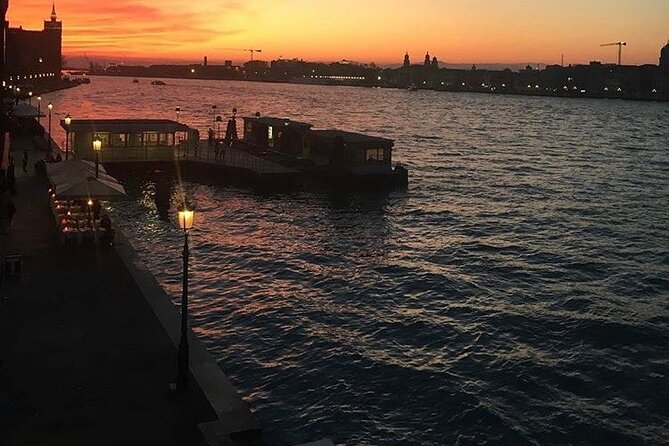
Giudecca is one of those places you can see from Venice without really understanding it. From the main islands, it looks like calm waterfront. On foot with a guide, it becomes a storybook of exile, work, and reinvention.
This tour’s value is that it gives you a framework. You start with the island’s name and the idea of banishment, then you keep seeing how the built environment followed that pattern. It’s a practical way to turn unfamiliar streets into something you can actually read.
And you get a day-and-night contrast without leaving the lagoon. Even when you’re looking at old brick and weathered walls, you’re also seeing how modern life moved in—artist spaces, artisan centers, and institutions housed in former industrial buildings.
Still choosing? Line this one up next to a few Venice favourites.
- Venice: Doge’s Palace Reserved Entry Ticket★ 4.6 · 42,716 reviews
- Venice: Grand Canal Gondola Ride with App Commentary★ 4.1 · 23,020 reviews
- Venice: Grand Canal Gondola Experience with Live Commentary™★ 4.2 · 16,504 reviews
- Boat Trip: Glimpse of Murano, Torcello & Burano Islands★ 4.3 · 15,699 reviews
Meeting at Zattere and the Giudecca Water Bus Reality Check
The meeting point is at Zattere (Zattere 30133). You’ll start near the waterfront and then head over by vaporetto to Giudecca. The tour ends at the Le Zitelle water bus stop on Giudecca (Fondamenta Zitelle).
Two practical tips matter here:
First, build in time for boarding. Giudecca isn’t far, but Venice transit can be stop-and-start. Second, the water bus ticket is not included—you purchase it on board. That means you should have your payment method ready and avoid arriving at the stop right on the minute.
Also keep an eye on the day-tripper rules. On certain dates, people staying outside Venice may need a €5 access fee. The tour notes that rules and exemptions depend on the calendar, so check in advance to avoid last-minute surprises.
A 2-Hour Walk That Actually Explains What You’re Seeing
This tour is designed as a straight-line story you can follow. It’s not about racing through stops. It’s about listening, looking, and connecting place to time.
You start with a quick orientation on the meaning of Giudecca. Then you move through a sequence of structures—churches, a former flour mill now a hotel, factory-to-residence conversions, and creative spaces in former convent buildings. The pace keeps each stop short, but the guide ties them together so you don’t leave with a list of names. You leave with a map in your head.
The maximum of 10 travelers helps a lot. It’s the difference between hearing a guide through shoulder-to-shoulder crowds and actually understanding details while you stand in front of the buildings.
Giudecca’s Name and the Exile Thread You’ll Keep Noticing
The first stop sets the tone: Giudecca’s name is tied to the idea of judgment and banishment, not to the modern stereotype most people bring with them.
You’ll hear that the name does not come from one-time Jewish inhabitants. Instead, it’s connected to a Venetian term: zudega, meaning the judged. The story goes back to the 9th century, when rebel aristocratic families were banished to Giudecca.
Then the guide brings it closer to modern life. In recent decades, the island attracted a new set of exiles: artists who could no longer afford rents in central Venice for their lofts and studios. That makes a huge difference in how you interpret what you see later. When you reach converted industrial buildings and creative centers, it’s not random. It’s part of the same long-running pattern: who gets pushed out, and what they build once they arrive.
Fondamenta Sant’Eufemia and a Veneto-Byzantine Church Story
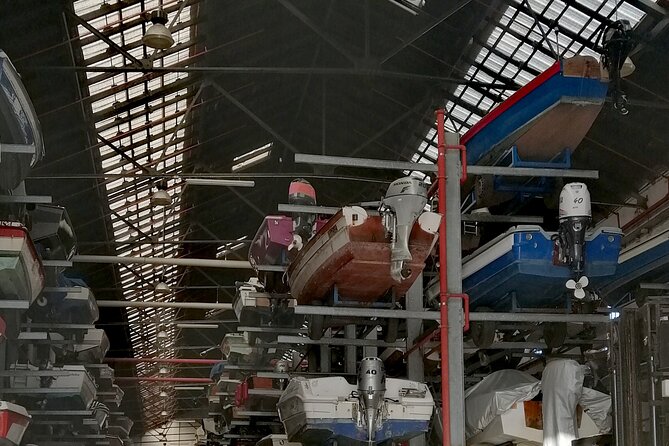
At Fondamenta Sant’Eufemia, you’ll visit a church dated to AD 890 in the original roots, though the structure you see is a simple Veneto-Byzantine design with a 14th-century date.
The church is named after a Byzantine Christian martyr: a woman who was thrown to hungry lions. The legend says the lions bit off her hand, then refused to eat her holy virgin flesh. It’s a heavy story, delivered on a walking tour in a way that’s memorable without turning grim.
What I like about this stop is the contrast. You’re in a quiet corner, near a waterfront, but you’re hearing a story with ancient stakes. If you enjoy when a city teaches you through small facts like dates and architectural style, this part will click.



Molino Stucky to Hilton Molino Stucky: When Factories Become Landmarks
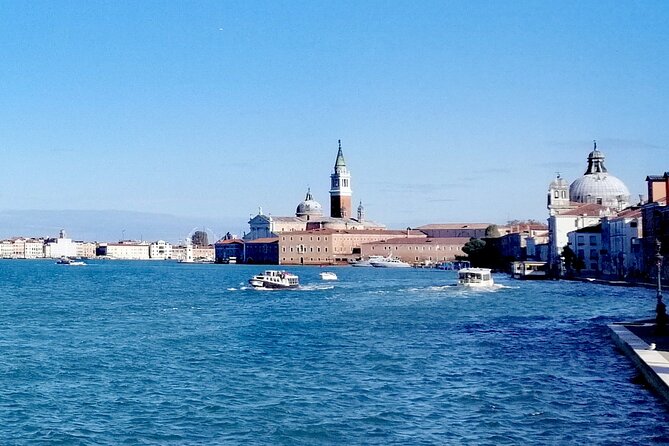
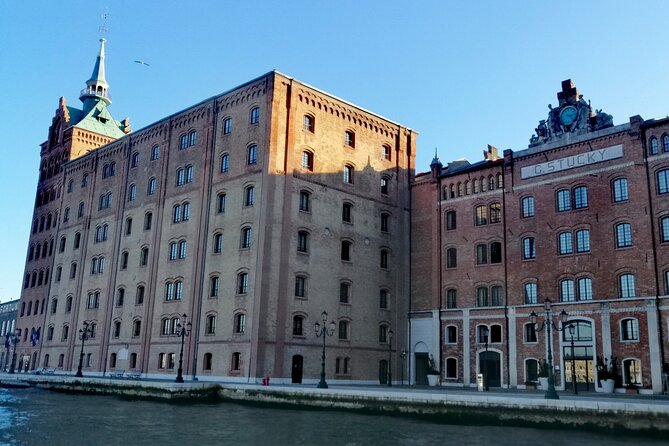
Next up is the Hilton Molino Stucky Venice, a huge Neo-Gothic building that used to be a flour mill. It was supplied by boats across the lagoon. Over time it also operated as a pasta factory.
Today, it houses a luxury 5-star hotel. That transformation is the point. Giudecca isn’t only about old churches and quiet lanes. It’s also about the economic engine that kept the lagoon working.
A practical note: this is a place where you’ll likely see the outside first and then understand the interior changes later through the guide’s explanation. If you’re the type who enjoys reading architecture—shapes, eras, and industrial design—you’ll probably spend extra time here just looking at what’s remained.
Hidden Waterfronts: Fondamenta de le Convertite and the Island’s Hard Edges
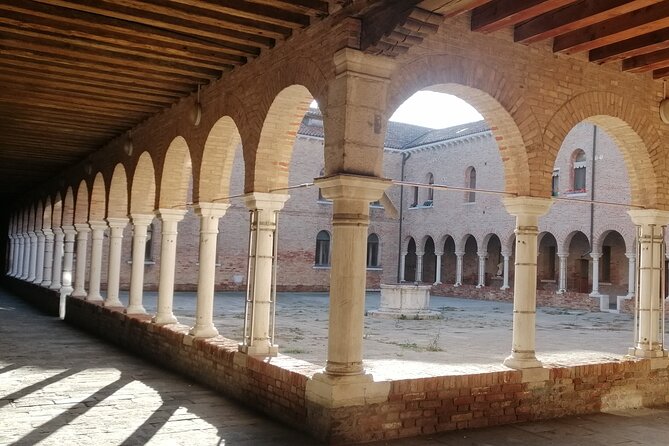
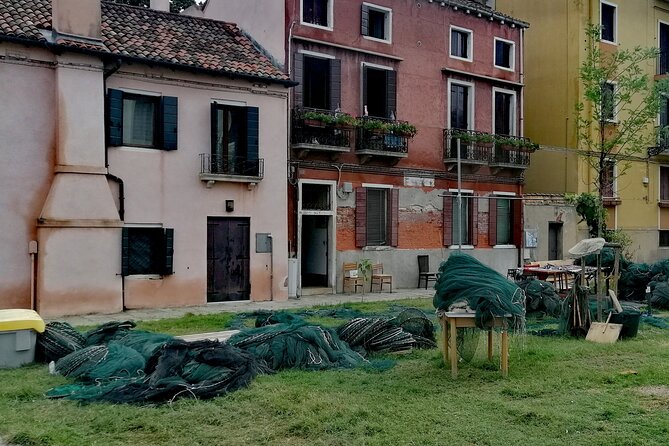
Then the tour slips into a more hidden part of the island at Fondamenta de le Convertite. This is a quieter, less photographed area, and the guide explains the island’s use over time as an institutional space.
You’ll pass an area described as an organic prison market, and you’ll also see it adjacent to a women’s correction facility. It’s not a comfortable subject, but it’s part of what makes Giudecca feel real. Venice often sells fantasy; Giudecca shows the machinery behind the scenes.
I appreciate that the stop doesn’t try to sensationalize it. It’s framed as context: what happened here, and why the island became a place for exile, work, and control.
Ex Convento Santissimi Cosma e Damiano: Monastery Spaces Now for Makers
At Artisti Artigiani del Chiostro – Ex Convento Santissimi Cosma e Damiano, you enter a former monastery. Now it functions as a center for promotion of local artists and artisans of different kinds.
This is one of the most hopeful moments on the walk. You can feel the shift from past roles to present ones. Old religious space, new creativity. If you’ve ever visited Venice and thought it felt too staged, this stop gives you something more grounded: people making things where people once prayed.
This is also where the tour’s small-group format shines. You’re inside (or at least in a sheltered space tied to the cloister setting), so you can hear the guide more clearly and ask questions without the crowd noise.
Teatro Junghans: Glassworks Turned Into Living and Performance
Next is Teatro Junghans. The guide explains that it began as a former factory for glass. Over time, that industrial footprint was converted into a modern residential neighborhood, along with a contemporary theatre facing the southern lagoon.
This stop helps you see how Giudecca’s identity keeps evolving. It’s not just that buildings changed use. It’s that the lagoon-facing geography stayed important. Southern views matter here, and you feel that in the way the theatre faces outward.
If you’re traveling with people who love design or who want something beyond church façades, this is a good pivot point.
Palladio’s Chiesa del Santissimo Redentore and the July Pontoon Tradition
The tour’s biggest architectural moment arrives at Chiesa del Santissimo Redentore. You’ll admire a church designed by Palladio, built to celebrate Venice’s deliverance from the Black Death.
Then the guide brings in a living tradition. Each July, Venetians make a pilgrimage across the canal to reach this church on a shaky pontoon bridge from Zattere, a practice said to date back to 1578.
Two reasons this stop works for you even if you’re not an architecture buff:
- It explains why the church exists, not just that it looks impressive.
- It connects history to a specific annual ritual, so you can picture what life looked like when the city’s survival story mattered.
If you like to watch for patterns in how Venice remembers its crises, you’ll probably think about this stop later when you see other memorial structures around the lagoon.
Villa Heriot and the Southern Lagoon Views You’ll Appreciate More Than Photos
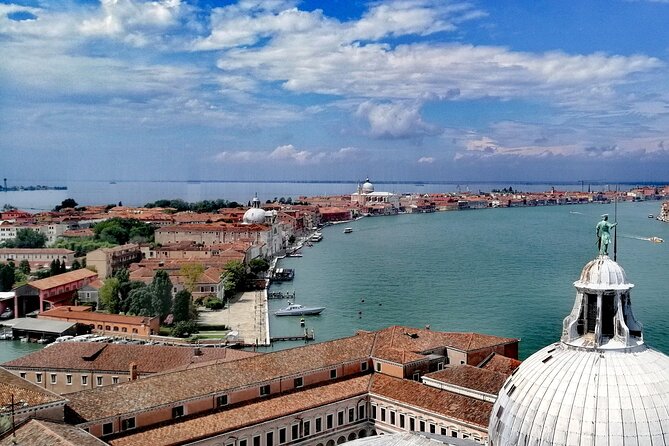
At Villa Heriot, you’ll step into an Art Nouveau villa off the beaten paths. The standout here is the views over the southern lagoon.
This is the kind of stop where photos don’t fully explain it. Once you’re there, the value is in the sightline: the calm spread of water, the way Giudecca frames Venice in the distance, and how the island feels less like an edge and more like a vantage point.
Also, because it’s not one of the highest-traffic spots in Venice, it can feel like you’ve earned the quiet.
Ending at Le Zitelle: Casa dei Tre Oci and the Three-Arched Facade
You finish with scenic viewpoints on San Marco and Punta della Salute. Along the way, you’ll walk past a palace with a distinctive neo-gothic brick façade and three peculiar arched windows.
The tour ends at the Zitelle water bus stop. That’s convenient: you’re finishing near a practical transit point, so you can head back without an awkward last-minute detour.
If you want a Venice experience that feels more like a reveal than a schedule, the closing views do that job. You see the skyline you came for, but you’re seeing it from the side that most visitors rarely reach on purpose.
Price and Value: Is $163.64 Worth It?
The tour is priced at $163.64 per person for about 2 hours, and it includes a tour leader and nature and interpretive guide.
Here’s where the value math gets real:
- You’re paying for guide time plus an efficient walking route that hits multiple kinds of places: churches, industrial architecture, and creative spaces.
- The stop descriptions indicate admission tickets are free at the listed stops, so you’re not stacking entry fees on top of the base price.
- The small group cap (10 travelers) makes it feel less like mass tourism and more like a guided walk where you can actually follow the story.
The main cost caveats are outside-the-tour items: the water bus ticket (purchased on board) and the possible €5 access fee on certain dates for people staying outside Venice. If either applies to you, your total spend will be higher—but even then, you’re typically buying less ticketing friction than a do-it-all-at-once day.
My bottom line: this price makes sense if you care about learning what you’re looking at, and if you want Giudecca specifically rather than generic Venice highlights.
Who Should Book This Giudecca Tour (and Who Might Not)
This tour is a great match if you:
- have been to Venice before and want a new angle
- enjoy walking and small architecture details
- like guided context more than photo stops
- want a quieter side of the Venetian Lagoon with a human pace
It may be less ideal if you:
- hate outdoor walking in wind (Giudecca can feel chilly in shaded stretches)
- want a long, sit-down museum-style experience (this is a guided walk with frequent transitions)
One small, useful tip from past experiences: Giudecca gets nicknamed something like the island of seals/foches, and people often mention the shade feeling colder than expected. Dress accordingly, even if Venice seems mild when you leave your hotel.
Should You Book the Giudecca Island Discovery Tour?
I’d book it if you want Venice that feels lived-in. This isn’t the island of grand crowds and tight lanes. It’s the island where banishment becomes architecture, industry becomes culture, and the lagoon gives you space to breathe.
The standout reason to choose it is the mix of history, function, and views—from the story behind the island’s name to Palladio’s Redentore and the finishing sightlines at Zitelle. Add in the small group cap and the fact that your tour leader is the kind of guide who can make details stick, and you’ve got a strong value package for a short visit.
If you’re doing Venice for the first time and you’re short on days, you might still prefer the main landmarks. But if you have even half a day and you want your Venice trip to feel more personal, Giudecca is a smart use of your time.
FAQ
How long is the Giudecca Island Discovery Tour?
It lasts about 2 hours.
Where do I meet the guide, and where does the tour end?
You start at Zattere 30133 Venice and end at the Le Zitelle water bus stop (Fondamenta Zitelle, 33, 30133 Venezia VE).
Is the water bus ticket included?
No. You purchase the water bus ticket to Giudecca on board.
How many people are in the group?
The tour has a maximum of 10 travelers.
What’s included in the price?
The tour includes a tour leader and a nature and interpretive guide.
Are there any admissions fees at the stops?
The stop list indicates admission tickets are free for the sights visited on this route.
What’s the cancellation policy?
You can cancel for a full refund up to 24 hours in advance. Free cancellation applies with the local time cut-off.
More Tours in Venice
- Murano & Burano: Boat Tour with Guide & Glass Factory Visit
★ 4.3 · 10,716 reviews - Doge’s Palace & St. Mark’s Basilica with Terrace Access Tour
★ 4.7 · 10,697 reviews - Venice: Burano, Torcello & Murano Boat Tour w/Glassblowing
★ 4.4 · 10,245 reviews - Murano, Burano and Torcello Half-Day Sightseeing Tour
★ 3.5 · 7,928 reviews - Murano & Burano Islands Guided Small-Group Tour by Private Boat
★ 4.5 · 7,580 reviews - Venice: Doge’s Palace and St Mark’s Basilica Walking Tour
★ 4.4 · 6,291 reviews
More Tour Reviews in Venice
- Venice: Doge’s Palace Reserved Entry Ticket
★ 4.6 · 42,716 reviews - Venice: Grand Canal Gondola Ride with App Commentary
★ 4.1 · 23,020 reviews - Venice: Grand Canal Gondola Experience with Live Commentary™
★ 4.2 · 16,504 reviews - Boat Trip: Glimpse of Murano, Torcello & Burano Islands
★ 4.3 · 15,699 reviews - Venice: La Fenice Opera House Entry Ticket with Audio Guide
★ 4.6 · 11,742 reviews - Murano & Burano: Boat Tour with Guide & Glass Factory Visit
★ 4.3 · 10,716 reviews
Fresh Off the Vaporetto: New Venice Reviews
Tours, compared.
 ★ 4.3Murano & Burano: Boat Tour with Guide & Glass Factory VisitFrom $2310,716 reviews
 ★ 4.7Doge’s Palace & St. Mark’s Basilica with Terrace Access TourFrom $12310,697 reviews
 ★ 4.4Burano, Torcello & Murano Boat Tour w/GlassblowingFrom $2810,245 reviews
 ★ 3.5Murano, Burano and Torcello Half-Day Sightseeing TourFrom $257,928 reviews
 ★ 4.5Murano & Burano Islands Guided Small-Group Tour by Private BoatFrom $367,580 reviews
 ★ 4.4Doge’s Palace and St Mark’s Basilica Walking TourFrom $1016,291 reviews
 ★ 4.4Murano & Burano Panoramic Boat Tour w/ GlassblowingFrom $296,212 reviews
 ★ 4.4Murano, Burano, Torcello: Tour with Guide & Glass FactoryFrom $286,187 reviews