
Review · TOURS
Il meglio di Venezia in un tour dei punti più e meno noti
Venice hits fast, then slows down. This tour makes the city feel usable, not just photographed. I like the way it balances famous landmarks with everyday Venice, and I especially like the photo-stop pacing so you’re never sprinting just to keep up.
You’ll start at Rialto Bridge and move through small calli and scenic overlooks, including spots tied to big names like Mozart and Goethe and classic Venice postcard views. I also like that the guide keeps things lively and answers questions as you walk.
One consideration: expect walking on uneven stone and lots of stopping, so it’s not for everyone—people over 95 aren’t recommended.
In This Review
- Key points worth knowing
- Starting at San Todaro: how you’ll get your bearings quickly
- Rialto Bridge first: the classic moment with less frantic energy
- Scala Contarini del Bovolo: a twisting stop you’ll actually remember
- Calli with Mozart and Goethe: buildings, not just names
- La Fenice exterior viewpoints: classic Venice energy, without the ticket maze
- Ponte dell’Accademia and Santa Maria della Salute: the postcard view with context
- Campo Santa Margherita: where the tour turns from sightseeing into Venice
- Scuola Grande di San Rocco: an exterior pass that still teaches you how to look
- Finishing near Ponte degli Scalzi and Santa Lucia Central Station
- Languages, guide style, and why Fortunato matters
- Price and value: why $58 can make sense here
- Who this tour fits best (and who should skip)
- Should you book this Venice best-of tour?
- FAQ
- Where does the tour meet?
- What is the tour route like?
- Where does the tour end?
- What languages are available?
- Is there a food stop?
- Is it suitable for very elderly travelers?
Key points worth knowing
- Rialto to Santa Lucia area in one flowing route with views and frequent stops
- Scala Contarini del Bovolo for a standout photo moment and exterior views
- Calli and building exteriors tied to Mozart and Goethe, plus everyday street life
- La Fenice, Ponte dell’Accademia, and Santa Maria della Salute as classic sight lines
- Campo Santa Margherita break with a food tasting instead of just pass-by sightseeing
- San Rocco and local contacts that make Venice feel inhabited, not staged
Starting at San Todaro: how you’ll get your bearings quickly
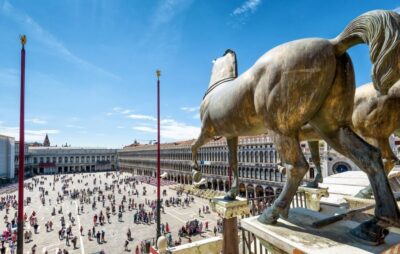
The tour meets in St Mark’s Square, right between the two columns—one supporting the Venetian lion and the other supporting St Todaro. It’s a smart starting point because you can orient yourself fast. From there, you head toward the heart of the old city with a guide who keeps the group together and moving.
I like that this tour doesn’t treat Venice like a museum floor. It’s built around sightlines, stories you can understand while walking, and places that still function as part of daily life. You’ll be looking at churches, palaces, and monuments, sure—but you’ll also spend time in campi, alleys, inns, and shops. That mix is the whole point.
If you’re traveling during a busy stretch, plan to stay flexible. Venice schedules have a way of doing what they want. Also, it helps to have a working mobile phone—the tour notes say you might need internet access at some point.
Still choosing? Line this one up next to a few Venice favourites.
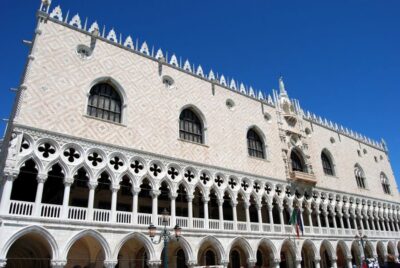
- Venice: Doge’s Palace Reserved Entry Ticket★ 4.6 · 42,716 reviews
- Venice: Grand Canal Gondola Ride with App Commentary★ 4.1 · 23,020 reviews
- Venice: Grand Canal Gondola Experience with Live Commentary™★ 4.2 · 16,504 reviews
- Boat Trip: Glimpse of Murano, Torcello & Burano Islands★ 4.3 · 15,699 reviews
Rialto Bridge first: the classic moment with less frantic energy
You begin at the Rialto Bridge area and then move into the lanes that surround it. This is where most first-timers start snapping pictures—but here, it’s not just about the bridge. The bigger value is what comes next: the guide uses the first landmark to set context for the neighborhoods you’ll pass through.
You’ll get a feel for how Venice’s shape funnels movement. The walk naturally turns from “big vista” into “human scale.” That’s where the tour earns its name—the best of Venice plus the quieter corners that don’t always make it into the first photo set.
Scala Contarini del Bovolo: a twisting stop you’ll actually remember
One of the first big architecture moments is the Palazzo Contarini del Bovolo. You’ll get a photo stop and scenic views on the way, which matters because this palazzo complex is the kind of place you understand more when you see it from multiple angles.
What you’re looking at here isn’t just a pretty facade. It’s a clue to how wealthy Venice used dramatic design to show power—and how that design still shapes street-level sightlines today. If you’ve ever wondered why Venice seems so theatrical even in ordinary streets, this is part of the answer.
The tour keeps it practical: you’re not stuck waiting around forever, and you’re not forced to keep moving without breaks. You’ll have the chance to slow down, frame your shot, and continue.
Calli with Mozart and Goethe: buildings, not just names
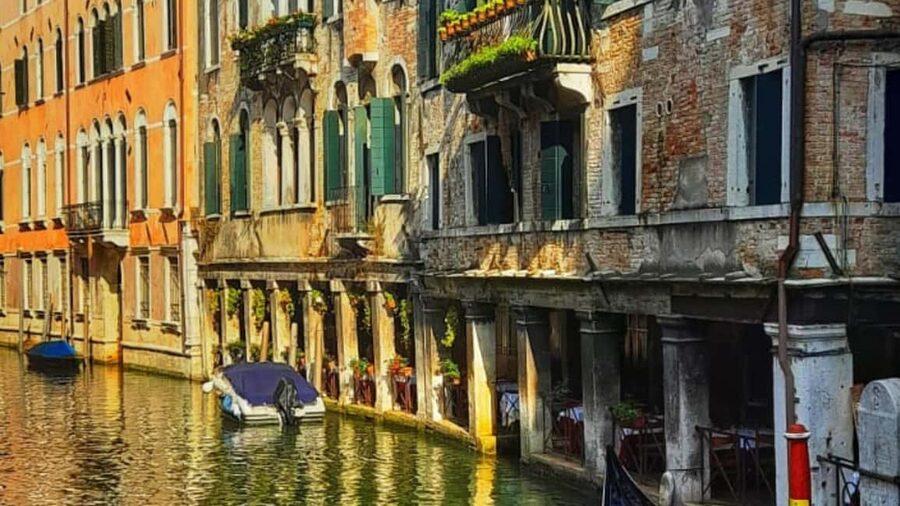
The tour then shifts into the calli—tight, twisting lanes where the city’s personality shows up. The guide takes you to the outside of houses where famous figures like Mozart and writers like Goethe once stayed.
Important: you’re seeing exteriors and street context, not stepping inside a museum with timed tickets. That’s a different kind of experience—and honestly, it can be more satisfying in Venice. You’re not separating the past from the present. You’re watching history sit next to laundry lines, small doorways, and everyday routines.
This part also tends to be where the tour feels most “lived-in.” Venice is famous, but it’s also inhabited. You’ll walk through spaces that still attract Venetians and you’ll pick up details that are easier to notice with someone pointing them out.
La Fenice exterior viewpoints: classic Venice energy, without the ticket maze
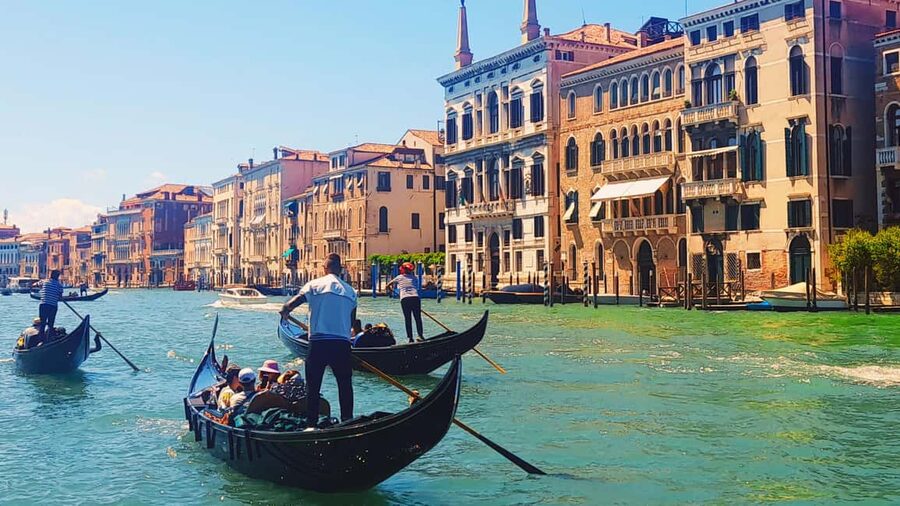
Next comes Teatro La Fenice. You’ll have a photo stop and a pass-by moment, plus scenic viewpoints along the way. La Fenice is one of those places that has an emotional pull even if you’re not a theater person. The building carries the weight of Venice’s cultural identity.
Because this tour is outdoor-focused, you avoid the common headache of planning around indoor access and separate ticket schedules. You get the visual impact and the story context without turning your day into admin.
If you love the feeling of Venice changing mood from street to street, this segment helps. One minute you’re in a tight corridor of buildings; the next, you’re facing something grand and deliberate.



Ponte dell’Accademia and Santa Maria della Salute: the postcard view with context
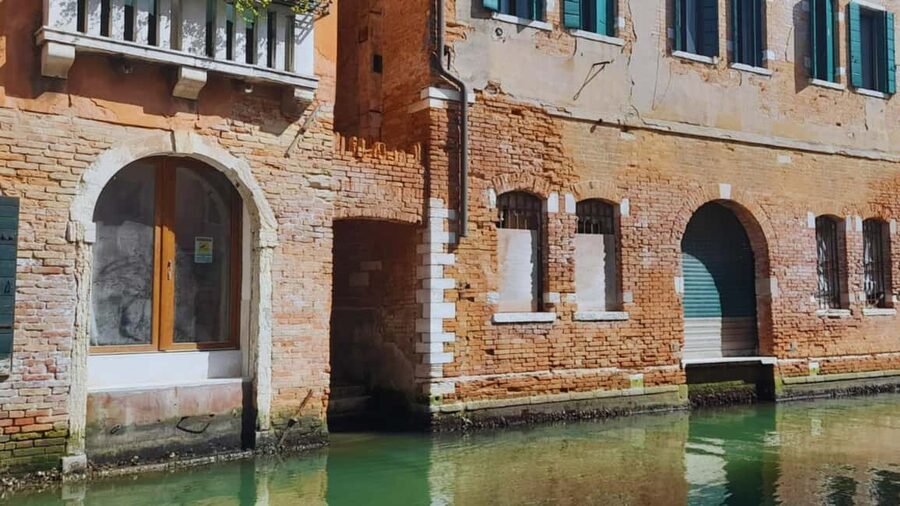
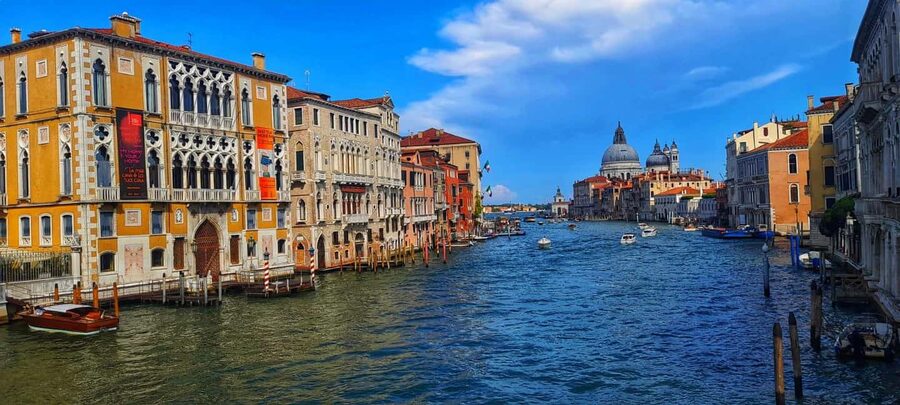
You cross at Ponte dell’Accademia, with a photo stop and visit time, plus scenic views en route. This is one of the best angles for seeing how Venice frames landmarks against the water and sky.
From this crossing, you can admire the church of Santa Maria della Salute in the background. The tour doesn’t treat that as a one-second photo moment. You get time to look, and the guide gives enough context to make the view click.
Here’s why this matters for you: when you see Salute in the right composition, you understand why artists keep returning to Venice’s skyline. The city isn’t flat. It’s layered—waterlines, domes, towers, and facades all working together.
Campo Santa Margherita: where the tour turns from sightseeing into Venice
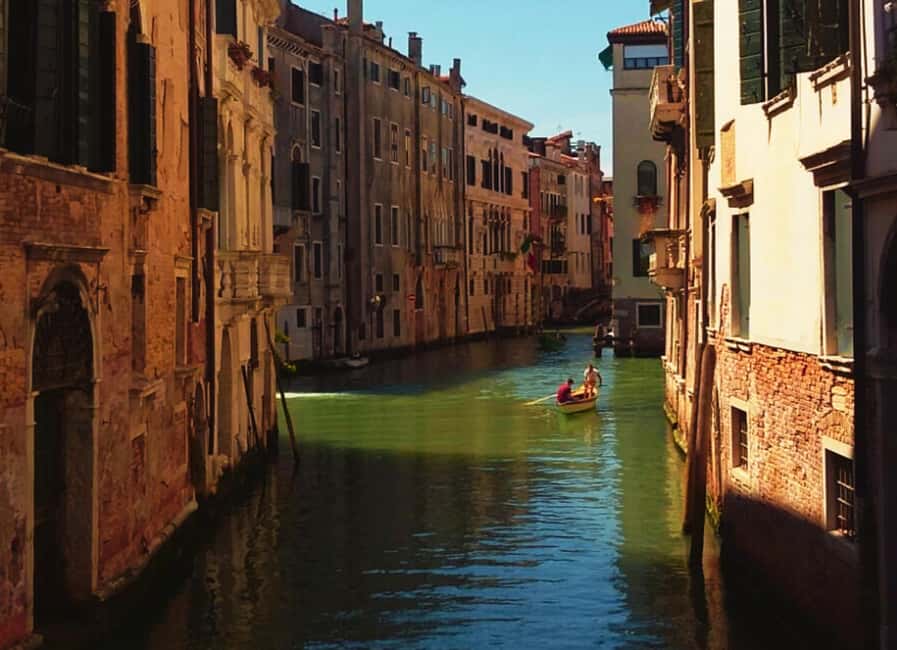
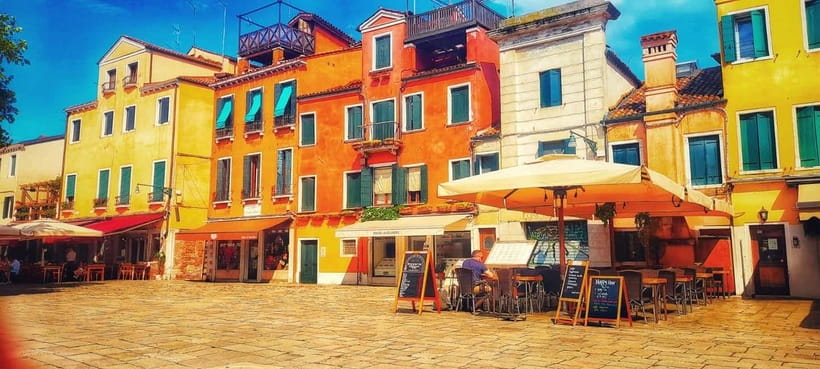
Then you reach Campo Santa Margherita, one of those places that feels like Venice at its most ordinary and human. You’ll have a break with time for photos, sightseeing, and free time, and there’s also a food tasting included.
This stop is a big deal for value. Many tours rush you from major monument to major monument. Here, the schedule gives your feet a chance to reset and gives your senses a break. And since Venice is a food city, the tasting keeps the tour from feeling like pure walking homework.
I like that the food moment is tied to a real square, not a staged restaurant experience. You’ll be surrounded by the kind of street life you want more of if you’re trying to understand Venice beyond the obvious tourist routes.
Scuola Grande di San Rocco: an exterior pass that still teaches you how to look
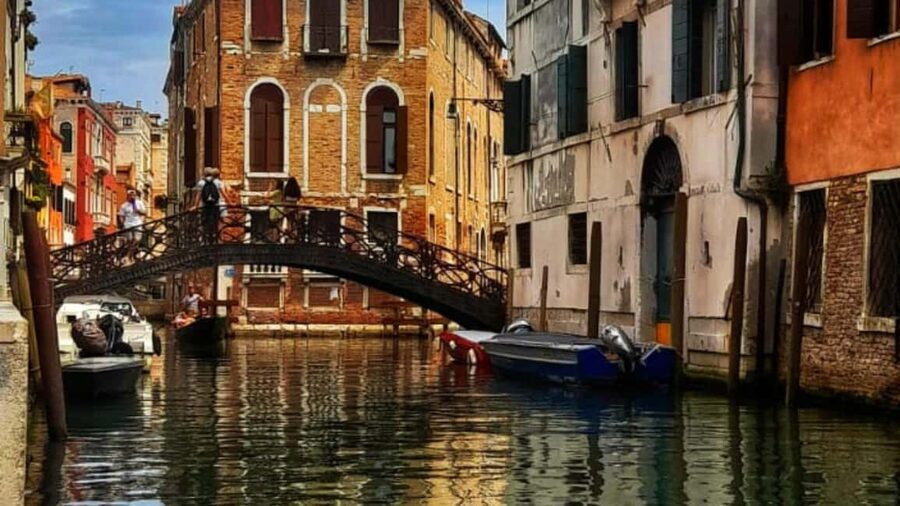
After the break, you’ll pass by the Scuola Grande di San Rocco with a photo stop. This is another “know it when you see it” Venice landmark. Even when you’re not inside, you can read a building’s importance through its scale, placement, and presence in the streetscape.
This stop is also useful if you plan to return on your own later. You’ll leave with a stronger idea of what to notice. You’ll know where the building sits in the neighborhood rhythm, and you’ll feel less lost when you encounter it again.
Finishing near Ponte degli Scalzi and Santa Lucia Central Station
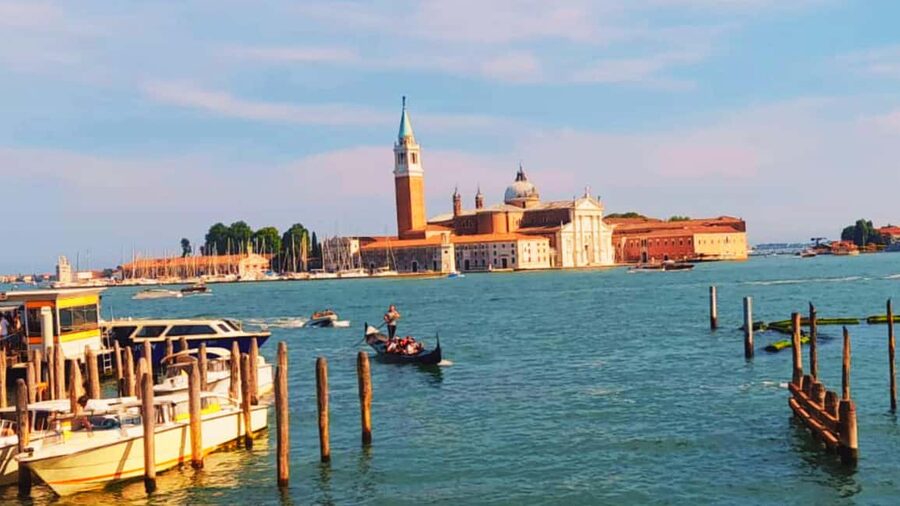
The tour ends at Ponte degli Scalzi, 3, 30121 Venezia VE, Italy. The route is set up so you don’t finish back at the starting point like a loop that wastes your energy. It also means you’re heading toward the Santa Lucia Central Station area, which can be a relief if you’re planning next-day travel or you need to get back quickly.
If your goal is to maximize one day in Venice without burning energy retracing steps, this “finish in a different zone” design helps a lot.
Languages, guide style, and why Fortunato matters
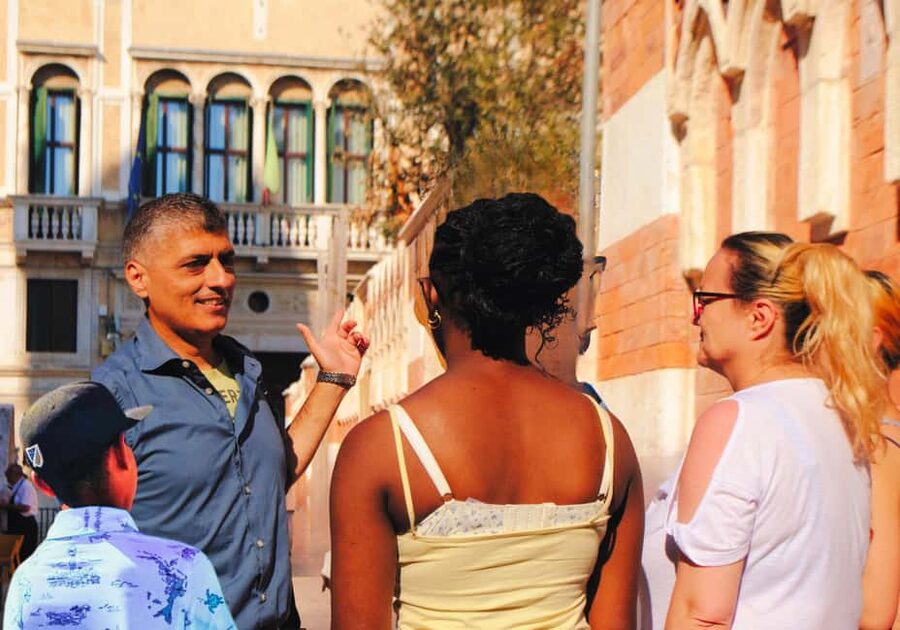
This is a live guided tour with guide support in Italian and German. The guide style shows up in the reviews: people praised the way the guide stays engaging, gives lots of historical knowledge in an entertaining way, and takes questions as you go.
One consistent theme: punctual care. One review notes that Fortunato waited for the group even though they were late, and that set the tone—relaxed but responsible. Another review mentions strong interaction with locals, like a meeting with a mask seller and conversations with an Italian kiosk owner. Even if you only get a glimpse of those exchanges, it changes how you see Venice. It stops being a backdrop and starts being a place with people and routines.
Price and value: why $58 can make sense here
At $58 per person for a short guided experience, you’re paying for more than a route. You’re paying for:
- guidance through areas that can feel confusing if you’re wandering alone
- context that helps you interpret what you’re seeing from street level
- a structure that includes both major sights and smaller corners
- a mid-route break with food tasting, which helps justify the cost compared with pure walking tours
Is it the cheapest way to see Venice? Probably not. But it’s not priced like an all-day, ticket-heavy ordeal either. If you want to see famous landmarks and the day-to-day Venice that people live in, the price feels reasonable because it buys time, direction, and meaning.
And for planning: the tour is listed as valid across 4 days for starting times. That flexibility is useful when Venice weather or your schedule shifts.
Who this tour fits best (and who should skip)
This is a great fit if you:
- want a walk that mixes major sights with less obvious street-level Venice
- like learning while walking, not sitting in lectures
- enjoy photography and scenic viewpoints at multiple points
- want at least one built-in food moment rather than relying on random hunger
It may not be ideal if you:
- need a fully step-free experience (Venice streets are uneven)
- can’t handle a lot of short stops and movement
- are outside the recommended age range; the tour data says it’s not suitable for people over 95
If you’re a first-timer, this works well as a “get the map in your head” day. If you’ve been before, it still helps because it pushes you beyond the obvious checklist.
Should you book this Venice best-of tour?
I’d book it if your priority is balance: famous Venice sights like Rialto, La Fenice, and Ponte dell’Accademia, plus the quieter, everyday streets around calli, campi, and small shops. The built-in Campo Santa Margherita break with food tasting makes it feel like a real morning/afternoon, not a parade of photo stops.
Skip it if you want a slow, fully flexible wandering day with no structure, or if walking pace and stone streets are a problem for you. Also, if you’ll be traveling in a way that makes mobile internet impossible, keep that in mind since the tour notes say you might need a working connection.
If you like Venice the way locals experience it—sights plus streets—this route is a strong pick.
FAQ
Where does the tour meet?
The meeting point is in St Mark’s Square, in the middle of the two columns—one supporting the statue of the Venetian lion and the other supporting St Todaro.
What is the tour route like?
The tour starts near Rialto Bridge, then goes through the area around Scala Contarini del Bovolo, continues through calli with stops outside houses connected to Mozart and Goethe, passes Teatro La Fenice, crosses Ponte dell’Accademia with views toward Santa Maria della Salute, includes Campo Santa Margherita and Scuola Grande di San Rocco, and finishes near Ponte degli Scalzi.
Where does the tour end?
It finishes at Ponte degli Scalzi, 3, 30121 Venezia VE, Italy.
What languages are available?
The live tour guide speaks Italian and German.
Is there a food stop?
During free activity in the St Mark’s Square period, a meal may possibly be recommended. In addition, the route includes a break in Campo Santa Margherita with a food tasting.
Is it suitable for very elderly travelers?
The tour data says it is not suitable for people over 95 years.
More Tours in Venice
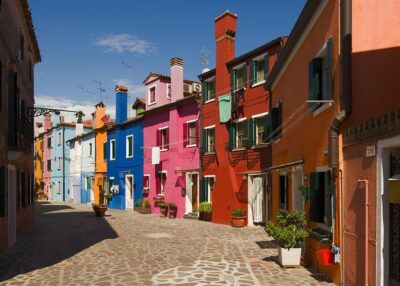
- Murano & Burano: Boat Tour with Guide & Glass Factory Visit
★ 4.3 · 10,716 reviews - Doge’s Palace & St. Mark’s Basilica with Terrace Access Tour
★ 4.7 · 10,697 reviews - Venice: Burano, Torcello & Murano Boat Tour w/Glassblowing
★ 4.4 · 10,245 reviews - Murano, Burano and Torcello Half-Day Sightseeing Tour
★ 3.5 · 7,928 reviews - Murano & Burano Islands Guided Small-Group Tour by Private Boat
★ 4.5 · 7,580 reviews - Venice: Doge’s Palace and St Mark’s Basilica Walking Tour
★ 4.4 · 6,291 reviews
More Tour Reviews in Venice
- Venice: Doge’s Palace Reserved Entry Ticket
★ 4.6 · 42,716 reviews - Venice: Grand Canal Gondola Ride with App Commentary
★ 4.1 · 23,020 reviews - Venice: Grand Canal Gondola Experience with Live Commentary™
★ 4.2 · 16,504 reviews - Boat Trip: Glimpse of Murano, Torcello & Burano Islands
★ 4.3 · 15,699 reviews - Venice: La Fenice Opera House Entry Ticket with Audio Guide
★ 4.6 · 11,742 reviews - Murano & Burano: Boat Tour with Guide & Glass Factory Visit
★ 4.3 · 10,716 reviews
Fresh Off the Vaporetto: New Venice Reviews
Tours, compared.
 ★ 4.3Murano & Burano: Boat Tour with Guide & Glass Factory VisitFrom $2310,716 reviews
 ★ 4.7Doge’s Palace & St. Mark’s Basilica with Terrace Access TourFrom $12310,697 reviews
 ★ 4.4Burano, Torcello & Murano Boat Tour w/GlassblowingFrom $2810,245 reviews
 ★ 3.5Murano, Burano and Torcello Half-Day Sightseeing TourFrom $257,928 reviews
 ★ 4.5Murano & Burano Islands Guided Small-Group Tour by Private BoatFrom $367,580 reviews
 ★ 4.4Doge’s Palace and St Mark’s Basilica Walking TourFrom $1016,291 reviews
 ★ 4.4Murano & Burano Panoramic Boat Tour w/ GlassblowingFrom $296,212 reviews
 ★ 4.4Murano, Burano, Torcello: Tour with Guide & Glass FactoryFrom $286,187 reviews