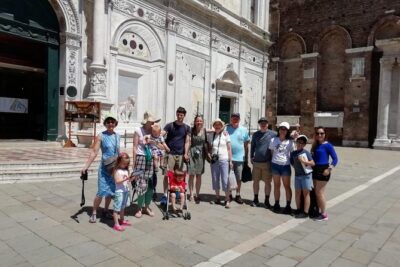
Venice can feel like a maze. This small-group day trip strings the main sights together with local street time and food stops, starting right from Padua by train. You’ll cover multiple neighborhoods in one go, and the route is built around what you can actually walk through.
I like the quiet-to-iconic progression. You start in the Venetian Jewish Ghetto and Cannaregio, then work your way toward San Polo and Rialto, and finally end up at Piazza San Marco and the Bridge of Sighs area.
One thing to consider: you’ll be on your feet for about 7.5 hours and you may need to dress appropriately for churches (covered shoulders and legs). If you’re sensitive to walking distance or long indoor breaks, plan around it.
In This Review
- Key highlights to know before you go
- From Padua to Venice: the train day that actually feels easy
- Cannareggio and the Venetian Jewish Ghetto: quiet streets and real shops
- San Polo and bacari-style breaks: how the day stays enjoyable
- Rialto Bridge crossing and Rialto Market time
- Piazza San Marco: buildings, flood awareness, and the Bridge of Sighs area
- A Grand Canal viewpoint from a quieter place, then back by ferry
- Price and logistics: what $150.49 buys you in the real world
- Who should book this day trip, and who should skip it
- Should you book Live Venice as a local departing from Padua?
- FAQ
- How long is the Venice day trip from Padua?
- What time does the tour start, and where do I meet?
- Is the ticket mobile?
- Are train tickets included from Padua?
- Is lunch or food included?
- Do I need to pay entrance fees for sights?
Key highlights to know before you go
- Padua train round-trip included so you’re not figuring out transit on your own
- Max 10 travelers for a more human-sized walking pace
- Jewish Ghetto to Cannaregio to San Polo to Rialto without long detours
- Rialto Bridge crossing + Rialto Market time as a real center, not just a photo stop
- Grand Canal viewpoint from a quieter spot for a less common angle
- Cicchetti lunch at a traditional bacaro plus an espresso break along the way
From Padua to Venice: the train day that actually feels easy
The day starts at Stazione FS di Padova (Piazzale della Stazione, 1) with a start time listed as 9:45 am. This matters because Venice day trips often fall apart at the start: wrong station, missed train, or arriving stressed. Here, you’re handed the plan. The tour includes round-trip train transfer from Padua, and you return later using a ferry boat to reach the rail station.
The group size is capped at 10 travelers, which is a big deal in Venice. Small groups move at a human speed through narrow calli, instead of turning every corner into a bottleneck. You’ll also get a tour leader, plus a mobile ticket (helpful when paper tickets would just turn into pocket clutter).
Practical tip: show up a little early at Padua station. Even with organized transfers, you’ll want time to gather your things, use the restroom, and get your bearings before boarding. Also keep an eye on your contact info for updates a few days before the tour (the operator confirms timing a bit closer to departure).
Still choosing? Line this one up next to a few Venice favourites.
- Venice: Doge’s Palace Reserved Entry Ticket★ 4.6 · 42,716 reviews
- Venice: Grand Canal Gondola Ride with App Commentary★ 4.1 · 23,020 reviews
- Venice: Grand Canal Gondola Experience with Live Commentary™★ 4.2 · 16,504 reviews
- Boat Trip: Glimpse of Murano, Torcello & Burano Islands★ 4.3 · 15,699 reviews
Cannareggio and the Venetian Jewish Ghetto: quiet streets and real shops
This is where the day starts to feel like Venice lived-in, not Venice staged.
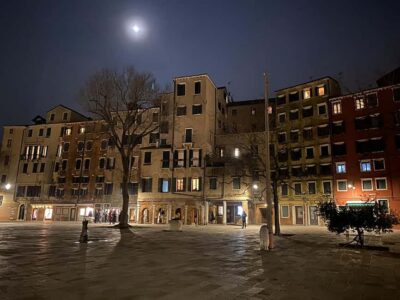
You begin at Ghetto Ebraico for a short walking pass through the Jewish Ghetto of Venice. The time at this stop is listed at about 10 minutes, and admission is free. It’s not a museum visit. Think streets, atmosphere, and small-scale details you’d miss if you only followed the loud postcard route.
Then you move through Cannaregio, one of the quieter, more neighborhood-feeling parts of Venice. You’ll hear about how Strada Nova connects the Santa Lucia area toward the Rialto zone, and you’ll also notice shopping areas like Lista di Spagna. The day’s description makes it clear this isn’t only about monuments—it’s about streets where people meet, browse, and eat.
Two things I like here:
- You get traditional Jewish shopfronts and the character of the area without rushing past them.
- You’re given context about why this area mattered for the Jewish community (including the Napoleonic-era period when residents were obliged to live in the Ghetto).
Bonus: the route is described as taking you through narrow and quiet Venetian streets between the Cannaregio district and the Ancient Jewish Ghetto. That’s exactly what I look for when I want Venice to feel calm enough to actually notice things.
A consideration: the quiet streets also mean you’ll want comfortable shoes. Venice isn’t the place for stiff footwear or blisters. The pace is walking-first, sightseeing-second.
San Polo and bacari-style breaks: how the day stays enjoyable
After Cannaregio, the route shifts to San Polo, described as the smallest of Venice’s six districts and loved for its relaxed atmosphere. You’ll walk narrow streets and see a mix of homes and working shops—plus taverns known as bacari.
San Polo’s big landmark is Campo San Polo, the largest square after Piazza San Marco, and you’re positioned in an area that historically hosted public life and celebrations. Today, it’s a good reminder that Venice isn’t just a sightseeing loop—it’s also a place where people actually live their day.
Your time here is listed at about 30 minutes, with free admission. That time lets you do what you should do in Venice: slow down enough to read the street, spot small details, and then keep moving before you get crowds-and-confusion fatigue.
And yes, this day includes food breaks that keep the walking from turning into a grind. The tour description mentions an espresso stop at a small coffee shop using the same recipe for nearly a century. It also calls out lunch at a traditional bacaro hidden among the intricate calli, where you can enjoy Venetian cicchetti.
That combo is smart. In Venice, guided days can feel heavy if they’re all sights and no rhythm. With an espresso and a cicchetti lunch stop built into the flow, you’ll have a natural reset point.
Small caution: lunch being cicchetti-style is a great experience, but portion sizes and pricing can vary by venue. The tour does not state that lunch is fully covered; it just says you’ll enjoy cicchetti at a traditional bacaro. Treat it as part of the guided experience and be ready for spending there unless your booking specifies otherwise.
Rialto Bridge crossing and Rialto Market time
Next comes the Rialto Bridge—the oldest of Venice’s four Grand Canal bridges—and it’s the kind of place you understand instantly. You don’t need extra context to feel its importance.
The bridge you’ll cross was built between 1588 and 1591, based on architect Antonio da Ponte’s project to replace a previous wooden structure that collapsed and burned on multiple occasions. Standing on it, you can almost see how practical it was: a fixed crossing over the canal when Venice depended on movement and trade.
Your stop time is listed as about 1 hour, and admission is free. The tour includes both the bridge crossing and a tour of the Rialto Market.
For planning, here’s the practical way to use that hour:
- Walk out to good viewpoints on the bridge itself for photos.
- Then shift your attention to the market stalls and what’s being sold.
- Expect your route to stay flexible based on foot traffic. In a place like Rialto, crowds move like weather.
Value angle: plenty of Venice tours “show” Rialto from across the canal. This one makes you cross it and spend time with the market environment. That’s a more authentic way to understand why Rialto is such an economic and social hub.
Piazza San Marco: buildings, flood awareness, and the Bridge of Sighs area
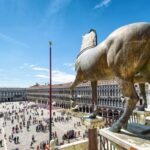
Eventually the day lands at Venice’s most famous stage set: Piazza San Marco.
The tour description gives you helpful context about the square itself: it was built in the 9th century, paved in 1177, and it’s the lowest area of Venice, meaning it’s often the first to flood when water rises. That’s not trivia for trivia’s sake—it helps you understand why Piazza behaves differently than higher ground districts.
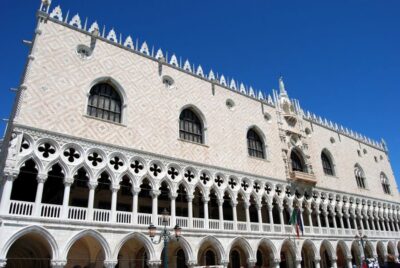
You’ll spend about 1 hour here, with admission free for the square itself. You’ll be surrounded by the main buildings, including:
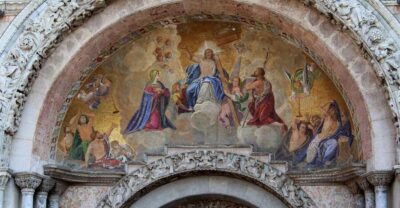
- Basilica San Marco
- Doge’s Palace
- Correr Museum
- Campanile
- Clock Tower
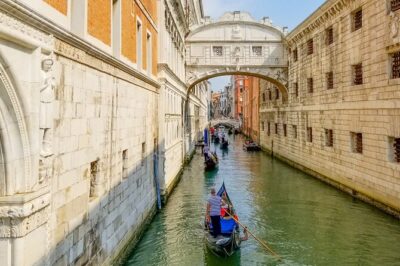
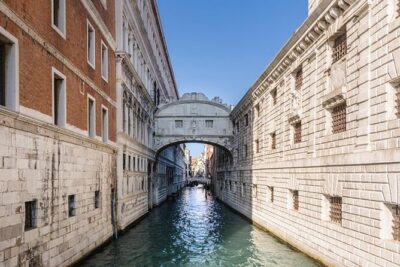
Then you’ll arrive at the Bridge of Sighs area. The Bridge of Sighs is one of those Venice landmarks that people want to see from every angle, and this day builds a path that ends with you getting there in sequence.
A key note for your planning: Basilica of San Marco is not included. That means you’ll likely be viewing it from the outside and from nearby areas, while entrance tickets aren’t part of this particular package.
Also, if you want to go inside churches during your day, the tour notes a dress requirement: covered shoulders and legs. Venice churches often run stricter than you expect, even in warmer months. Bring something light that covers easily—especially if you’re traveling in summer or spring.

A Grand Canal viewpoint from a quieter place, then back by ferry
One of the best parts of this day is that it promises a hidden place where you can appreciate an exclusive view of the Grand Canal. You don’t get details on the exact location in the provided info, but the intent is clear: give you a better angle than the classic crowded spots.
I like these “one quieter viewpoint” moments for two reasons:
- They give your brain a break from back-to-back monuments.
- They help you understand Venice’s geography—canals, bends, and perspectives—so the city starts making sense.
After that viewpoint, you head toward the ferry boat for the ride back to the rail station. That matters because it turns the day’s ending into something easier than walking the whole time. At about 30 minutes, it’s long enough to feel like a proper canal transit, but short enough that you won’t feel stuck.
Price and logistics: what $150.49 buys you in the real world
The price is listed at $150.49 per person, and the experience runs about 7 hours 30 minutes (approx.). That total duration matters because it tells you this is not a 2-hour highlight walk. This is a full day connecting multiple districts, with guided pacing and structured time at key landmarks.
What’s included:
- Walk in Venice with a tour leader
- Round trip transfer by train from Padua station
- Insurance and technical organization via a certified travel agency
What’s not included:
- Anything not clearly indicated
- Entrance fees (and you’re told that fees are currently not required, though local rules could change)
That last point is important for budgeting. Venice entrance policies can shift, and sometimes you think something is free until you hit a gate. The good news here: the tour notes that church entrance fees are currently not required, so you’re likely safe on the day, but don’t ignore the possibility of future changes.
Also, a local day-tripper rule may apply: on certain dates, people staying outside Venice might need to pay an €5 access fee, and you’re directed to the official page for days and exemptions. If your lodging is outside Venice proper, check ahead of time so the €5 doesn’t feel like a surprise.
Language note: the experience is described as an English tour in the general listing terms, but small groups can end up with mixed language needs. If you’re planning a trip where language clarity is crucial, it’s worth reaching out with your question during booking or after confirmation.
Who should book this day trip, and who should skip it
This tour makes strong sense for you if:
- You’re starting in Padua and want round-trip rail handled for you.
- You want a guided day that hits Cannaregio, San Polo, Rialto, and San Marco without building a route from scratch.
- You like seeing Venice through neighborhood streets first, then the big-name sights second.
- You enjoy food moments like espresso and cicchetti lunch as part of travel, not an afterthought.
You might think twice if:
- You hate long walking days or you’re only comfortable with minimal walking. The tour calls for moderate physical fitness.
- You’re expecting full inside access to major sites. Basilica San Marco is not included, so your visit there would be separate if you decide to go in.
- You need guaranteed monolingual guiding. In small groups, language pacing can vary depending on who’s booked.
Should you book Live Venice as a local departing from Padua?
If you want a Venice day that feels like a real itinerary—quiet streets, historic anchors, and a couple of “stop and taste” moments—this is a solid choice. The big win is the combination of small group size plus train transfers from Padua plus a route that actually connects neighborhoods in a logical flow.
I’d book it if you:
- Are okay with about 7.5 hours of walking and standing.
- Want Rialto Bridge and Rialto Market as a real segment of your day.
- Would enjoy seeing Piazza San Marco and the Bridge of Sighs area without paying to enter everything.
I’d skip or double-check if:
- You absolutely need Basilica San Marco included.
- You’re traveling in a period when the €5 access fee might apply and you’d rather not deal with it at the last minute.
- Your schedule is tight and you want very flexible timing. This is a structured day.
FAQ
How long is the Venice day trip from Padua?
The total duration is about 7 hours 30 minutes.
What time does the tour start, and where do I meet?
It starts at 9:45 am at Stazione FS di Padova, Piazzale della Stazione, 1, 35131 Padova PD, Italy.
Is the ticket mobile?
Yes, you’ll receive a mobile ticket.
Are train tickets included from Padua?
Yes. The tour includes round-trip transfer by train from Padua station, and you return by ferry boat to the rail station.
Is lunch or food included?
The tour includes a lunch stop where you can enjoy traditional Venetian cicchetti and also includes an espresso stop, but the provided info doesn’t specify exactly what portion is included in the price versus paid at the venues.
Do I need to pay entrance fees for sights?
Entrance fees are not included and are currently noted as not required, though local rules can change. The tour also warns that an €5 access fee may apply on certain dates for people staying outside Venice.
More Tour Reviews in Venice
- Venice: Doge’s Palace Reserved Entry Ticket
★ 4.6 · 42,716 reviews - Venice: Grand Canal Gondola Ride with App Commentary
★ 4.1 · 23,020 reviews - Venice: Grand Canal Gondola Experience with Live Commentary™
★ 4.2 · 16,504 reviews - Boat Trip: Glimpse of Murano, Torcello & Burano Islands
★ 4.3 · 15,699 reviews - Venice: La Fenice Opera House Entry Ticket with Audio Guide
★ 4.6 · 11,742 reviews - Murano & Burano: Boat Tour with Guide & Glass Factory Visit
★ 4.3 · 10,716 reviews