Review · VENICE
Palladio. A wonderful live tale through time&soul, from Ve/Pd/Vr
Palladio turns a day into time travel. This private tour strings Vicenza’s UNESCO stops to Venice’s ideas, guided as a live tale through UNESCO architecture. You’ll move from “door of time” storytelling into real buildings you can touch with your eyes.
I love how the guide connects design to big human themes, from classical Athens to later visions like Washington during the Villa Chiericati stop. I also love the care in the experience format—van comfort plus high-touch moments like a private reception in a standout Palladian palace.
One thing to plan for: key villa entry costs may be on you later. Seasonal access matters for Villa La Rotonda, and Villa La Rotonda plus Villa Foscari are listed as entry excluded, with Villa La Rotonda entry rules changing by dates.
In This Review
- Key Highlights You’ll Feel Day-of
- A Private Day Trip With a Time-Through-Tale in Vicenza
- Price and Inclusions: What You Pay For (and What You Don’t)
- Pickup, Van Comfort, and How the Day Ends
- Villa Chiericati and Palazzo Valmarana Braga: The Story Starter and the Fresco Moment
- Piazza dei Signori and Basilica Palladiana: Views, Arcades, and Craft
- Strada Maior and Contrà Porti: Streets Where Ideas Walk
- Museo Civico di Palazzo Chiericati: Paintings and the Palladian Inner Circle
- Teatro Olimpico’s Light-and-Sound Dream
- Palladio Museum and the Loggia Aperitif
- Villa La Rotonda (and Villa Foscari): Two Tickets to the Icons
- Should You Book This Palladio Routes Tour?
- FAQ
- How long is the tour?
- Where does the tour take place?
- Is pickup available?
- Is the tour private or shared?
- What language is the tour in?
- Are entrance fees included?
- Is lunch included?
- Is there an e-bike option?
- Does the tour end back in Venice?
- Is there a Venice access fee for day visitors?
- What’s the cancellation policy?
Key Highlights You’ll Feel Day-of
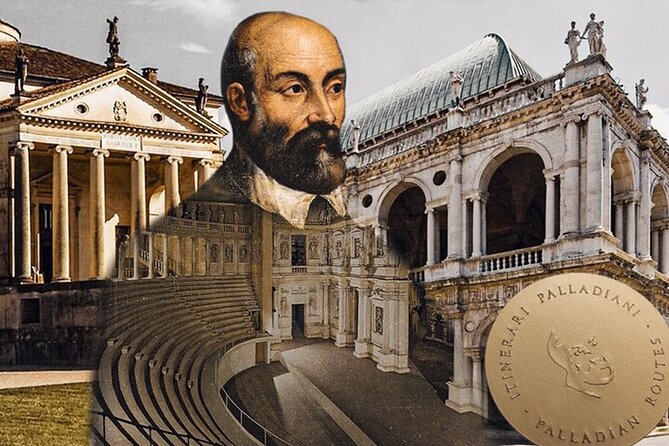
- A director-level narrative tied to the network of Palladio villa owners, so the day feels like a story with context
- Private reception in Palazzo Valmarana Braga, including a fresco-focused moment in the Count’s study
- Basilica Palladiana viewpoints plus arcades that link to Vicenza craft via the jewelry museum
- Teatro Olimpico with a light-and-sound show, in a theater Palladio designed around the Greek ideal
- Palladio Museum models that help you actually understand how the villas were built and planned
- An aperitif in a Palladian loggia, with a final small Palladian gift to send you off
A Private Day Trip With a Time-Through-Tale in Vicenza
If you’re the type who likes art and history with a pulse, this format works. Instead of bouncing from sight to sight, you get a live, chronological-style narrative that treats Palladio as more than a style—almost like a way of thinking.
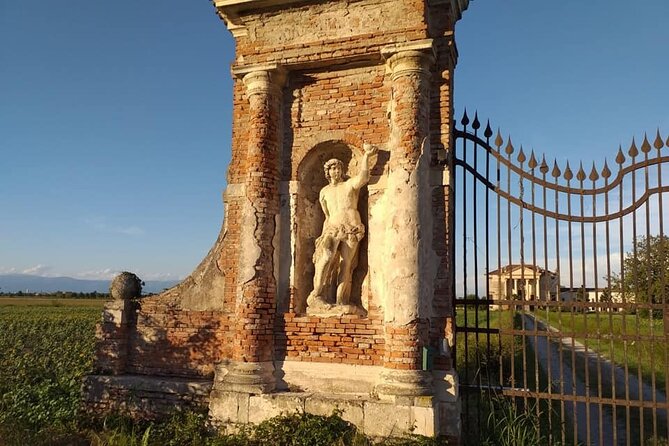
The tour starts with a “door of time” moment at Villa Chiericati, described like a romantic ruin, and framed as a bridge across centuries. That tone matters because it trains you to notice details the rest of the day: symmetry, classical references, and how buildings communicate ideas.
You’ll also keep hearing the Venice-Vicenza connection. There’s an intentional Palladian contrast between Vicenza and Venice at the Loggia in front of the Basilica—so the trip doesn’t feel like you’ve left Venice behind. You’re still “in Venice,” just reframed through Palladio’s influence.
Still choosing? Line this one up next to a few Venice favourites.
- Venice: Doge’s Palace Reserved Entry Ticket★ 4.6 · 42,716 reviews
- Venice: Grand Canal Gondola Ride with App Commentary★ 4.1 · 23,020 reviews
- Venice: Grand Canal Gondola Experience with Live Commentary™★ 4.2 · 16,504 reviews
- Boat Trip: Glimpse of Murano, Torcello & Burano Islands★ 4.3 · 15,699 reviews
Price and Inclusions: What You Pay For (and What You Don’t)
At $612.81 per person for about 8 hours, the real value is what’s bundled: private transportation, entrance fees for many listed sites, the narrated tale, and an aperitif with drinks. You’re also getting a mobile ticket, group discounts (if applicable when you book), and a tour designed for your private group rather than a packed bus.
Here’s what’s clearly included:
- Private transportation
- Entrance fees to the places mentioned as included/free in the program
- The itinerant tale led by the director of the Network of Owners of Palladio’s Villas
- E-bike possible for the ride to Villa La Rotonda (free use if you want it)
- Alcoholic beverages aperitif in the Palladians’ loggia
- A little final Palladian gift
Here’s where you should expect possible extra payments:
- Villa Chiericati stop is presented as a door with no entry, and its ticket is listed as not included.
- Villa La Rotonda (Temple of Man) is explicitly listed as entry excluded, with entry rules changing by date.
- Villa Foscari is also explicitly entry excluded, with possible entry only on opening days and only with an extra cost (excluded by default).
And one practical note: lunch is not included. So you’ll want to plan a meal timing strategy before or after the tour, especially since the day is tightly scheduled around entrances and shows.
In plain terms: you’re paying for a guided, high-touch architecture day with admissions handled for most stops, plus the “special” moments like the reception and aperitif.
Pickup, Van Comfort, and How the Day Ends
Pickup is offered, and the day runs as a private tour, meaning only your group. For many people coming from Venice, that matters. You avoid the stress of coordinating transfers, and you can just settle into the rhythm of the guide’s story.
If you’re staying somewhere in Venice and want the smoother-on-arrival option, there’s a possibility of arranging a water taxi transfer from your hotel (extra cost). You need to contact Palladian Routes at least 3 days before your tour date to explore it.
The day ends in a different location, and you get a choice at the end of the Vicenza UNESCO portion: return to Venice more quickly, or take it slower by using the next train about an hour later. That flexibility is helpful if you want one last walk after you get back, or if your train timing is already part of your travel plan.
Also keep in mind Venice’s €5 access fee. The tour data notes that on certain dates, travelers staying outside Venice planning to visit for the day may need to pay it. Check the city info link provided when you’re planning your day.
Villa Chiericati and Palazzo Valmarana Braga: The Story Starter and the Fresco Moment
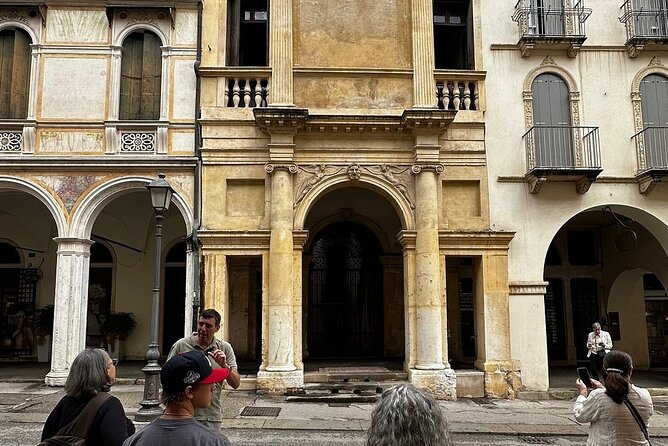
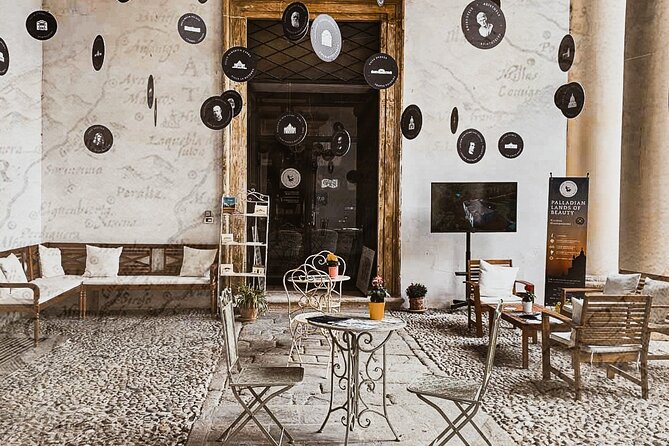
The day kicks off at Villa Chiericati with The Door of Time—presented as something you look at rather than enter. Think of it as your “film opening.” The stop is framed as a romantic ruin and a symbolic gateway into a guided journey that jumps across time and ideas.
I like this kind of start because it tunes your eyes. When you later see Palladian elements reused in new contexts, it doesn’t feel random. It feels like the same brain at work, changing clothes across centuries.
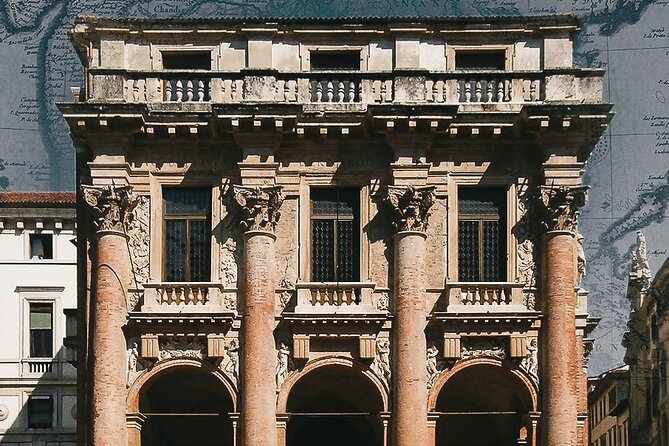
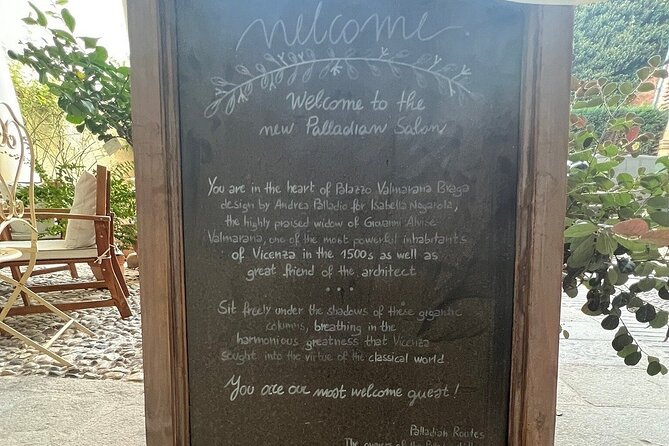
Next you’re welcomed into Palazzo Valmarana Braga for a private reception. This is one of the stops that sounds like pure special-occasion travel: you get introduced to the UNESCO Palladio heritage through the lens of a palace headquarters tied to the owners’ network. Then the focus shifts to specific architectural and art details:
- the extraordinary facade of the Palladian palace
- a precious Renaissance fresco on the ceiling of the Count’s study, described as having a cosmology theme
- the reconstruction idea of what the Empress of Austria saw during a visit
- how Palladianism spread as part of the broader fabric of culture
This is where the tour earns its “live tale” promise. Instead of saying Palladio mattered, the guide points to the objects and design choices that carried his influence forward.
Piazza dei Signori and Basilica Palladiana: Views, Arcades, and Craft
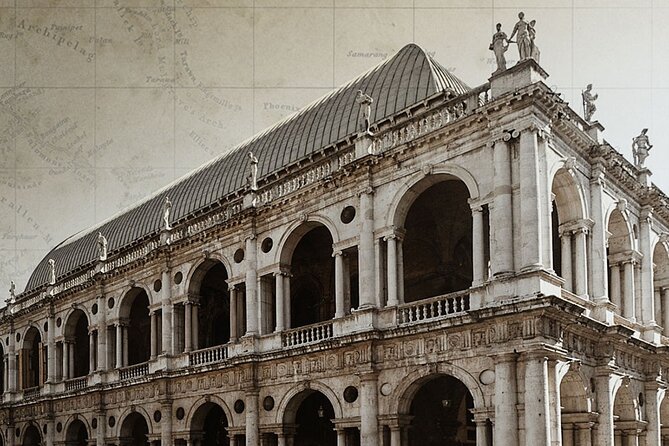
From palace interior to public space, you then hit Piazza dei Signori—your “living room” in Vicenza. It’s a relaxing stop in the heart of town, built around views and the patrician salon idea. Admission here is free, so it’s the kind of break that doesn’t feel like dead time.
Then comes Basilica Palladiana, and this part is a big reason people pick a guided day. You enter and go up to see a terrace view described as the cameo of Piazza dei Signori. Going down between the arcades brings you into a different kind of appreciation: it’s where Vicenza tradition and craft show up.
The program specifically calls out the jewelry museum (goldsmith work), described as one of a kind. Even if you’re not a jewelry person, this is useful. You’re seeing how high design and luxury craft were part of the same cultural machine.
Right outside, the program includes a moment titled Venice is silent, but present, tied to the Loggia in front of the Basilica. That contrast is the kind of thing a guide can explain fast, and then you’ll spot it yourself—Vicenza and Venice as two cities sharing the same visual stage through Palladian thinking.
Strada Maior and Contrà Porti: Streets Where Ideas Walk
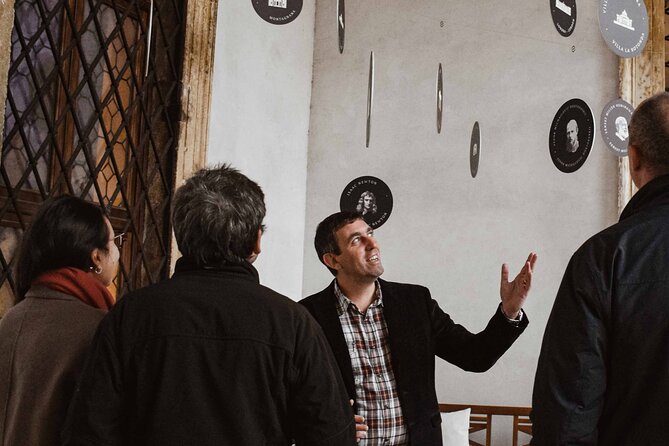
After you’ve seen key buildings, you move into the streets. This is where the tour starts to feel like a city you can keep walking after it ends.
Strada Maior is presented in honor of Andrea Palladio, as the most important street in Vicenza and also a road connecting key Palladian works tied to UNESCO heritage. The practical value here is simple: it’s how you understand Palladio’s impact as something you can walk through, not just something you visit with a ticket.
You’re also encouraged to notice normal life alongside architecture. The tour frames the street as a backdrop for how locals live, so you get more than “photo stops.”
Then you’ll pass through Contrà Porti, described as spanning different layers of history and cultures. The language is clear: Vicenza is framed as a northern end of the Renaissance world, and a southern end where the Reformation culture arrives from the continent. It’s an interesting point because it turns a street into an idea map. Even if you don’t follow the theological details, you can feel why a guide would slow down here: architectural choices and cultural tensions often show up in the same addresses.
Museo Civico di Palazzo Chiericati: Paintings and the Palladian Inner Circle
Next up is Museo Civico di Palazzo Chiericati, a UNESCO World Heritage site with an imposing facade. The stop is described as revealing a civic museum perspective, and the program highlights one strong angle: the civic museum collection includes Venetian works by major names like Tintoretto, Veronese, and Sansovino.
This is a good place to reset your brain. Earlier stops were about architecture as symbols. Here, paintings and collections help you see how the arts fed the same elite world that supported Palladian design.
The guide also focuses on portraits of men on the main floor, described as having created the architect in more than one way. That’s worth paying attention to, because it shifts Palladio from “genius alone” into a network. You start connecting patronage, taste, and how ideas spread through powerful circles.
Teatro Olimpico’s Light-and-Sound Dream
Then the tone rises again with the Teatro Olimpico. This is listed with entry included and described as unique and exciting, with an evocative light and sound show.
The program also gives you the headline architectural significance: it’s described as the first covered theater in history, and as a realization of the ancient Greek ideal Palladio and his clients pursued. That matters because it changes how you look at the space. You’re not only watching a show; you’re seeing an architectural argument about theater, sightlines, and classical ideals.
This stop is one of those “you either get it or you don’t” experiences. Having a guide here helps either way, because the meaning is not just aesthetic. It’s intentional design meeting performance atmosphere.
And for timing: the tour notes that after finishing the UNESCO World Heritage visit of Vicenza, you can choose how quickly to return to Venice. So the theater functions like a capstone—then you either go home fast or milk the last hour.
Palladio Museum and the Loggia Aperitif
Two of the more practical, hands-on parts come late in the Vicenza sequence.
First is the Palladio Museum, with entry included. You’re told you can discover the legacy of Palladio’s villas by observing wooden models, which is a smart way to understand architectural plans. If you’ve ever stared at a facade and wondered how it works behind the scenes, models help you mentally rotate the building from flat to 3D.
The museum stop also notes that they can open it for you even outside standard opening hours. That kind of scheduling flexibility is worth something, because it reduces the chance your day gets stuck behind public hours.
Then you end with Palazzo Valmarana Braga again for a private aperitif in the Palladians’ loggia. This is a “social architecture” moment: you’re toast-ready among quotations of the ancients and columns that evoke virtues. It’s also where you feel the tour’s theme—your guide isn’t only showing buildings, they’re showing how elites used spaces to communicate values.
Expect included drinks with the aperitif, and a small final Palladian gift at the end.
Villa La Rotonda (and Villa Foscari): Two Tickets to the Icons
The day’s big star power sits outside Vicenza proper: Villa La Rotonda (also known as Villa Capra). This stop is entry excluded. The program describes it as the icon of all Palladian villas: Palladio had the chance to freely design his temple-like villa, and it’s described as found a place in the pantheon of world wonders.
Timing and access rules matter here. The tour data states you can enter only until 10 December and starting from 11 March, excluding Mondays. It also notes that from Tuesday to Thursday, entry is exclusive (and the villa is normally closed to the public those days). So don’t treat “Villa La Rotonda” as guaranteed entry without checking your date’s access window.
You have a choice for getting there: the program says you can reach it by pedaling with a comfortable Palladian E-bike (possible free use), or you’ll go by transport. If you want a workout-free way to enjoy the ride energy, the e-bike option is the kind of upgrade that makes the villa feel like an event.
Then there’s Villa Foscari, another Palladio villa stop. This is entry excluded as well, and the program says you may have possible entry (extra cost excluded by default) on the villa’s opening days, in a way that reduces the rest of the program based on your indication. In other words: if you add Villa Foscari, you’re trading time back in the schedule.
If you’re deciding whether to pay for the excluded entries, my advice is to match it to your interests:
- If you want the single most famous Palladio experience, prioritize Villa La Rotonda.
- If you like early Palladian evolution and villa variations, consider adding Villa Foscari—but only if your day stays paced.
Should You Book This Palladio Routes Tour?
Book it if you want more than photos and more than a facts-only museum day. This tour is built around a strong guided narrative, and it’s heavy on intentional moments: palace receptions, Basilica arcades, Teatro Olimpico’s show format, and model-based understanding at the Palladio Museum. You also get the feel of a private experience through its format and included drinks.
Skip or think carefully if you’re strict about “everything included.” Villa La Rotonda and Villa Foscari are explicitly entry excluded, and one early stop is described as no-entry too. Also, Villa La Rotonda access depends on dates and day-of-week rules—so your budget and expectations should be date-aware.
If you’re coming for Palladio and you like architecture explained through story—plus a guide who can connect art, design, and patronage—this is a smart way to spend your time between Venice and Vicenza. It turns the trip into a cohesive day, not a scatter of tickets.
FAQ
How long is the tour?
The duration is listed as approximately 8 hours.
Where does the tour take place?
It’s in Venice, Italy, with the experience visiting Vicenza UNESCO sites.
Is pickup available?
Yes, pickup is offered.
Is the tour private or shared?
It’s private. Only your group participates.
What language is the tour in?
The tour is offered in English.
Are entrance fees included?
Entrance fees are included for the places listed as included in the program, and some stops are free. Villa La Rotonda and Villa Foscari are listed as entry excluded, and Villa Chiericati is listed as no entry with its ticket not included.
Is lunch included?
No. Lunch is not included.
Is there an e-bike option?
Yes. The program says you can reach Villa La Rotonda by pedaling with a comfortable Palladian E-bike, and the possible free use of the E-bike is included.
Does the tour end back in Venice?
The activity ends in a different location, and it notes you can choose how quickly to return to Venice afterward using the next train about an hour later.
Is there a Venice access fee for day visitors?
On certain dates, travelers staying outside Venice who plan to visit for the day may be required to pay a €5 access fee. The tour data points you to the city’s official page for details and exemptions.
What’s the cancellation policy?
The experience is non-refundable and cannot be changed for any reason. If you cancel or request an amendment, the amount paid will not be refunded.
More Tour Reviews in Venice
- Venice: Doge’s Palace Reserved Entry Ticket
★ 4.6 · 42,716 reviews - Venice: Grand Canal Gondola Ride with App Commentary
★ 4.1 · 23,020 reviews - Venice: Grand Canal Gondola Experience with Live Commentary™
★ 4.2 · 16,504 reviews - Boat Trip: Glimpse of Murano, Torcello & Burano Islands
★ 4.3 · 15,699 reviews - Venice: La Fenice Opera House Entry Ticket with Audio Guide
★ 4.6 · 11,742 reviews - Murano & Burano: Boat Tour with Guide & Glass Factory Visit
★ 4.3 · 10,716 reviews