
Review · BRIDGE OF SIGHS & PRISONS
Prisons’ Palace: Maleficia, Inquistion torture tools
Venice can get dark fast. This one-hour stop in the Prisons’ Palace turns the spotlight on the Holy Office and witchcraft persecution through documents and torture instruments tied to the Maleficia story.
I like how the exhibition mixes paper evidence and objects, not just spooky props. I also like that you get an audio guide commentary, so you can move at a steady pace while the meaning of the items clicks into place.
One thing to think about: this is a severe subject, and the route is not recommended for people with limited mobility. It’s also short by design, so if you want a long, classroom-style explanation, you may want to pair it with other Venice sights.
In This Review
- Key things I’d mark on your Venice plan
- Where the Prisons’ Palace sits (and how to reach it without wasting time)
- Maleficia: what you’re actually paying for at $11
- Entering the Prisons’ Palace: the setting does half the work
- The Holy Office and witchcraft persecution: context you’ll get as you go
- Torture instruments you’ll see: what’s on display and what it means
- The audio guide: how to use it to get more from a short visit
- How long you should plan (and when to go)
- Who this fits best (and who should think twice)
- Price, value, and the right expectations
- Practical checklist before you go
- Should you book it?
- FAQ
- Where is the meeting point for Prisons’ Palace?
- What’s included in the ticket price?
- How long does the experience last?
- What languages is the audio guide available in?
- What are the opening hours?
- Can I skip the ticket line?
- Is it suitable for people with limited mobility?
- What’s the cancellation policy?
Key things I’d mark on your Venice plan
- Prisons’ Palace location: right by San Marco Square, beside the Doge’s Palace area
- Maleficia Museum ticket included: you’re paying for admission plus an audio guide
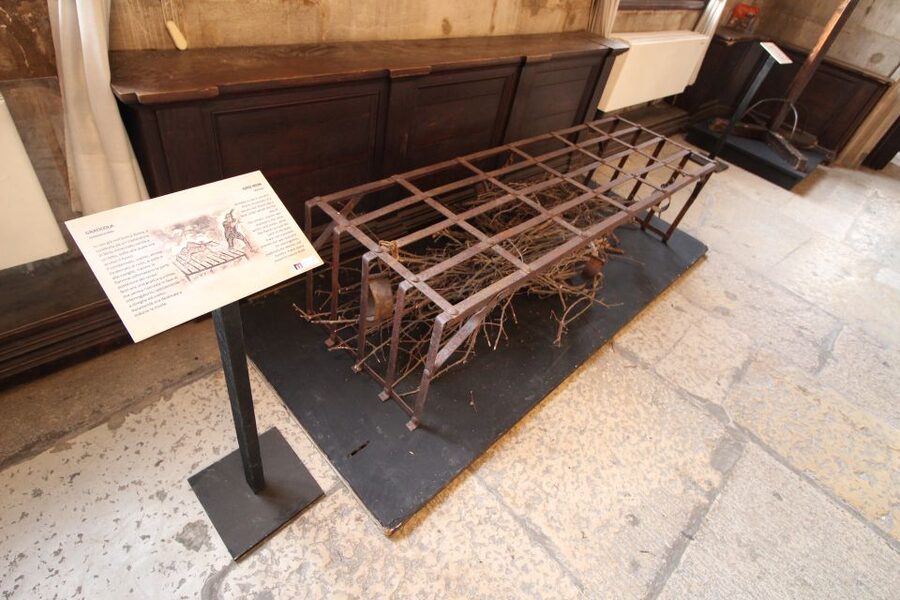
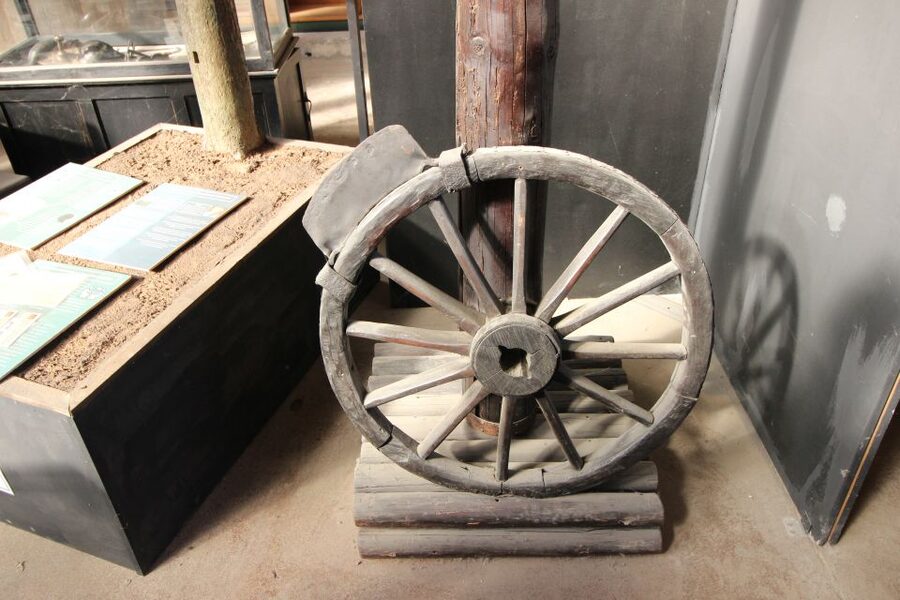
- Inquisition instruments on display: including a garrote, head crusher, and whipping post
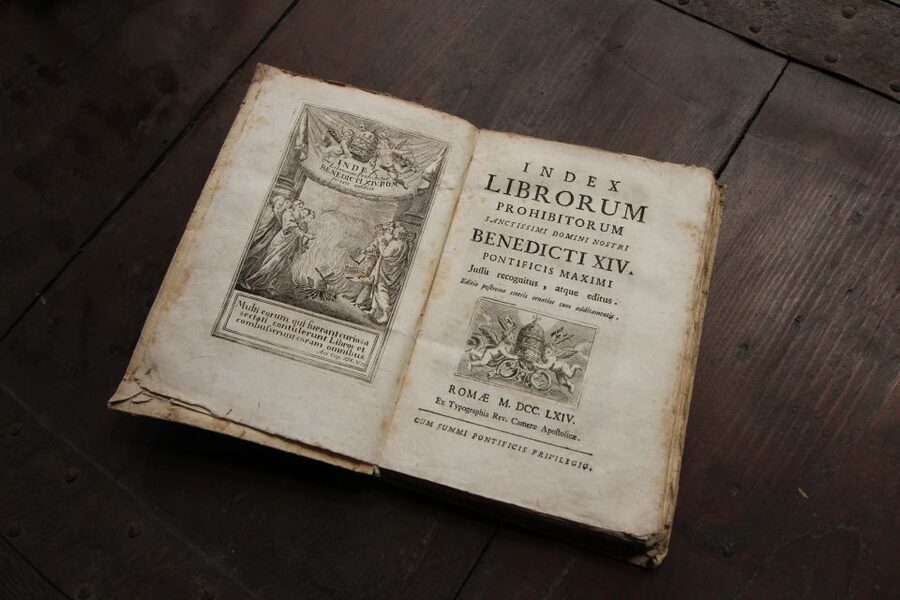
- Original-style documents and reproductions used by the Holy Office in witchcraft cases
- A women’s cell for people accused of witchcraft
- Casanova is mentioned as an example of someone accused of magic and the occult
Where the Prisons’ Palace sits (and how to reach it without wasting time)
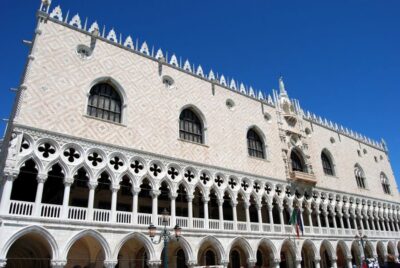
You’ll find the Prisons’ Palace near San Marco Square, close to the Doge’s Palace. The whole area is a maze of stone bridges and lanes, so your best move is to follow the simple routing advice: cross the bridge on the right side of the entrance area of the Doge’s Palace.
Important tip: don’t head to the Doge’s Palace entrance to start your visit. The Prisons’ Palace is nearby, but the entry points are different, and you don’t want to burn your one-hour window hunting for the right door.
Since the visit is about 1 hour, I’d treat this as a focused, stand-alone experience. It’s not a slow, meandering museum day. Plan it when you’re ready to concentrate, then use the rest of your time around San Marco for lighter sights.
Across the Bridge of Sighs and down into the cells
- Venice: Doge’s Palace, Bridge of Sighs & Prisons Guided Tour★ 4.3 · 2,549 reviews
- Venice: Doge’s Palace Skip-the-Line Tour with Prisons★ 4.1 · 1,637 reviews
- Venice: St. Mark’s Basilica, Doge’s Palace & Bridge of Sighs★ 4.2 · 1,513 reviews
- St Mark’s Basilica, Doge’s Palace & Casanova’s Prison Ticket★ 4.2 · 1,113 reviews
Maleficia: what you’re actually paying for at $11
At about $11 per person, you’re not paying for a long guided tour in a big group. You’re paying for entry to the Maleficia Exhibition inside a historic prison building, plus an audio guide in English, French, Italian, and Spanish. You also get the benefit of skipping the ticket line.
For Venice, that combo matters. Museums can add up fast, and this is a relatively low-cost way to see a specific theme—witchcraft persecution and the Inquisition—without paying for multiple separate tickets or tours.
Here’s the practical value: you get to connect the setting (the Palace of prisons) with the theme (instruments of justice used by the Holy Office). The price feels fair because the experience is concentrated. You’ll know within an hour whether you’re the type of traveler who wants this kind of history presented through objects and documents.
Entering the Prisons’ Palace: the setting does half the work
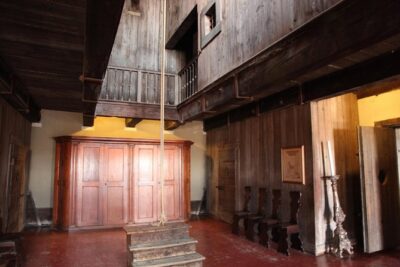
Even before you reach the exhibition rooms, the building sets the tone. This is one of those Venice places where the architecture already tells a story. A prison palace next to the Doge’s Palace doesn’t feel like a random museum location—it’s part of the same civic and judicial world.
Once you’re inside, the show leans into suggestive testimonies, documents, and objects. The format matters: instead of reading a single long panel, you’re moving through a sequence where you’re meant to connect the evidence and the mechanisms of punishment.
If you prefer history that’s anchored in how people lived and feared, this works well. You’re seeing justice portrayed through tools and written material connected to the Holy Office’s witchcraft persecution.
The Holy Office and witchcraft persecution: context you’ll get as you go
A big part of what makes this exhibition more than a collection of grim items is the way it frames the Holy Office’s role during the centuries of witchcraft persecution. You’ll encounter ancient documents and reproductions meant to reflect what was used in those cases.
The exhibition also connects the persecution to famous names. Giacomo Casanova is included as an example of someone accused of dabbling in magic and the occult. That detail alone changes the tone for a lot of people: it’s no longer only about anonymous fear. It’s about how the machinery of accusation could reach well-known figures too.
And the show isn’t only about men or general rumor. You’re shown a cell for women accused of witchcraft, which adds a specific human focus to the theme. It’s a reminder that the enforcement side had targets, not just abstract ideas.
Torture instruments you’ll see: what’s on display and what it means
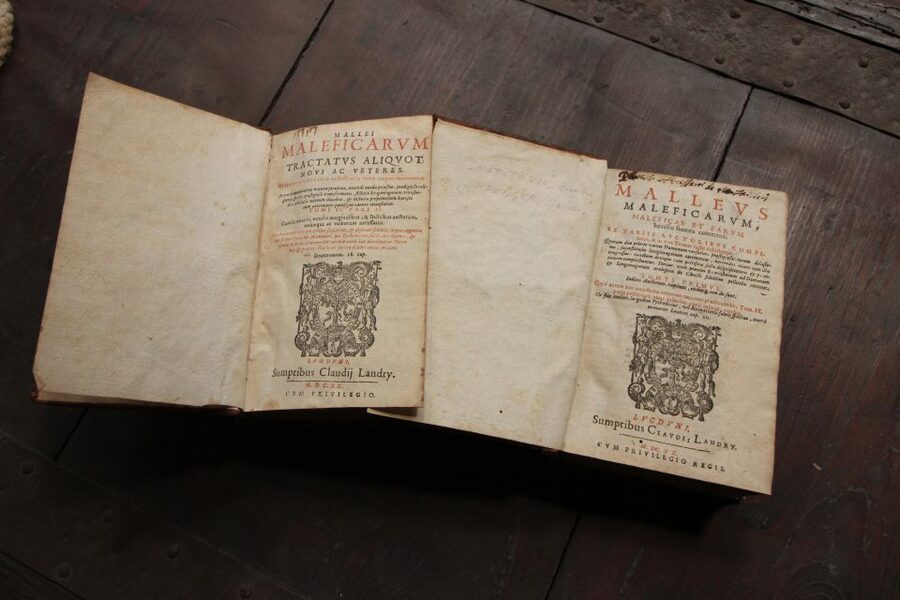
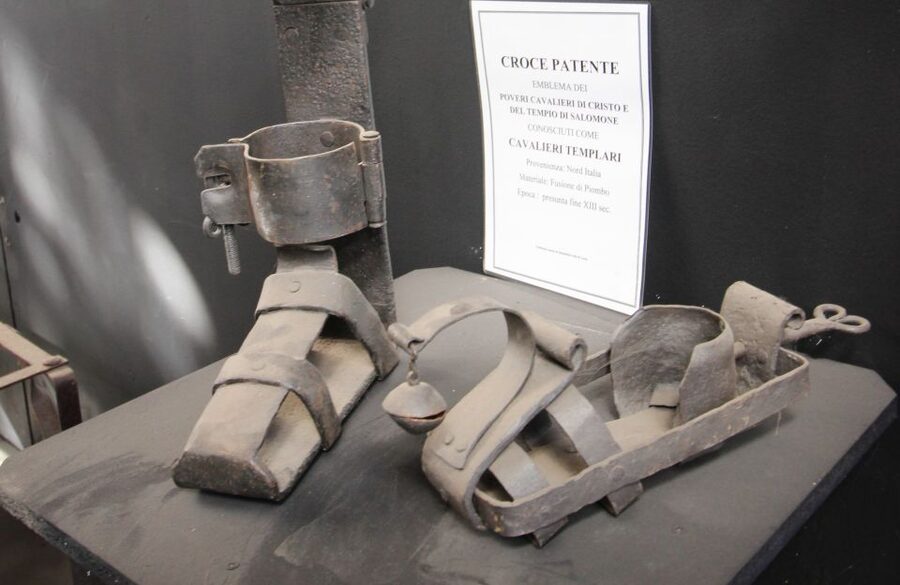
The centerpiece experience is the presentation of Inquisition “instruments of torture” linked to the Maleficia story. The exhibition specifically includes tools that were prescribed in the original Maleficia book and items presented as instruments of justice used to counter witchcraft accusations.
From the description, you can expect to see:
- A garrote, presented as an instrument of torture/justice
- A device associated with a head crusher
- A whipping post shown as an authentic object in the exhibition
- Instruments shown as a pillory and in connection with the garrote
You’re not likely to leave feeling proud of what you saw. But that’s not the point. The value is in understanding how systems of justice used physical mechanisms to enforce belief and punish accusations.
Practical advice: if you’re sensitive to disturbing themes, pace yourself. The exhibition is designed to prompt reflection on suffering and condemnation to death and torture in past eras. It’s presented in a way that asks you to think, not just look.


The audio guide: how to use it to get more from a short visit
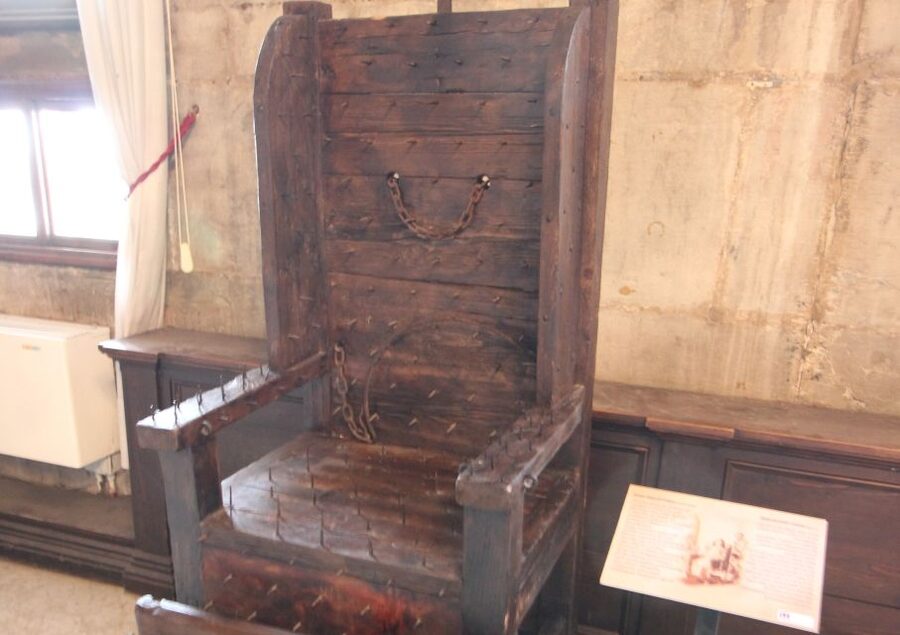
Since the experience lasts 1 hour, your audio guide becomes the main way to stretch the value of that time. You can pick up the commentary in multiple languages, including English, French, Italian, and Spanish.
The key move is simple: don’t play the audio on autopilot while you rush. Pause when you reach a major object or document. Listen to the explanation, then look again at the item with the context in your head.
One more practical note: because the subject is intense, the audio guide can help you stay grounded. It turns the display from shock-factor into structured understanding.
If you like to plan ahead, you can preview the audio guide link provided by the operator. That way you’ll know what kind of pacing and commentary style to expect once you’re in the rooms.
How long you should plan (and when to go)
The exhibition visit is scheduled for about 1 hour, and the Prisons’ Palace area is generally busiest around prime hours near San Marco. The opening window is 10:00 AM to 5:00 PM.
To make this feel worthwhile instead of rushed, give yourself extra breathing room. Arrive early enough to use your first minutes to settle in, orient yourself, and start the audio guide without stress. Then you can spend the “real” time with the documents and instruments.
Because it’s only an hour, this is also a good fit for travelers who want one intense cultural stop and then want the rest of the day for lighter walking around Venice. Think of it like a concentrated chapter rather than a full book.
Who this fits best (and who should think twice)
This is a strong match if you like:
- history told through objects and documents
- Venice sights tied to civic authority and justice
- a focused, one-hour museum experience with audio support
It can be a tough match if you:
- need step-free or easily accessible routes (this visit is not recommended for people with limited mobility)
- get uncomfortable with exhibits about torture, condemnation, and persecution
- prefer long guided lectures with lots of background (this is short by design, and you’ll likely want to add context elsewhere if that’s your style)
For some travelers, the Casanova mention and the women’s cell will feel especially meaningful. For others, the physical tools will dominate their takeaway. Either way, you’ll likely understand quickly what kind of experience this is: not entertainment, but a guided encounter with how justice was carried out.
Price, value, and the right expectations
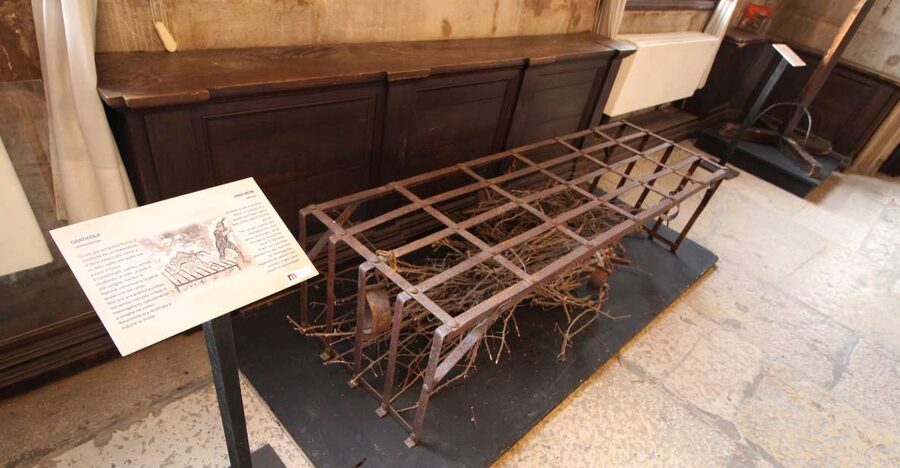
At $11 including the ticket to the Maleficia Museum and an audio guide, the math is simple. You’re paying for:
- admission to the exhibition inside Prisons’ Palace
- the audio commentary in multiple languages
- the convenience of skipping the ticket line
The value depends on your expectations. If you treat this like a short, themed museum visit, you’ll probably feel it’s worth your time and money. If you expected a full lecture on the politics, theology, and broader context of witchcraft across centuries, you might feel the session is too compact.
My advice: go in with a mindset of purposefully looking at evidence and tools, then use the rest of your Venice day to broaden the story through other sights, walking, and reading.
Practical checklist before you go
- Plan 1 hour for the exhibition and include a little extra time to reach the correct entrance
- Expect an intense theme tied to the Holy Office and witchcraft persecution
- Use the audio guide to turn the displays into understanding
- If mobility is an issue, consider alternative plans because it’s not recommended for limited mobility
Should you book it?
Book this if you want a short, serious cultural stop near San Marco that takes you inside the Prisons’ Palace and connects the theme of witchcraft persecution to documents and instruments of justice. The audio guide and the museum ticket make it a straightforward value play.
Skip it or reconsider if you’re worried about disturbing subject matter or if mobility needs make the route hard. Also, if you want a long, fully contextual explanation, plan to add other sources around Venice—because this one is intentionally time-limited.
FAQ
Where is the meeting point for Prisons’ Palace?
Prison Palace is close to San Marco Square beside the Doge’s Palace. You should cross the bridge on the right side of the entrance of the Doge’s Palace to reach it, and avoid going to the Doge’s Palace entrance.
What’s included in the ticket price?
Your ticket includes entrance to the Maleficia Museum and commentary by audio guide.
How long does the experience last?
The duration is 1 hour.
What languages is the audio guide available in?
The audio guide is available in English, French, Italian, and Spanish.
What are the opening hours?
The Prisons’ Palace is open from 10:00 AM to 5:00 PM.
Can I skip the ticket line?
Yes, you get skip the ticket line.
Is it suitable for people with limited mobility?
No. This experience is not recommended for people with limited mobility, and it is not suitable for people with mobility impairments.
What’s the cancellation policy?
There is free cancellation: you can cancel up to 24 hours in advance for a full refund.
More Tour Reviews in Venice
- Venice: Doge’s Palace Reserved Entry Ticket
★ 4.6 · 42,716 reviews - Venice: Grand Canal Gondola Ride with App Commentary
★ 4.1 · 23,020 reviews - Venice: Grand Canal Gondola Experience with Live Commentary™
★ 4.2 · 16,504 reviews - Boat Trip: Glimpse of Murano, Torcello & Burano Islands
★ 4.3 · 15,699 reviews - Venice: La Fenice Opera House Entry Ticket with Audio Guide
★ 4.6 · 11,742 reviews - Murano & Burano: Boat Tour with Guide & Glass Factory Visit
★ 4.3 · 10,716 reviews
Over the Bridge of Sighs
- Venice: Doge’s Palace, Bridge of Sighs & Prisons Guided Tour
★ 4.3 · 2,549 reviews - Venice: Doge’s Palace Skip-the-Line Tour with Prisons
★ 4.1 · 1,637 reviews - Venice: St. Mark’s Basilica, Doge’s Palace & Bridge of Sighs
★ 4.2 · 1,513 reviews - St Mark’s Basilica, Doge’s Palace & Casanova’s Prison Ticket
★ 4.2 · 1,113 reviews - Venice: Lords of the Night Prison’s Palace Cells & Tortures
★ 4.0 · 1,067 reviews - Venice: Crafted Gondola Under Breathtaking Bridge of Sighs™
★ 4.1 · 996 reviews
Fresh Off the Vaporetto: New Venice Reviews

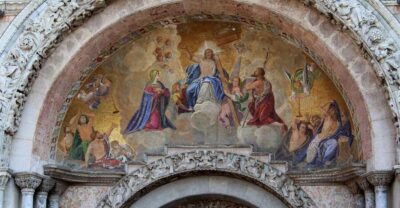
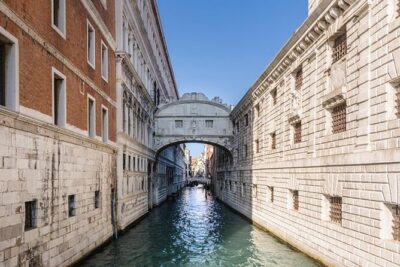
Bridge of Sighs & Prisons, compared.
 ★ 4.3Doge’s Palace, Bridge of Sighs & Prisons Guided TourFrom $682,549 reviews
 ★ 4.1Doge’s Palace Skip-the-Line Tour with PrisonsFrom $541,637 reviews
 ★ 4.2St. Mark’s Basilica, Doge’s Palace & Bridge of SighsFrom $511,513 reviews
 ★ 4.2St Mark’s Basilica, Doge’s Palace & Casanova’s Prison TicketFrom $541,113 reviews
 ★ 4.0Lords of the Night Prison’s Palace Cells & TorturesFrom $111,067 reviews
 ★ 4.1Crafted Gondola Under Breathtaking Bridge of Sighs™From $41996 reviews
 ★ 4.1Doge’s Palace, Bridge of Sighs, Prisons, Correr & Audio GuideFrom $54980 reviews
 ★ 4.5Doge’s Palace Prisons & Secret Itineraries Guided TourFrom $91665 reviews
Browse the lists this tour appears in