
Review · AUDIO TOURS
The Heart of Venice: A Self-Guided Audio Tour
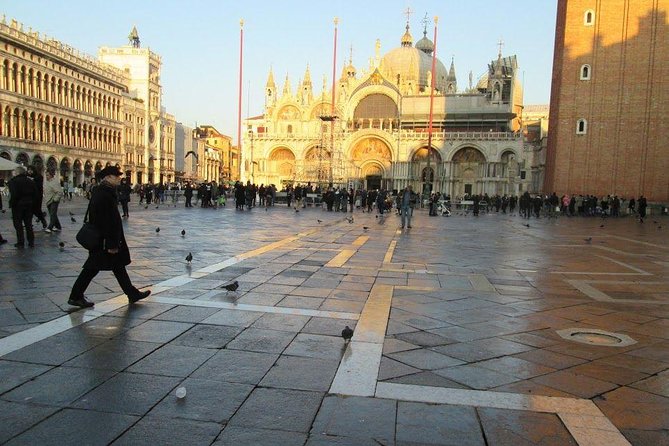
Venice can feel like a maze. This self-guided audio route turns it into a story-led walk, with stops queued up for you as you go. You get offline access to audio and maps, plus audio that starts when you arrive at each spot.
What I like most is how easy it is to explore at your own pace without losing the plot. The VoiceMap app also handles the heavy lifting with GPS directions to the start, so you’re not wasting precious time figuring out where to begin.
One thing to consider: this is very phone-and-app dependent. If you don’t want to rely on your smartphone for navigation and listening, a live guided tour will likely feel better.
In This Review
- Key points worth knowing
- Venice’s big sights, guided by audio, not a group pace
- How VoiceMap auto-play and offline maps keep you confident
- Piazza San Marco: the stories start at the city’s center
- Campo San Salvador’s tall marble column and the 1848 revolt
- Teatro Comunale Carlo Goldoni: comedy that shaped real people
- La Fenice and opera first performances in Venice
- Palazzo Cavalli and the tide science of Centro Maree
- Rialto Bridge: from old wood bascules to today’s span
- How much time should you give this one-hour loop?
- Who this self-guided tour is best for
- Price and value: $11.99 for a focused Venice loop
- Should you book The Heart of Venice audio tour?
- FAQ
- FAQ
- What language is the audio tour offered in?
- How long is the tour?
- Does the tour work offline?
- When does the audio start for each stop?
- How much does it cost?
- Where do I start and where do I end?
- Is this tour private?
- Do I need a smartphone?
- Is there any extra city access fee?
Key points worth knowing
- Auto-playing audio when you reach each stop, so you’re not constantly tapping around
- Offline audio, maps, and geodata, helpful when Venice signals get spotty
- Only about an hour, but designed for flexible wandering at your own pace
- A tight Venice highlights loop, from Piazza San Marco to Rialto Bridge
- Clear stop-by-stop themes, including opera, civic life, and the science behind high tide
Venice’s big sights, guided by audio, not a group pace
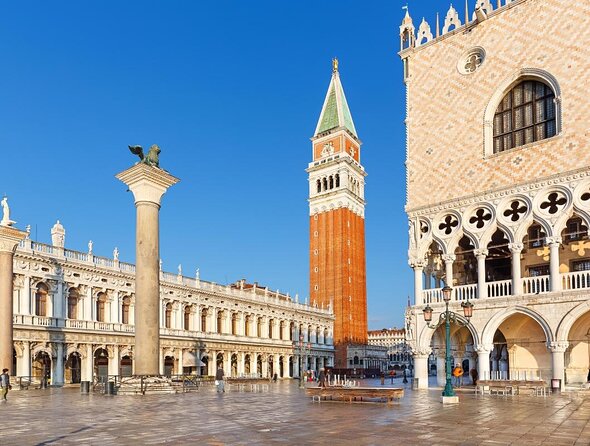
This tour is built for people who want the classic Venice highlights, but without being swept along with a crowd. At $11.99 per person for about 1 hour (approx.), it’s a value play if you’re the type who likes to pause, look up, and linger when something catches your eye.
You’re not just getting “background info.” The audio is organized around specific locations and stories, so the walk feels like a curated route even though it’s self-guided. And since the tour comes with lifetime access, you can redo it later when you want a second pass with fresh eyes.
The main trade-off is that it’s not interactive like a live guide. You can still control the pace, but the narration is fixed to the route’s stops, so you’ll get the most out of it if you’re happy following a guided outline on your own.
More days smoothed out by a local guide
- Venice: La Fenice Opera House Entry Ticket with Audio Guide★ 4.6 · 11,742 reviews
- Murano & Burano: Boat Tour with Guide & Glass Factory Visit★ 4.3 · 10,716 reviews
- Murano & Burano Islands Guided Small-Group Tour by Private Boat★ 4.5 · 7,580 reviews
- Murano, Burano, Torcello: Tour with Guide & Glass Factory★ 4.4 · 6,187 reviews
How VoiceMap auto-play and offline maps keep you confident
The mechanics are a big part of the appeal. The audio is set up to play automatically when you reach each spot, so you can focus on the buildings and squares instead of constantly checking your screen.
Even better, everything important works offline: audio, maps, and geodata. That means you’re not betting your experience on data coverage. Venice can be unpredictable for mobile signals, and the ability to keep going without service is a real quality-of-life upgrade.
Here’s a practical tip: before you start walking, give your phone a moment to be settled on the route and make sure your volume is up. If you walk too far from a stop or you’re moving very quickly through the area, the audio cues might not line up exactly the way you’d like.
Also, the tour isn’t a one-time event. You’re told there’s lifetime access to the tour, and you’ll be using the VoiceMap application to experience it on your phone.
Piazza San Marco: the stories start at the city’s center
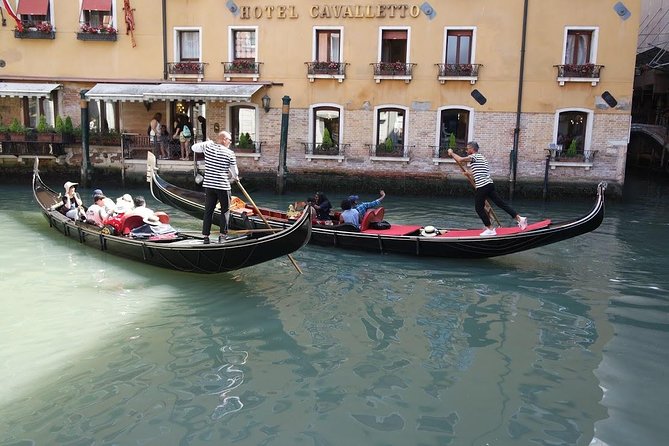
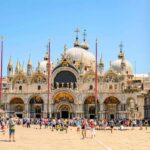
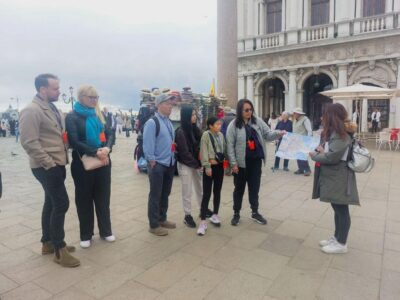
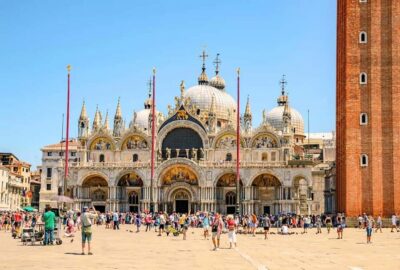
Your walk kicks off at Piazza San Marco at P.za San Marco, 328. This is the kind of place where you can stand still for ten minutes and still miss details, which is exactly why an audio narrative helps.
The narration frames the Piazza as Venice’s “drawing room of Europe,” while also grounding it in what Venetians call it: the Piazza. You’ll hear about high-drama moments tied to this space—state visits, religious processions, public executions, and Carnival. It’s not just postcard sightseeing; it gives you context for why this square has always been a stage.
One consideration: Piazza San Marco is crowded, and it’s easy to feel like you’re walking through a sea of people. The audio helps, but you’ll still want to manage your expectations. When crowds surge, you may need to step aside toward the edges of the square to get clean listening time.
Campo San Salvador’s tall marble column and the 1848 revolt
Next up is Campo San Salvador, where the standout is a tall marble column set in 1898. The story connected to it reaches back to the 17-month Venetian revolt against Austrian occupation in 1848 and 1849.
This stop is a good reminder that Venice isn’t only art and romance. The city also has civic anger, sacrifice, and political moments carved into stone. Even if you’re not a history person, the column’s presence makes the story feel grounded and real.
Why this stop is worth it: a square like Campo San Salvador can look simple at first glance, but the audio turns it into a living memorial. You’ll likely notice details you would otherwise walk past, like the column’s role as a focal point in the space.
The only drawback here is that Campo San Salvador is smaller than San Marco, so your audio timing can feel a bit tighter. Keep your phone accessible and take a couple of seconds to position yourself comfortably around the column.
Teatro Comunale Carlo Goldoni: comedy that shaped real people
From there, the tour points you toward the Teatro Comunale Carlo Goldoni, named for Carlo Goldoni, a Venetian playwright from the 1700s. Goldoni is described through his contribution to comedy in the Venetian dialect, and how his approach made characters feel more like real people.
This stop adds a human layer to your Venice walk. Instead of thinking only about monuments, you’re now thinking about language, performance, and everyday quirks. If you like theater, the audio makes it clear why Goldoni mattered: the style itself was a shift from earlier norms.
Practical note: theaters are often busy with events or closures depending on the day. The audio tour is designed as a storytelling stop, so you don’t need to count on entering the building. Plan to read the exterior vibe and let the audio do the guiding.
Worth weighing up before you book this Venice outing:



La Fenice and opera first performances in Venice
The route then hits La Fenice, Venice’s major opera house. The narration connects it to famous premieres, including Rigoletto and La Traviata, and it reminds you that La Fenice remains one of Italy’s important opera venues.
I love this pairing because Venice is famous for spectacle, but opera is a very specific kind of spectacle. This stop helps you see how the arts weren’t a side hobby; they were part of the city’s identity and public life.
A small reality check: opera houses can feel majestic from the outside, but the best experience depends on your timing. Since the tour is self-guided and about a one-hour loop, you’re mostly taking in the location and story, not necessarily planning a full performance.
Still, it’s a smart moment in the walk—especially if you’re pairing this with later plans like dinner nearby. The audio gives you talking points you can carry into your evening.
Palazzo Cavalli and the tide science of Centro Maree
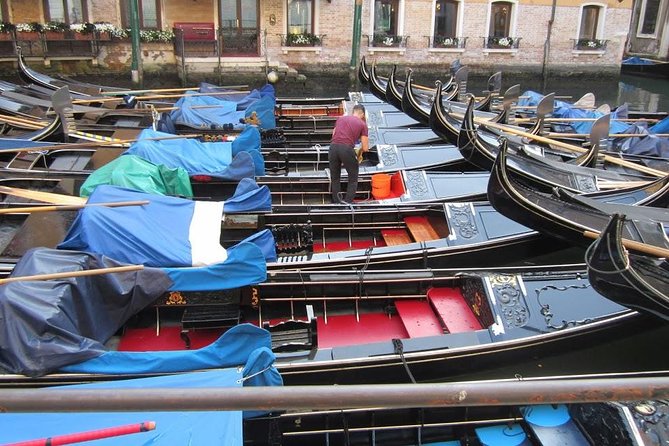
This is one of the most unexpected stops in the tour, and that’s a compliment. You’ll reach Palazzo Cavalli, described as the place where civil marriage services are conducted. On top of that, it houses the Centro Maree, the Tide Center.
Here’s the “Venice gets practical” part: you’ll hear about monitoring data related to tides and weather, and where the daily predictions are made—especially for high tide, known as acqua alta.
Why this stop feels so valuable: most Venice walks focus on what you can see. This one reminds you that Venice is also a system—water levels, timing, and prediction. Even if you’ve seen photos of acqua alta, this adds the mechanics behind the scenes.
If you’re visiting during a time when acqua alta could be possible, this stop can change how you think about your day. It doesn’t replace checking conditions, but it gives meaning to the local infrastructure meant to deal with water.
Rialto Bridge: from old wood bascules to today’s span

The final stop is Rialto Bridge at Ponte de Rialto, finishing near Rialto. The audio gives you a key detail: this is the third Rialto bridge of its kind.
It also connects the earlier versions to how ships moved through Venice. The older bridges were made of wood and were bascule bridges, meaning the center section could be raised to let ships with masts pass through.
This ending works because it ties together the city’s water-and-trade logic. You’re standing at a place built for movement, not just views, and the audio makes that functional design feel like a story rather than trivia.
One consideration: Rialto gets busy, and the bridge itself can slow down your ability to pause and listen. If you want the narration to land, plan to step back slightly onto nearby sides of the bridge area so you aren’t pressed by constant foot traffic.
How much time should you give this one-hour loop?
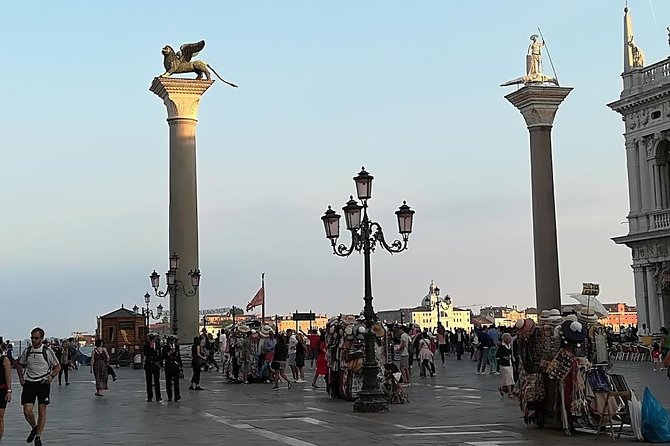
The tour is listed at about 1 hour, but Venice walking rarely stays on the dot. I’d treat the hour as a minimum for the listening portion, especially if you’re stopping to take photos or watching people work in the streets and squares.
A good approach is to walk with the audio first, then do a second pass around your favorite spot. Since you have lifetime access, you can repeat parts later without paying again.
Also, because the audio plays at each spot, you don’t need to constantly check your screen. Still, keep an eye on your battery. You’ll be using GPS and the VoiceMap app while you wander.
Who this self-guided tour is best for
This tour fits best when you want structure without a strict schedule. It’s ideal for first-time visitors who want a clear route that hits major sights like Piazza San Marco and Rialto Bridge, while also sneaking in culture stops like Carlo Goldoni and opera at La Fenice.
It also makes sense for people who dislike being trapped in a group rhythm. The selling point is self-guided GPS with auto-play narration, so you control how long you stop at each place.
If you’re the type who enjoys understanding what you’re seeing—why a square mattered, what a memorial column marks, or why tides are a big deal—this route will feel more rewarding than random wandering.
And if you’re short on time but still want context, the one-hour length is a plus. You’ll still have plenty of day left for meals and exploring side streets on your own.
Price and value: $11.99 for a focused Venice loop
At $11.99 per person, you’re paying for a guided experience without the cost of a live guide. That can be great value in Venice, where the price of “having someone else manage the logistics” can add up quickly.
The value improves because you’re not paying for just audio. You’re also getting offline access to maps and geodata, which helps you stay oriented even if you wander a bit off-route. Plus, lifetime access means you’re not buying something you’ll use only once.
What you should factor in is what’s not included: a smartphone (you need your own), and transportation plus food/drink. Also, any admission fees for places you might want to enter later on your own would be separate.
If you’re already carrying a phone and you’re comfortable using apps for navigation, this pricing feels fair for the time and structure you get.
Should you book The Heart of Venice audio tour?
Book it if you want a practical, story-led walk through Venice’s key highlights without joining a large group. The auto-playing audio, offline maps, and tight selection of stops—from San Marco to Rialto—make it a smart way to turn a busy city into something you can actually follow.
Skip it if you strongly prefer a live guide who can answer questions on the spot, or if you don’t want to depend on a smartphone for navigation and listening. This is built for self-guided motion, not for Q and A.
If you’re visiting for a short time, this one-hour format is also a good match. It gives you enough context to enjoy the sights now, and enough meaning that you won’t feel like you only saw the outside.
FAQ
FAQ
What language is the audio tour offered in?
It’s offered in English.
How long is the tour?
The duration is listed as about 1 hour (approx.).
Does the tour work offline?
Yes. It includes offline access to audio, maps, and geodata, so you do not need data during the tour.
When does the audio start for each stop?
The audio plays automatically when you reach each spot.
How much does it cost?
The price is $11.99 per person.
Where do I start and where do I end?
The start is P.za San Marco, 328, 30124 Venezia VE, Italy, and the end is Rialto Bridge (Ponte de Rialto, 30100 Venezia VE, Italy).
Is this tour private?
Yes. It’s described as a private tour/activity, meaning only your group participates.
Do I need a smartphone?
Yes, a smartphone is listed as not included, and you’ll use the VoiceMap application on your phone.
Is there any extra city access fee?
On certain dates, people staying outside Venice who are visiting for the day may need to pay a €5 access fee. You can check applicable days and exemptions at https://cda.ve.it.
Easier With a Venetian Guide
- Venice: La Fenice Opera House Entry Ticket with Audio Guide
★ 4.6 · 11,742 reviews - Murano & Burano: Boat Tour with Guide & Glass Factory Visit
★ 4.3 · 10,716 reviews - Murano & Burano Islands Guided Small-Group Tour by Private Boat
★ 4.5 · 7,580 reviews - Murano, Burano, Torcello: Tour with Guide & Glass Factory
★ 4.4 · 6,187 reviews - Murano & Burano Guided Tour by Private Boat with Glassmaking
★ 4.7 · 5,658 reviews - Venice Islands: Murano Glass & Burano Colors Guided Visit
★ 4.5 · 4,581 reviews
More Tours in Venice
- Murano & Burano: Boat Tour with Guide & Glass Factory Visit
★ 4.3 · 10,716 reviews - Doge’s Palace & St. Mark’s Basilica with Terrace Access Tour
★ 4.7 · 10,697 reviews - Venice: Burano, Torcello & Murano Boat Tour w/Glassblowing
★ 4.4 · 10,245 reviews - Murano, Burano and Torcello Half-Day Sightseeing Tour
★ 3.5 · 7,928 reviews - Murano & Burano Islands Guided Small-Group Tour by Private Boat
★ 4.5 · 7,580 reviews - Venice: Doge’s Palace and St Mark’s Basilica Walking Tour
★ 4.4 · 6,291 reviews
More Tour Reviews in Venice
- Venice: Doge’s Palace Reserved Entry Ticket
★ 4.6 · 42,716 reviews - Venice: Grand Canal Gondola Ride with App Commentary
★ 4.1 · 23,020 reviews - Venice: Grand Canal Gondola Experience with Live Commentary™
★ 4.2 · 16,504 reviews - Boat Trip: Glimpse of Murano, Torcello & Burano Islands
★ 4.3 · 15,699 reviews - Venice: La Fenice Opera House Entry Ticket with Audio Guide
★ 4.6 · 11,742 reviews - Murano & Burano: Boat Tour with Guide & Glass Factory Visit
★ 4.3 · 10,716 reviews
Fresh Off the Vaporetto: New Venice Reviews




Audio Tours, compared.
 ★ 4.6La Fenice Opera House Entry Ticket with Audio GuideFrom $1411,742 reviews
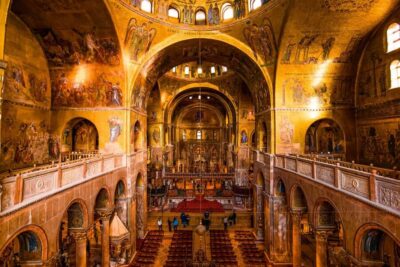 ★ 4.5St. Mark’s Basilica with Audio and Campanile OptionsFrom $372,093 reviews
 ★ 3.4St. Mark’s Basilica Ticket with Audio GuideFrom $361,645 reviews
 ★ 3.9St. Mark’s Basilica Skip-the-Line Ticket & Audio AppFrom $141,183 reviews
 ★ 4.1Doge’s Palace, Bridge of Sighs, Prisons, Correr & Audio GuideFrom $54980 reviews
 ★ 3.9Gondola Tour under the Bridge of Sighs & Audio GuideFrom $42617 reviews
 ★ 3.9Gondola Ride with Live Guide or Audio GuideFrom $42472 reviews
 ★ 3.2St. Mark’s Basilica Priority Ticket and Audio GuideFrom $34230 reviews