
Review · TOURS
Venice Film Tour: Explore Iconic Movie Locations
Venice turns into a movie set in two hours. This Venice Film Tour is a fun way to walk through the Floating City while your guide connects real corners to classic and modern scenes, from Orson Welles to James Bond. I especially liked the film-first storytelling and the way Valerio Coppo (deTourist Venice) keeps the walk lively with quick, clear explanations at each stop. I also love that you get real routing help—good paths that help you see more without feeling stuck with the biggest crowds.
One thing to plan for: it’s mostly outside and each location gets only about 10–15 minutes, so you’re there for cinematic context and photos, not for long museum time. It also depends on weather, so if conditions aren’t great, you might need a different date.
In This Review
- Key things I’d bet on before you book
- Venice Film Locations, Without Losing Your Whole Day
- Meeting Valerio Coppo: How the Tour Really Moves
- Price and Value: What $185.43 Buys You in Two Hours
- Stop-by-Stop in Venice’s Movie Trail: Station to the Ghetto
- Campo, Church Facades, and the Grand Canal’s Early Cinema Moment
- Rialto Markets: Depp’s Leap and Bond’s Fictional Collapse
- Santa Maria dei Miracoli and San Marco: Welles and the New Pope
- Ca’ Rezzonico and La Fenice: Bond Offices and a Theater’s Phoenix Return
- Bovolo Stairs and Spiderman Venice: Legends, Staircases, and Square Corners
- Indiana Jones Finds the X, and Summer Time Falls Into Place
- Gritti Palace: A Former Power House Turned Into Film-Friendly Luxury
- Santa Maria della Salute and the Painted Hall Detour
- Piscina Sant’Agnese and Hotel Danieli: Allen’s Jogging Scene to De Sica’s Last Film
- Doge’s Palace and San Marco Square: Bond’s Strange Transport and Welles at the Facade
- Practical Tips to Enjoy This Walk More
- Should You Book the Venice Film Tour?
- FAQ
- How long is the Venice Film Tour?
- What is the price per person?
- Is the tour in English?
- Does the tour include pickup and a mobile ticket?
- Is this a private tour?
- Are there any situations where I might need an extra Venice access fee?
- What happens if the weather is bad?
Key things I’d bet on before you book
- Valerio Coppo’s movie + Venice mix turns landmarks into plot points you’ll remember.
- Quick stops (often 10–15 minutes) make it ideal for a short visit window.
- Iconic and unexpected locations: Rialto markets, campo corners, and major theaters all in one walk.
- Tablet clip moments help you connect the setting to the actual scenes.
- Private tour feel: only your group participates, so questions are easier to fit in.
Venice Film Locations, Without Losing Your Whole Day
If you want Venice but you’re also the kind of person who can’t resist a movie reference, this tour hits the sweet spot. In two hours, you get a stitched-together view of the city as filmmakers have used it: water routes, square facades, churches, and theaters that instantly look familiar once you’re told what to look for. It’s a different way to see Venice than the usual checklist.
I also like how the tour focuses on places you can actually stand on and look around. You’re not just hearing a history lecture from a distance. Instead, you’re walking from one recognizable setting to the next, with time to stop, orient yourself, and notice details like facades, canal edges, and the angles that make a scene work on screen.
The biggest value here is speed with meaning. Many visitors spend their first Venice day mostly “going from A to B.” This tour gives you a reason to stop at each point—so your photos, your memories, and your understanding of the city all line up.
Still choosing? Line this one up next to a few Venice favourites.
- Venice: Doge’s Palace Reserved Entry Ticket★ 4.6 · 42,716 reviews
- Venice: Grand Canal Gondola Ride with App Commentary★ 4.1 · 23,020 reviews
- Venice: Grand Canal Gondola Experience with Live Commentary™★ 4.2 · 16,504 reviews
- Boat Trip: Glimpse of Murano, Torcello & Burano Islands★ 4.3 · 15,699 reviews
Meeting Valerio Coppo: How the Tour Really Moves
This tour is run by deTourist Venice and led by Valerio Coppo, a licensed guide. The vibe is friendly and practical. The best part is that he doesn’t just recite facts. He links locations to filming choices—why a place fits a story, and how the setting contributes to mood.
Because it’s offered in English, you won’t lose the thread if you’re not fluent in Italian. Also, you’re given a mobile ticket, and pickup is offered. That matters in Venice, where finding your meeting point can sometimes be more annoying than the walking itself.
You’ll also want to use the “ask mode.” One review I read (and you should do the same) leaned on the guide for practical local recs. After a movie-focused walk, it’s a great time to ask for where to eat nearby that’s actually worth your time.
One more detail that’s worth your attention: many stops are outside, so comfort matters. I’d plan for stairs, uneven paving, and the kind of footwork that Venice always demands.
Price and Value: What $185.43 Buys You in Two Hours
At $185.43 per person for about 2 hours, this isn’t the cheapest Venice option. But you’re paying for something that’s hard to DIY: a guided route that connects cinematic scenes to exact spots, plus a guide who can explain the context without turning it into a long lecture.
If you’re a film fan, the value jumps. The tour doesn’t treat movies as trivia. It treats them like a map. When your guide points out why a particular church frontage or canal-side angle works, you’ll start noticing what most people miss—small visual clues that make a set feel real.
It’s also a private tour/activity, meaning only your group participates. That often translates to better pacing and more room for questions—especially if your group is small. Group discounts are also offered, so if you’re traveling with friends or family, this price can feel more reasonable fast.
If you’re not into movies, you might still enjoy the city landmarks. But you’ll get more satisfaction if you at least recognize a handful of titles and directors named on the tour.
Stop-by-Stop in Venice’s Movie Trail: Station to the Ghetto
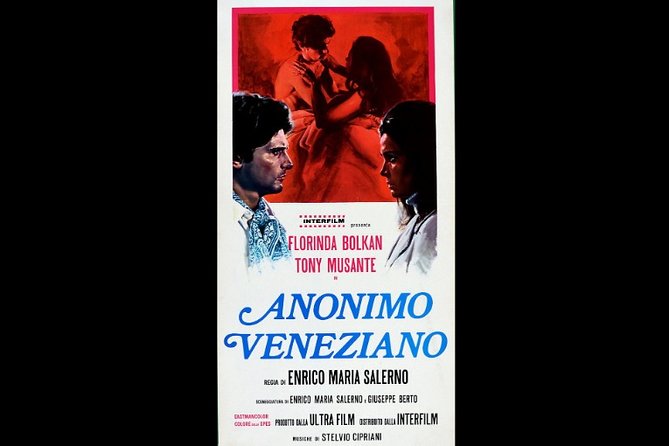
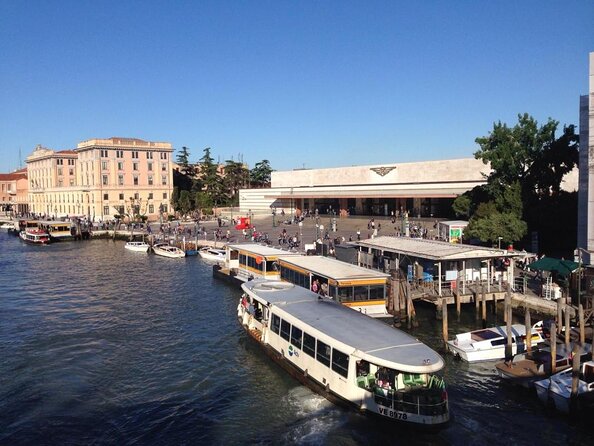
You start at a railway station that’s been used in multiple films. It’s a clever opening point because stations give Venice a built-in sense of arrival and momentum—exactly what cinema loves. From there, the tour eases you into Venice’s quieter layers rather than immediately dumping you into the most obvious tourist scenery.
One early standout is the association with Venice, the Moon and You (1958), where Alberto Sordi appears in a memorable way involving foreign tourists. Even if you don’t remember every scene, the idea sticks once you’re standing there: filmmakers often use arrival points to kick off the sense of wonder or confusion that Venice creates.
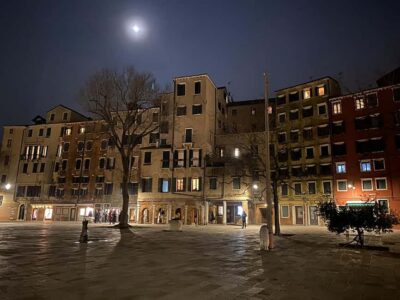
Stop 1 is at Campo del Ghetto, in the Jewish Ghetto area. Here, the tour connects the space to Senso (1954), where the passion between Livia Serpieri and Franz Mahler begins. This is a good moment to slow down. Campos can look similar if you rush through them, but with the film reference in your head, you’ll notice the scale of the square and how it feels like a stage.
Practical thought: this stop is brief, but it sets the tone. It tells you the tour won’t only chase famous facades. It will also use neighborhood spaces that feel lived-in.
Campo, Church Facades, and the Grand Canal’s Early Cinema Moment
Next comes Chiesa di San Stae (Eustachio). The tour points out how Don’t Look Back Now (1973) uses the idea of funeral boats. You’ll also learn why this church feels like a perfect Grand Canal overlook: the facade is imposing, and the setting is made for dramatic framing.
Then you move to the Grand Canal, one of Venice’s most recognizable backdrops. The tour highlights a specific cinema milestone: in 1896 Alexandre Promio boarded a gondola and filmed an early rundown of the canal. That’s the kind of detail that changes how you see the water. Suddenly, it’s not just a pretty route; it’s part of cinema’s origin story.
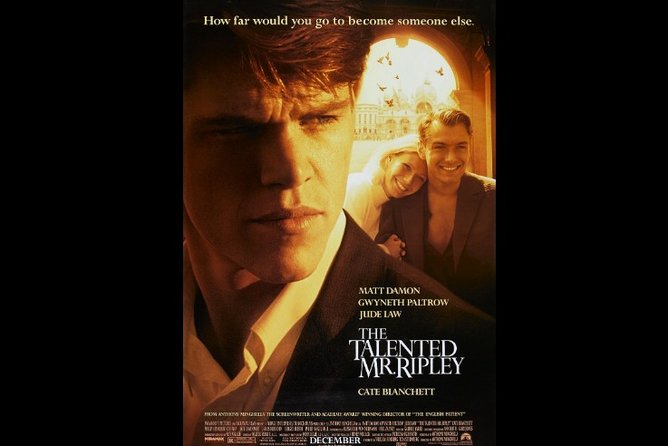
The Grand Canal is also linked to later films like The Talented Mr. Ripley (1999), where the apartment setting is described as a fusion of two buildings overlooking the canal. You’ll also hear about The Merchant of Venice (2004) and how the canal’s buildings show up again and again on screen.
What you should watch for at the Grand Canal: angles. The tour makes you look up at building lines and down toward the water in ways you’d normally skip. Those angles are exactly what film crews want because they read instantly as Venice.
Rialto Markets: Depp’s Leap and Bond’s Fictional Collapse
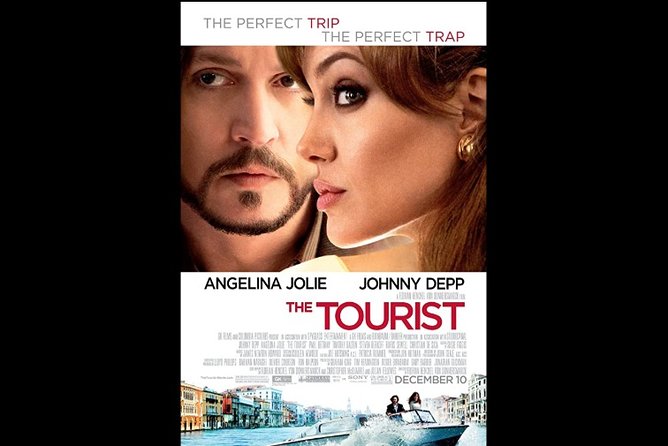
At Mercati di Rialto, you get a fun mix of real place and movie spectacle. The connection here includes The Tourist (2010), where Johnny Depp launches from a terrace onto a stall. Even without rewatching the film, that description makes you look at the market as more than a food stop—it’s a built-in stage for action.
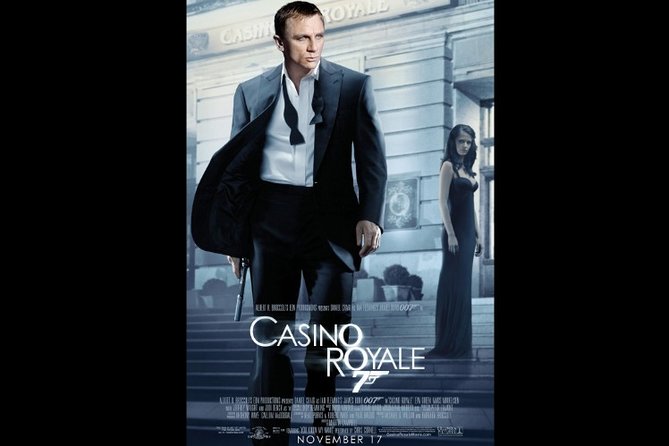
The tour also mentions a James Bond link: across the canal, the palace-collapse sequence from Casino Royale (2006) is referenced as a movie invention. This is one of those moments where you get a reality check that’s actually useful. You learn what’s real about the setting and what’s purely cinematic.
This is also a good stop for photos. Market areas give you energy and texture. Just keep in mind that you’ll likely be sharing space with regular Venice foot traffic, so plan for quick snapshots.
Santa Maria dei Miracoli and San Marco: Welles and the New Pope
Chiesa di Santa Maria dei Miracoli is one of those small churches that rewards attention. The facade is decorated with polychrome marble, and the tour connects it to Orson Welles’ Othello (1952), specifically the wedding scene of Otello and Desdemona.
Then the tour expands the reference in a clever way: it points out a fictional element around a flower shop connection. The flower shop where Licia Maglietta works in Bread and Tulips (1999) is placed just a few steps behind the church, in a campo nearby. Even though it’s fictional, it helps you understand how films borrow real corners to create an imagined neighborhood feel.
After that, you step into Scuola Grande di San Marco, a location tied to The New Pope (2019). This matters if you’re tired of only seeing the same Venice landmarks over and over. It shows Venice as a filming location for contemporary productions too, not only the classic-era crowd.
The drawback here is simple: you may want to look longer at marble details and interiors, but the stop timing is short. So come in with curiosity, and accept that you’re collecting highlights, not doing a full architectural study.
Ca’ Rezzonico and La Fenice: Bond Offices and a Theater’s Phoenix Return
Next up is Ca’ Rezzonico, a palace that’s now a civic museum. For the tour, it’s the fictional Drax’s office location from Moonraker (1979). You’ll likely notice how a grand interior—or the grandness of the space itself—fits the “big villain office” vibe Bond stories love.
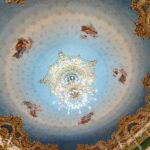
Then the tour focuses on Teatro La Fenice. This one is a highlight because it ties cinematic performance to real-world tragedy and rebuild. In Senso (1954), the story begins during a performance of Il Trovatore at La Fenice. The tour also explains that the theater had a devastating fire in 1996, and the current building reopened in 2003.
The phoenix connection is more than a name. The tour explains that La Fenice translates to the phoenix, linked to earlier damage and return: the theater had already been partially destroyed by fire in 1836 and had risen again. That detail makes the building feel like a character with its own plot arc.
Time for a reality check: you’ll probably get more out of this stop if you’re comfortable doing quick exterior and lobby-area viewing. The theater is spectacular, but it’s not a long “sit and watch” moment in a 2-hour tour.
Bovolo Stairs and Spiderman Venice: Legends, Staircases, and Square Corners
At Scala Contarini del Bovolo, you get a legend-driven location. The tour notes a traditional association with Desdemona’s house in Othello (1952), and explains that Orson Welles chose this palace setting for Brabanzio. Even if you treat the legend lightly, it’s still a great excuse to slow down and look at the staircase geometry.
Then you head to Campo Santa Maria Formosa, a corner that was visually “destroyed” for Spider-Man: Far From Home (2019). The point isn’t to re-create the disaster. It’s to see how filmmakers use real Venetian spaces and then “edit reality” for big action sequences. When you stand there afterward, the quiet normalcy feels extra funny.
This is also where I think good guides shine. A lesser guide might just say the filming fact and move on. Valerio-style guiding (based on what you’ll experience) tends to help you connect the space to the scene so your brain can match what you see now to what you saw on screen.
Indiana Jones Finds the X, and Summer Time Falls Into Place
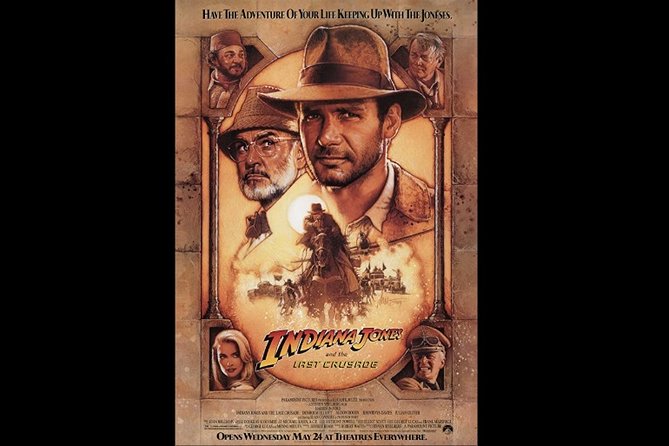
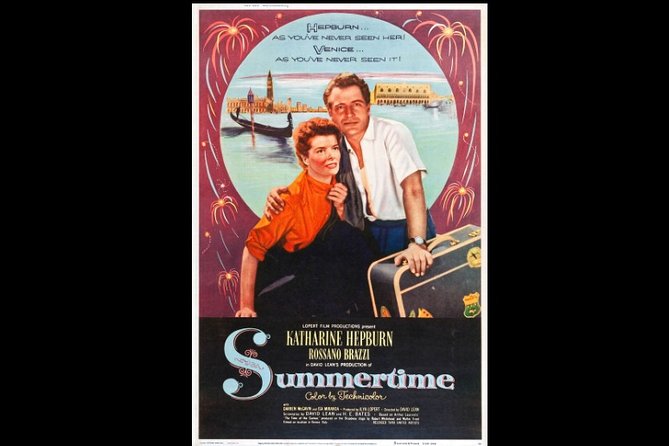
Campo San Barnaba brings you two different classic Venice vibes. The tour describes how in Indiana Jones and the Last Crusade (1989), the basements of San Barnaba church are where Indiana Jones finds the X that never indicates the place to dig. Then it connects the area to Summer Time (1955), where Katharine Hepburn’s character wanders and accidentally falls into the canal.
It’s a strong stop because the stories are playful but grounded: Venice’s canals and stairways provide natural “movie mechanics.” You’ll likely start imagining how filmmakers choreograph movement here.
The tour also mentions another movie tie-in: the remake of The Italian Job (2003) used this location too. If you like recognizing patterns—how certain Venice corners become “go-to” scenes—you’ll appreciate hearing multiple references tied to one compact area.
Gritti Palace: A Former Power House Turned Into Film-Friendly Luxury
Then you reach The Gritti Palace, a luxury hotel (Luxury Collection). The tour gives a clear historical arc: it was once Doge Gritti’s family palace and also used as a residence for Vatican ambassadors before becoming the hotel it is today. It also cites famous guests including John Ruskin, Ernest Hemingway, and Somerset Maugham.
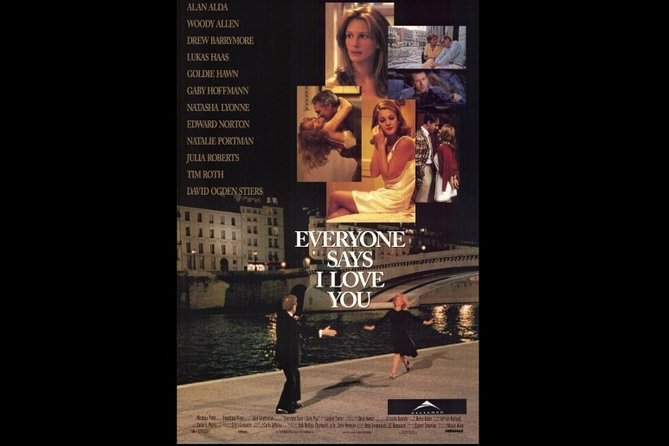
For the film connection, it notes scenes from Woody Allen’s Everyone Says I Love You (1996). This stop is a nice shift in tone—from campos and churches to a polished setting that still feels Venetian.
If you’re wondering why a luxury hotel belongs on a film tour, the answer is simple: filmmakers love settings that look expensive and instantly readable on camera. Venice gives them that look naturally, and places like Gritti make it even easier.
Quick tip: at hotel stops, be respectful of entrances and keep your viewing to the areas you’re allowed to access.
Santa Maria della Salute and the Painted Hall Detour
At Basilica di Santa Maria della Salute, you’ll hear a connection to Lara Croft: Tomb Raider (2001). The tour explains that in that film, an Illuminati sect gathering is shown here, but the room you see is actually the Painted Hall of the Old Royal Naval College in London. It’s a useful reminder that movie realism often mixes locations.
The basilica also connects directly to The Talented Mr. Ripley (1999). The tour links it to a dialogue sequence where the conversation takes place on a terrace across the canal, tied to the Hotel Westin Europa & Regina.
This is one of the most interesting learning moments on the whole tour: it trains you to think like a filmmaker. Venice becomes the recognizable exterior, while other places may supply interior sets.
Piscina Sant’Agnese and Hotel Danieli: Allen’s Jogging Scene to De Sica’s Last Film
Next is Piscina Sant’Agnese, a location tied to the jogging routine in Woody Allen’s Everyone Says I Love You, where Julia Roberts plays the role of Jill. The tour also connects this spot to Katharine Hepburn in Summer Time (1955), where she refreshes herself.
Then comes Hotel Danieli, another major shift in scale and status. The tour references its historic guest list (including Wolfgang Goethe and Richard Wagner) and its broader cultural significance, then links it to films. It mentions Vittorio de Sica’s last movie The Journey (1974) starring Sophia Loren and Richard Burton. It also connects Hotel Danieli to Moonraker (1979) as the hotel of Holly Goodhead.
Finally, it notes a connection to Viaggi di Nozze (1995), describing a first tragicomic wedding night scene between Raniero Cotti Borroni and Fosca.
If you like classic film references, this stop will likely make you feel like Venice has been starring in movies for generations. If you’re less into the titles, you can still appreciate the fact that the building’s grandeur provides a visual “shortcut” for cinema.
Doge’s Palace and San Marco Square: Bond’s Strange Transport and Welles at the Facade
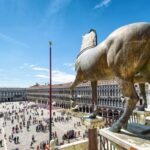
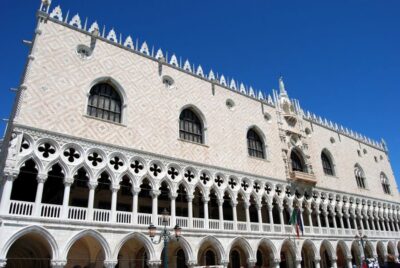
The tour ends around Doge’s Palace, tying the area to some of the biggest-screen moments in its set of connections. It includes Moonraker (1979), where James Bond uses a gondola-hovercraft that crosses San Marco square. It also notes Casino Royale (2006), describing Bond’s hotel view right on the square.
The tour also connects Orson Welles to a dramatic dialogue scene in Othello (1952), pointing to the side facade south of the basilica. And it links the area to The Talented Mr. Ripley (1999), with the final scene taking place at café tables in the Piazza.
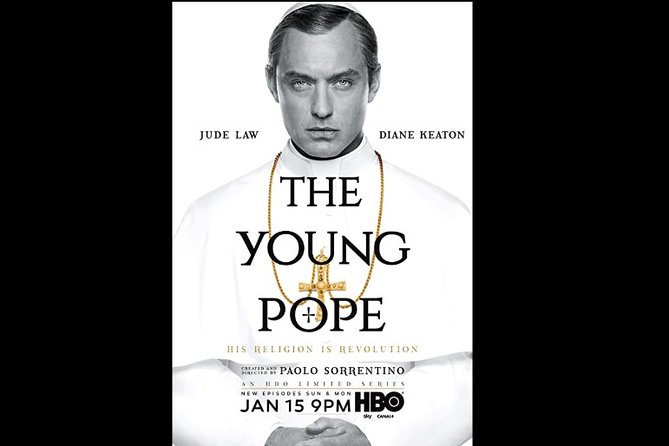
A contemporary note rounds it out: the tour mentions that Paolo Sorrentino filmed scenes for The Young Pope in this square too.
This is the payoff zone. After walking through churches, staircases, and markets, you end at one of Venice’s most cinematic stages. Even if you’re not a Bond superfan, the scale of the square and the presence of Doge’s Palace make it feel like the city knows it’s been watched.
Practical Tips to Enjoy This Walk More
A film tour can be fun, but Venice has its own rules. Keep these in mind:
- Wear shoes you trust. The walking adds up over 2 hours, and Venice surfaces don’t forgive.
- Bring water and plan for sun or shade. Short stops don’t remove the need for hydration.
- Have one movie refresh in your head before you go. Even knowing a few titles helps the connections land faster.
- Ask Valerio for food ideas. One review singled that out, and it makes sense: after seeing where films filmed, you’ll want a real meal nearby.
Also remember: this experience requires good weather. If it’s canceled due to poor conditions, you’ll be offered a different date or a full refund.
Should You Book the Venice Film Tour?
Book it if you fit at least one of these profiles:
- You love movies and want Venice tied to scenes you already know.
- You’re short on time and want a high-effort, guided route instead of wandering aimlessly.
- You enjoy learning details you can use on future trips, like why certain angles and facades get filmed again and again.
Skip it (or reconsider) if:
- You mainly want long stays in museums and interiors, because this is a short-stop walking format.
- You’re traveling at a time when weather is unpredictable and you don’t have flexibility.
If you’re a cinephile, this tour is a genuinely smart way to spend a morning or afternoon in Venice. You leave with the city feeling less like a postcard and more like a set that’s still changing every day.
FAQ
How long is the Venice Film Tour?
It’s about 2 hours.
What is the price per person?
The price is listed at $185.43 per person.
Is the tour in English?
Yes, it’s offered in English.
Does the tour include pickup and a mobile ticket?
Pickup is offered, and you’ll receive a mobile ticket.
Is this a private tour?
Yes. Only your group will participate.
Are there any situations where I might need an extra Venice access fee?
On certain dates, people staying outside of Venice who plan to visit for the day may need to pay a €5 access fee. Details and exemptions are available at https://cda.ve.it.
What happens if the weather is bad?
This experience requires good weather. If it’s canceled due to poor weather, you’ll be offered a different date or a full refund.
More Tours in Venice
- Murano & Burano: Boat Tour with Guide & Glass Factory Visit
★ 4.3 · 10,716 reviews - Doge’s Palace & St. Mark’s Basilica with Terrace Access Tour
★ 4.7 · 10,697 reviews - Venice: Burano, Torcello & Murano Boat Tour w/Glassblowing
★ 4.4 · 10,245 reviews - Murano, Burano and Torcello Half-Day Sightseeing Tour
★ 3.5 · 7,928 reviews - Murano & Burano Islands Guided Small-Group Tour by Private Boat
★ 4.5 · 7,580 reviews - Venice: Doge’s Palace and St Mark’s Basilica Walking Tour
★ 4.4 · 6,291 reviews
More Tour Reviews in Venice
- Venice: Doge’s Palace Reserved Entry Ticket
★ 4.6 · 42,716 reviews - Venice: Grand Canal Gondola Ride with App Commentary
★ 4.1 · 23,020 reviews - Venice: Grand Canal Gondola Experience with Live Commentary™
★ 4.2 · 16,504 reviews - Boat Trip: Glimpse of Murano, Torcello & Burano Islands
★ 4.3 · 15,699 reviews - Venice: La Fenice Opera House Entry Ticket with Audio Guide
★ 4.6 · 11,742 reviews - Murano & Burano: Boat Tour with Guide & Glass Factory Visit
★ 4.3 · 10,716 reviews
Fresh Off the Vaporetto: New Venice Reviews
Tours, compared.
 ★ 4.3Murano & Burano: Boat Tour with Guide & Glass Factory VisitFrom $2310,716 reviews
 ★ 4.7Doge’s Palace & St. Mark’s Basilica with Terrace Access TourFrom $12310,697 reviews
 ★ 4.4Burano, Torcello & Murano Boat Tour w/GlassblowingFrom $2810,245 reviews
 ★ 3.5Murano, Burano and Torcello Half-Day Sightseeing TourFrom $257,928 reviews
 ★ 4.5Murano & Burano Islands Guided Small-Group Tour by Private BoatFrom $367,580 reviews
 ★ 4.4Doge’s Palace and St Mark’s Basilica Walking TourFrom $1016,291 reviews
 ★ 4.4Murano & Burano Panoramic Boat Tour w/ GlassblowingFrom $296,212 reviews
 ★ 4.4Murano, Burano, Torcello: Tour with Guide & Glass FactoryFrom $286,187 reviews