
Review · VENICE BACKSTREET WALKING TOURS
Discover the Hidden Gems of Venice: Guided Walking Tour
Venice hits different when you skip the crush. This 90-minute walk is built around quiet squares, narrow calles, and a smart path that still lands you at the Rialto Bridge views. I love the way it starts in Campo San Zaccaria and gives you a real feel for everyday Venetian streets before the big landmarks show up. I also like that you spend time inside San Giovanni e Paolo, not just outside taking selfies. One thing to consider: it’s a walking tour through old streets, so you’ll want comfortable shoes and a bit of stamina for uneven ground.
You’ll follow an expert guide through a route designed to keep you away from the busiest bottlenecks, while still hitting highlights people actually come to see. Past guides such as Estela and Emma were praised for explaining details with calm confidence and for pointing out interesting corners you might otherwise miss. If you prefer a slow, rest-heavy tour, this one may feel like it moves at a lively pace.
In This Review
- Key things I’d bet on in this tour
- Why Campo San Zaccaria is a smarter starting point
- The narrow calles: where Venice feels real
- Santa Maria Formosa: history and calm in a quieter square
- San Giovanni e Paolo: the Pantheon of Venice moment
- Campo Santa Marina: the local charm pause
- Spotting S. Giorgio dei Greci’s tower on the way
- Rialto Bridge: classic view, guided approach
- The loop back to Campo San Zaccaria
- Price and time: how $17 fits into Venice
- Who should book this walking tour
- Should you book it?
- FAQ
- Is this tour 90 minutes long?
- Where does the tour meet?
- How much does it cost?
- What languages are available?
- Which major sights will I visit?
- Is entry included for any churches?
- Will I see the Grand Canal view?
- What’s the cancellation policy?
- Can I reserve now and pay later?
- Is this tour suitable for wheelchair users?
Key things I’d bet on in this tour
- Campo San Zaccaria first: you start in a charming local square instead of the usual crowded entrances.
- Callettes and narrow calles: you’ll walk the skinny streets that make Venice feel like Venice.
- San Giovanni e Paolo inside: you get access with the church entrance included.
- Pantheon of Venice stop: the guide connects what you see with why this church is famous.
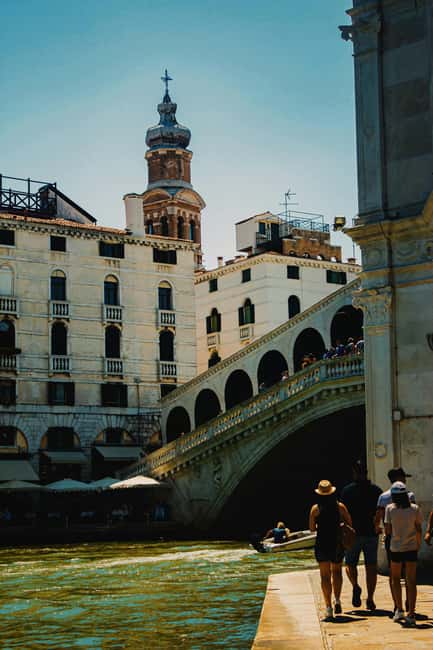
- Rialto Bridge view at the end: you finish at a classic Grand Canal perspective.
- Local squares like Santa Marina: you’ll spend time in calmer public spaces, not just monuments.
Why Campo San Zaccaria is a smarter starting point
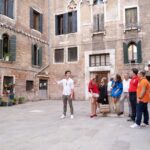
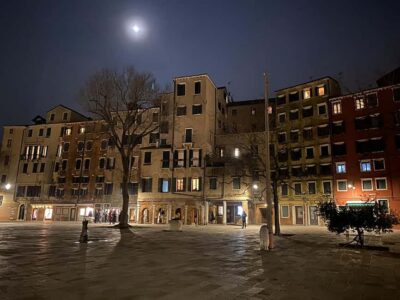
The tour begins at Campo San Zaccaria, in front of the Church of San Zaccaria. That matters, because it sets the tone early: you’re not instantly funneled into the loudest tourist traffic. Instead, you get a chance to notice how Venice works at street level—small turns, changing sightlines, and daily life happening along the edges.
Campo San Zaccaria is also a great “orientation” spot. After a short moment there, you can start to understand how the rest of your walk will unfold: narrow streets connect quiet spaces, and the city feels like it’s made for wandering. And since the plan loops back to this area, you’ll finish knowing exactly where you are relative to major sights.
On foot over the bridges, more routes
- Venice: Doge’s Palace and St Mark’s Basilica Walking Tour★ 4.4 · 6,291 reviews
- Venice: San Marco to Rialto Walk & Spritz Like a Local★ 4.2 · 3,651 reviews
- Venice Walking Tour and Gondola Ride★ 3.5 · 3,630 reviews
- Private 3 hrs Venice Tour: St Mark’s, Walking tour & Boat tour★ 4.0 · 3,372 reviews
The narrow calles: where Venice feels real
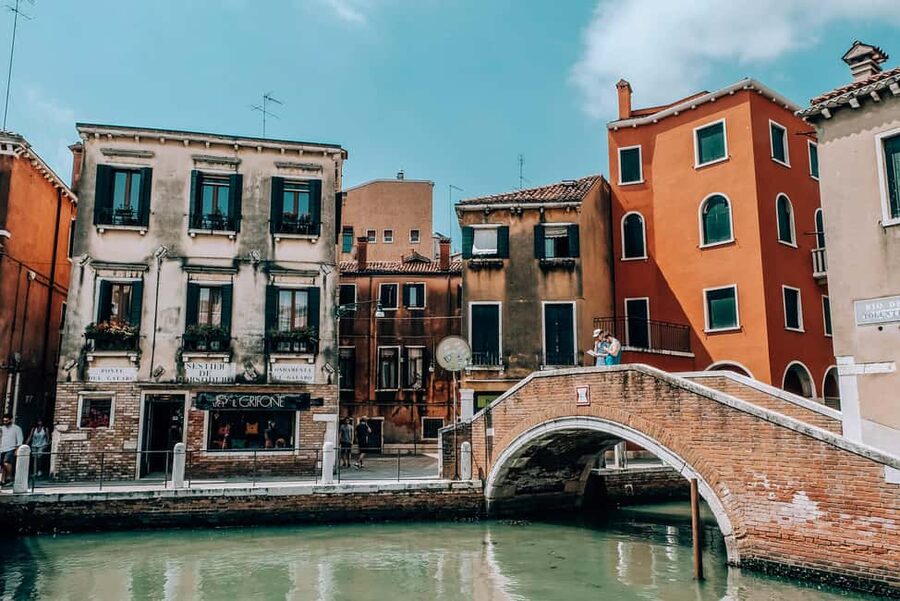
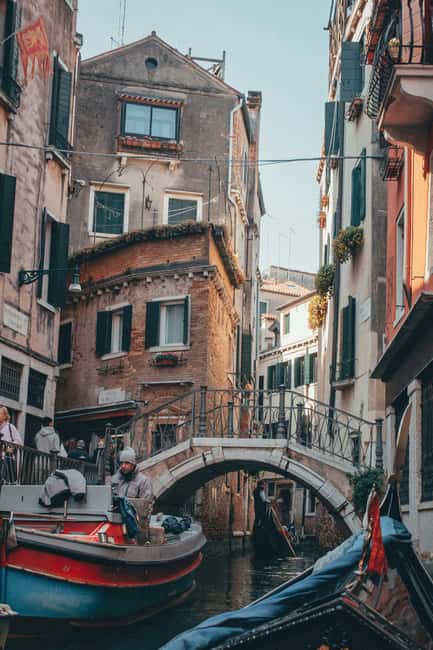
Once you leave the square, you’ll move through the callettes and narrower calles—those tight little lanes where buildings seem to lean closer. This is the kind of walking that makes Venice click. You’re close to the architecture, you see how facades meet over street corners, and you get a sense of scale that you just don’t get from a canal boat.
This segment is valuable because it’s not just “transit time.” It’s the difference between visiting Venice and actually moving through Venice. The goal is to show you the quieter side: the kind of streets and passages locals use all the time, without the feeling that you’re being dragged through a theme park route.
A practical note: these streets can be uneven, and the tour is strictly on foot. If you’re used to flat pavements, slow your pace and keep your eyes on your footing. You’ll enjoy more if you feel stable.
Santa Maria Formosa: history and calm in a quieter square
Next, you’ll head to Santa Maria Formosa, described as a quiet square full of history and beauty. What I like about this stop is the contrast. You get to pause in a public space that feels less like a photo stop and more like a real square where people can be present.
Squares are where you reset your senses in Venice. After the tight lanes, you need open space to breathe. Santa Maria Formosa gives you that chance, and it also helps you connect the route visually—so when you later see bigger icons, you understand how you’re positioned in the city.
The “value” here is subtle but real: you’ll learn Venice’s rhythm. Tight streets, open squares, then back again. That rhythm is a big part of why a guided walk can feel more meaningful than going solo.
San Giovanni e Paolo: the Pantheon of Venice moment
The standout church stop is San Giovanni e Paolo—also called the Pantheon of Venice. The nickname is a big deal, because it signals this church isn’t just a pretty building. It’s part of Venice’s identity, tied to important figures and big-city significance.
Here’s what to expect as you approach: you’ll feel the shift from street-level Venice to something more monumental. You’re still in the neighborhood fabric, but the church changes the atmosphere. Once you’re inside, you’re there for the experience, not just a quick glance.
This is also where your guide really earns their fee. A good guide helps you look properly: what to notice first, how to connect details you might otherwise miss, and how the architecture and symbolism fit together. Guides like Emma and Estela were praised for calm precision, and this church is the kind of stop that rewards that style of explanation.
If churches aren’t your thing, you might still appreciate this one because it’s described as the Pantheon of Venice. That framing gives you a reason to pay attention beyond aesthetics.
Campo Santa Marina: the local charm pause
After San Giovanni e Paolo, the route continues to Campo Santa Marina, a peaceful spot with local charm. This is the kind of stop that helps keep the tour from feeling like a checklist of landmarks. You’ll have a moment in an open-air setting before you move toward the iconic finale.
What I like about building in a calmer square after a major church is that your energy stays steady. By the time you reach the Rialto Bridge area, you’re not exhausted. Instead, you’re ready to take in the view with fresh eyes.
This stop also keeps the walk grounded. Venice can get dramatic fast, and Campo Santa Marina is a reminder that the city is lived in, not only photographed.
Venice at walking pace, more of the calli
Spotting S. Giorgio dei Greci’s tower on the way
Included in the experience is the Tower of S. Giorgio dei Greci. You may not spend a long time there, but tower moments matter in Venice because they work like visual anchors. A tower helps you orient yourself across a maze of streets and canal angles.
Even when you only get a passing look, it’s useful. Towers give you a sense of direction, height, and history—often becoming a reference point you’ll notice later on your own. If you’re the type who likes to map your walk in your head, this is a nice addition.
Rialto Bridge: classic view, guided approach
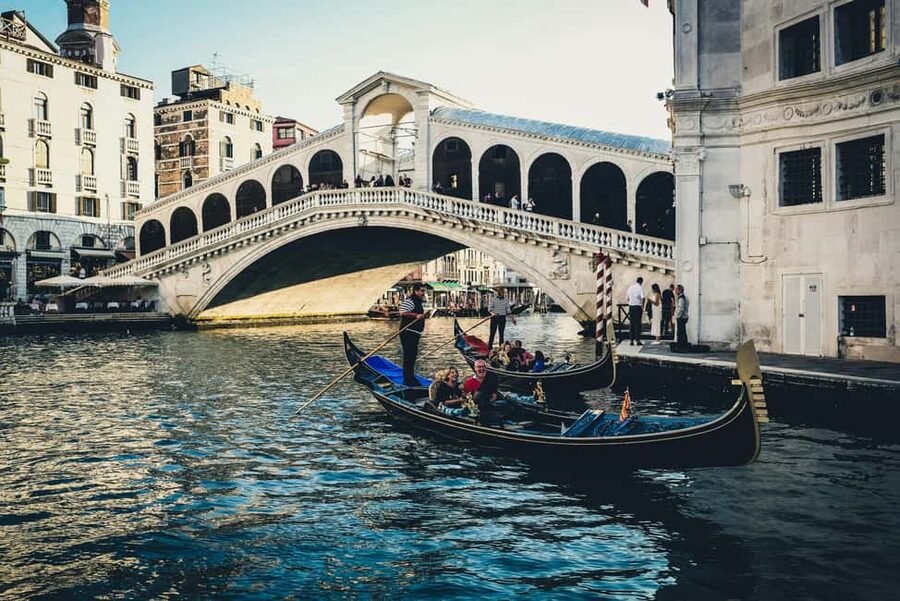
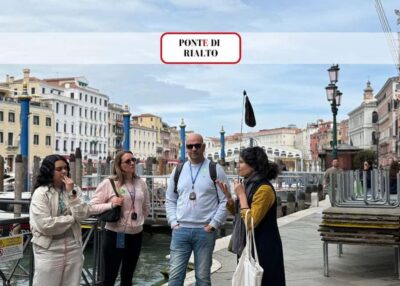
Then you’ll arrive at the Rialto Bridge—the iconic spot many people picture before they even land in Italy. The plan is timed so you’re not just rushing straight to it. You’ve already walked through squares and quieter calle areas, so the view from the bridge feels earned.
The tour calls out the Grand Canal perspective, and that’s the main reason to come. Rialto is one of those places where the scale becomes obvious. Streets and buildings suddenly make sense in relation to the waterway that powers the city.
One small piece of advice: don’t spend your whole time looking down at the crowd. Look at the angles—where the bridge frames buildings on both sides. With a guide in front of you, you can also ask what to notice before you settle into your own viewing rhythm.
The loop back to Campo San Zaccaria
The walk finishes by returning to Campo San Zaccaria. I like tours that loop back like this, because it reduces the “where do I go now?” stress. You end where you started, which makes it easier to plug the rest of your day into a plan—whether that’s more wandering, a café break, or heading toward another attraction.
It also gives you a mental connection between the beginning and end. After you reach Rialto Bridge and see the larger picture, you can look back at the route you took and understand how the city ties together.
Price and time: how $17 fits into Venice
At $17 per person for 90 minutes, this is the kind of tour that works as a first-day or mid-trip activity. Venice can swallow your time fast, and paying for a guided walk can actually save effort. You get a structured route through key areas while still keeping the pacing flexible enough to enjoy the streets.
You’re also getting several “value” items for the price: a professional guide, church entrance to San Giovanni e Paolo (and the listed church visit at Campo San Zaccaria), time in notable squares, and access to viewpoints connected to Rialto Bridge and the S. Giorgio dei Greci tower.
Is it a bargain? Compared with longer tours that cover fewer meaningful stops, yes. This one is short enough to avoid fatigue, but focused enough to feel purposeful.
Who should book this walking tour
This tour is a strong fit if you want:
- A guided path that aims to avoid the busiest tourist corridors
- A mix of church interior time and outdoor square wandering
- A route that helps you learn Venice by walking, not by rushing
You’ll likely enjoy it if you like architecture details, street-level atmosphere, and quiet pauses in squares like Santa Maria Formosa and Campo Santa Marina. If you’re the type who hates feeling herded, the emphasis on calmer areas should be reassuring.
If you need step-free routes or wheelchair access, this is not suitable. The tour specifically isn’t designed for mobility impairments or wheelchair users, and there are also limits related to maximum weight and advanced age.
Should you book it?
If your goal is to see Venice in a way that feels less crowded and more human, I’d say book it. The route hits big landmarks—Rialto Bridge and San Giovanni e Paolo—but the experience is built around quieter streets and squares that make those landmarks more meaningful. You also get the benefit of a guide who, based on prior experiences, tends to explain with calm precision.
Skip it only if you don’t like church visits, you hate walking on uneven cobblestones and narrow lanes, or you can’t manage a continuous 90-minute stroll.
FAQ
Is this tour 90 minutes long?
Yes. The tour lasts 90 minutes.
Where does the tour meet?
Meet at Campo San Zaccaria, in front of the Church of San Zaccaria.
How much does it cost?
It costs $17 per person.
What languages are available?
The live tour guide is available in English and Spanish.
Which major sights will I visit?
You’ll visit Rialto Bridge, the Church of San Giovanni e Paolo, Campo San Zaccaria, and the Church of San Zaccaria. You’ll also go through Campo Santa Marina and Santa Maria Formosa.
Is entry included for any churches?
Yes. The church entrance is included for the Church of San Zaccaria, and the tour also includes the Church of SS. Giovanni e Paolo.
Will I see the Grand Canal view?
Yes. The tour includes a stop at Rialto Bridge for the Grand Canal view.
What’s the cancellation policy?
You can cancel up to 24 hours in advance for a full refund.
Can I reserve now and pay later?
Yes. There is a reserve now & pay later option.
Is this tour suitable for wheelchair users?
No. It is not suitable for wheelchair users or people with mobility impairments.
More Tours in Venice
- Murano & Burano: Boat Tour with Guide & Glass Factory Visit
★ 4.3 · 10,716 reviews - Doge’s Palace & St. Mark’s Basilica with Terrace Access Tour
★ 4.7 · 10,697 reviews - Venice: Burano, Torcello & Murano Boat Tour w/Glassblowing
★ 4.4 · 10,245 reviews - Murano, Burano and Torcello Half-Day Sightseeing Tour
★ 3.5 · 7,928 reviews - Murano & Burano Islands Guided Small-Group Tour by Private Boat
★ 4.5 · 7,580 reviews - Venice: Doge’s Palace and St Mark’s Basilica Walking Tour
★ 4.4 · 6,291 reviews
More Tour Reviews in Venice
- Venice: Doge’s Palace Reserved Entry Ticket
★ 4.6 · 42,716 reviews - Venice: Grand Canal Gondola Ride with App Commentary
★ 4.1 · 23,020 reviews - Venice: Grand Canal Gondola Experience with Live Commentary™
★ 4.2 · 16,504 reviews - Boat Trip: Glimpse of Murano, Torcello & Burano Islands
★ 4.3 · 15,699 reviews - Venice: La Fenice Opera House Entry Ticket with Audio Guide
★ 4.6 · 11,742 reviews - Murano & Burano: Boat Tour with Guide & Glass Factory Visit
★ 4.3 · 10,716 reviews
Venice on Foot, Continued
- Venice: Doge’s Palace and St Mark’s Basilica Walking Tour
★ 4.4 · 6,291 reviews - Venice: San Marco to Rialto Walk & Spritz Like a Local
★ 4.2 · 3,651 reviews - Venice Walking Tour and Gondola Ride
★ 3.5 · 3,630 reviews - Private 3 hrs Venice Tour: St Mark’s, Walking tour & Boat tour
★ 4.0 · 3,372 reviews - Venice: City Center Historical Guided Walking Tour
★ 4.2 · 1,873 reviews - Venice: Walking Guided Tour of the City Must-See Sites
★ 4.7 · 1,095 reviews
Fresh Off the Vaporetto: New Venice Reviews
Venice Backstreet Walking Tours, compared.
 ★ 4.4Doge’s Palace and St Mark’s Basilica Walking TourFrom $1016,291 reviews
 ★ 4.2San Marco to Rialto Walk & Spritz Like a LocalFrom $143,651 reviews
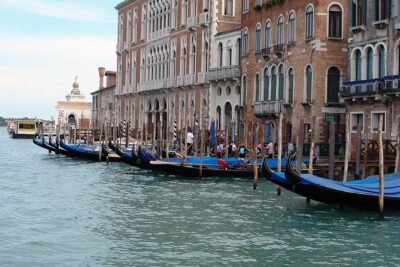 ★ 3.5Venice Walking Tour and Gondola RideFrom $723,630 reviews
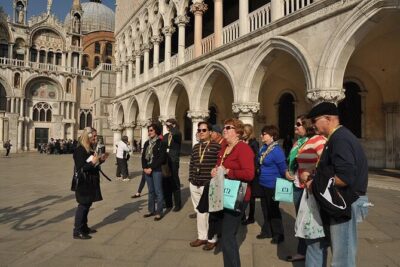 ★ 4.0Private 3 hrs Venice Tour: St Mark’s, Walking tour & Boat tourFrom $4803,372 reviews
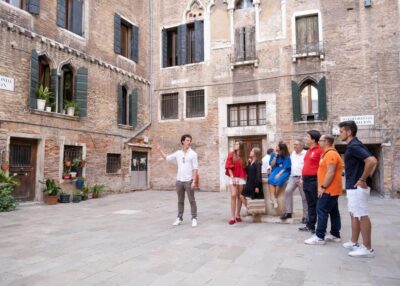 ★ 4.2City Center Historical Guided Walking TourFrom $141,873 reviews
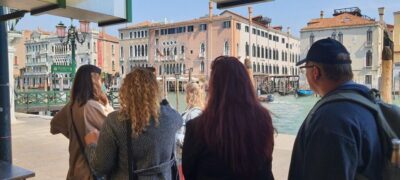 ★ 4.7Walking Guided Tour of the City Must-See SitesFrom $441,095 reviews
 ★ 4.0Private Best of Venice Walking Tour with St Mark’s BasilicaFrom $2421,063 reviews
 ★ 4.5Venice Sightseeing Small Group Walking Tour with a Local GuideFrom $48887 reviews
Browse the lists this tour appears in