
Review · VENICE SIGHTSEEING & CITY TOURS
Venice: Walking Guided Tour of the City Must-See Sites
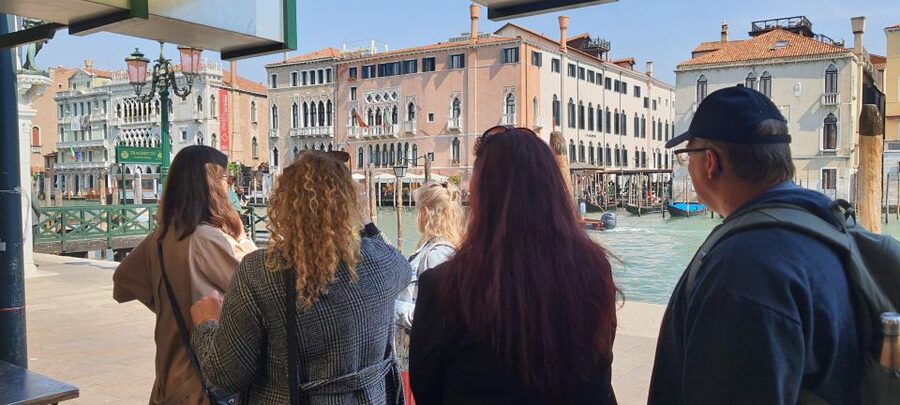
Venice makes sense on foot. This 2-hour small-group walk connects Rialto Bridge and St. Mark’s Square with stories that explain what you’re seeing as you move.
I really like the setup: a small-group city-center route that helps you get your bearings fast. And since it’s English-only with an English-speaking local expert, you won’t lose the thread when streets get crowded and confusing.
One watch-out: it’s outdoor walking with no entrances included, so you’ll want comfy shoes and a decent pace. It’s also not suitable for wheelchair users or people with heart problems.
In This Review
- Key Things to Know Before You Go
- Why This 2-Hour Venice Walk Works for First-Time Visitors
- Finding the Group Near Ca’ Foscari: The Campiello dei Squelini Start
- Scuola Grande di San Rocco Outside: Spot the Details First
- San Polo and the Rialto Approach: Learning the City’s Grid
- Crossing the Rialto Bridge: The Shortcut to Real Orientation
- Cannareggio and the Jewish Ghetto Area: A Different Side of Venice
- Basilica de’ Frari From the Outside: Art and Influence Without the Line
- Finishing at St. Mark’s Square and the Dorsoduro-to-San-Marloarc Transition
- Pacing, Shoes, and Weather: How to Stay Comfortable for 2 Hours
- The Small-Group Value Behind the $44 Price Tag
- What the Best Guides Seem to Do Well
- Should You Book This Venice Walking Tour?
- FAQ
- How long is the walking tour?
- What is the price per person?
- Is the tour offered in English only?
- Where is the meeting point?
- What time should I arrive?
- Does the tour include entrance fees?
- Is transportation included?
- Is this tour wheelchair accessible?
- What should I bring?
- Is free cancellation available?
Key Things to Know Before You Go
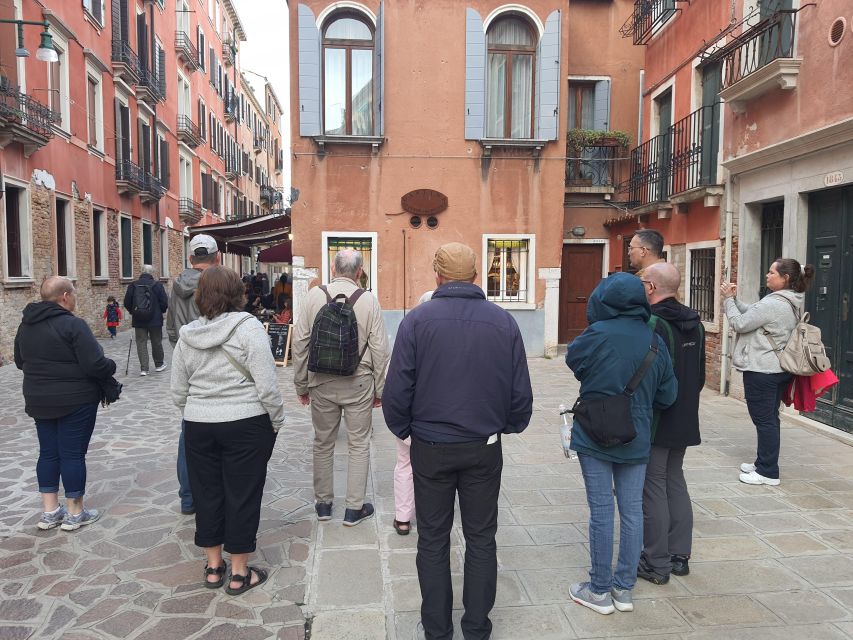
- Small group in Venice’s core: easier conversation, easier orientation.
- English-only guide: your experience stays smooth even when the city turns chaotic.
- A route that spans multiple districts: San Polo, Rialto, Cannareggio, and the Jewish Ghetto area.
- Outside views, not ticketed sights: you’ll learn a lot without spending time in lines.
- Ends at St. Mark’s Square: you finish in the best place to keep exploring on your own.
Why This 2-Hour Venice Walk Works for First-Time Visitors
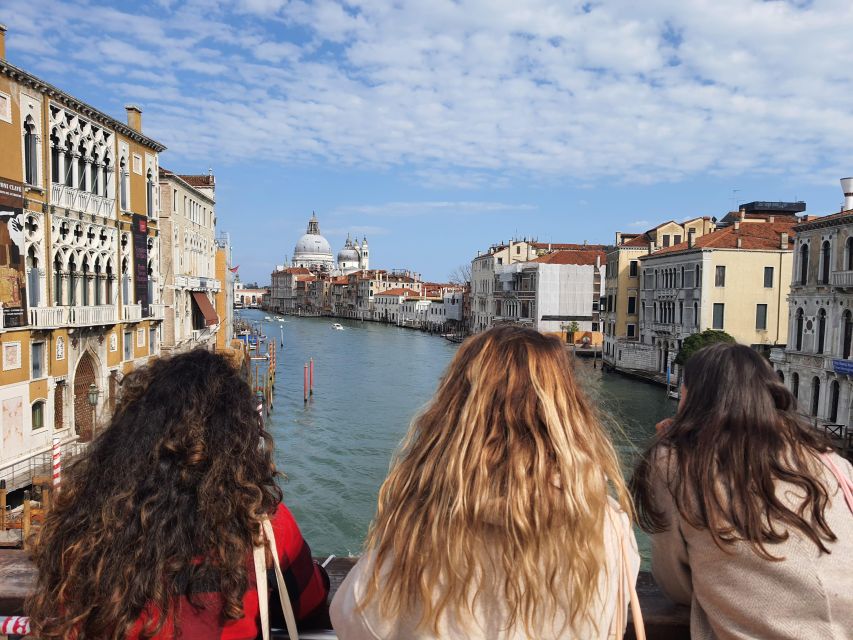
Venice is famously hard to “understand” on your own. Streets loop, canals block shortcuts, and landmark after landmark starts to blur together. A focused 2-hour orientation walk fixes that by giving context while you’re still in the neighborhood.
This tour is built around the city’s most famous reference points, but it’s not only postcard sightseeing. You also pass through less-obvious areas like Cannareggio and the Jewish Ghetto zone, which helps you picture how Venice worked day to day, not just how it looks in photos.
At just 2 hours, you’re not trapped. You get solid background, a sense of direction, and then you can choose what to do next without feeling like you missed the “real Venice.”
The headline sights in one loop
- Murano, Burano and Torcello Half-Day Sightseeing Tour★ 3.5 · 7,928 reviews
- Venice In a Day: St Mark’s, Doges Palace Gondola Ride & City Tour★ 5.0 · 3,588 reviews
- Tour of The Real Hidden Venice★ 5.0 · 2,006 reviews
- Venice: City Center Historical Guided Walking Tour★ 4.2 · 1,873 reviews
Finding the Group Near Ca’ Foscari: The Campiello dei Squelini Start
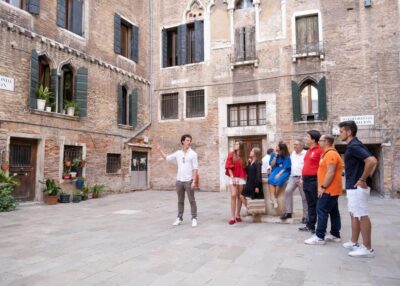
You meet at Campiello dei Squelini, in Dorsoduro, near Ca’ Foscari University, by a colored wall. It’s a sensible start because Dorsoduro is active, walkable, and close enough to reach the central sights without turning the tour into a marathon.
The biggest practical tip here is timing: arrive about 10 minutes early. The tour can’t wait more than 5 minutes, and once it starts, joining later isn’t possible.
Also, keep in mind that Venice routes can feel like a maze in the moment. If you’re arriving by foot (or from a vaporetto stop), give yourself a little buffer so you’re calm when you reach the meeting square.
Scuola Grande di San Rocco Outside: Spot the Details First
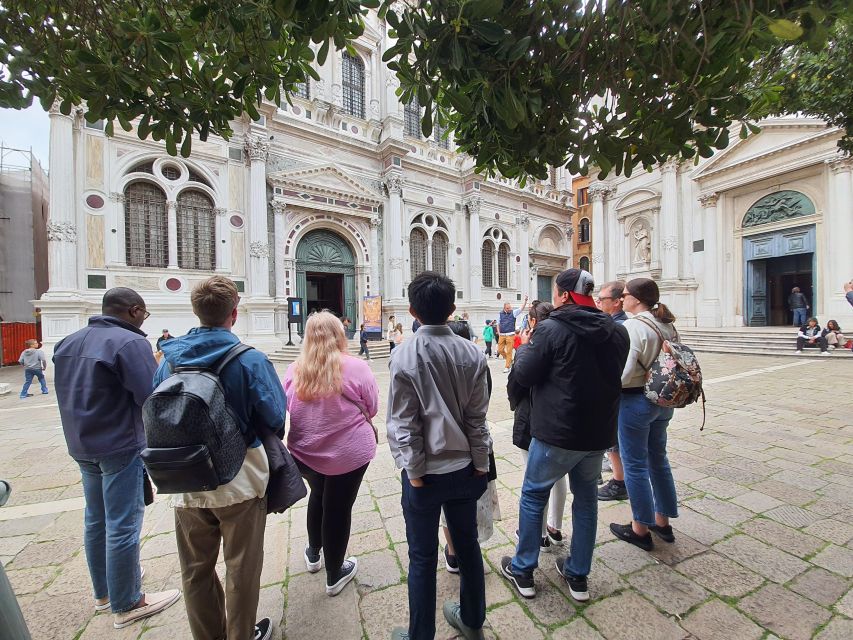
The tour begins with a short stop at Scuola Grande di San Rocco for sightseeing and guided commentary. You’re seeing it from the outside, so this isn’t about ticketing or spending time indoors.
What makes this stop useful is the way it trains your eyes. You start learning what to look for—how buildings announce identity, how art and religious life shaped the city, and why certain facades matter even if you never step inside.
In a city of constant surfaces and canals, this kind of outside focus is smart. It helps you notice the “why” behind Venice’s shapes before you move on to heavier hitters.
San Polo and the Rialto Approach: Learning the City’s Grid
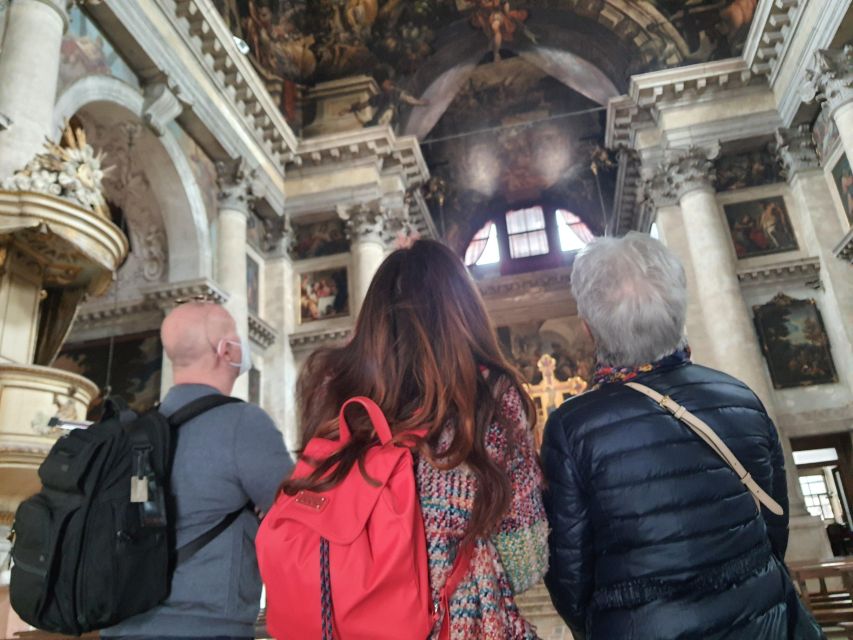
Next comes San Polo with another short guided stop. San Polo is one of those districts that makes you feel the city’s layers—markets, bridges, busy corners, and small streets that still function like real neighborhood space.
This is where you get something more valuable than facts: perspective. You start to understand how Venice is organized around crossings and public squares, not around straight-line streets.
If your goal is to navigate confidently later, this section matters. You’ll begin connecting landmarks to actual routes you can walk again on your own.
Crossing the Rialto Bridge: The Shortcut to Real Orientation
Then you get to one of the true classics: Rialto Bridge. You cross it during the tour, so the “lesson” happens while you’re moving across the exact point people photograph from.
Rialto is also a perfect orientation tool because it forces you to experience Venice as a system: foot traffic, canal boundaries, and how people naturally funnel toward the busiest crossings.
And since you’re paired with an English-speaking guide, the bridge becomes more than scenery. You get context that helps you recognize what you’re seeing next time—whether you’re walking away toward quieter streets or heading back into the central buzz.
On foot over the bridges, more routes
Cannareggio and the Jewish Ghetto Area: A Different Side of Venice
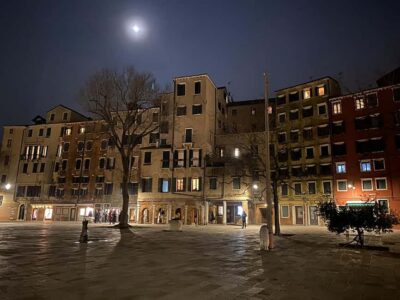
From there, the route moves through Cannareggio and into the area associated with the Jewish Ghetto. This part is important because it shifts the focus from monuments to community.
Even if you only spend a short time in each spot, the guided commentary helps you connect neighborhoods to historical life: trade, migration, rules, and daily routines.
This is also one of the most human parts of the walk. Venice can feel unreal when you only see it as a museum-city. Here, it starts to feel like a place where people lived through complicated centuries.
Basilica de’ Frari From the Outside: Art and Influence Without the Line
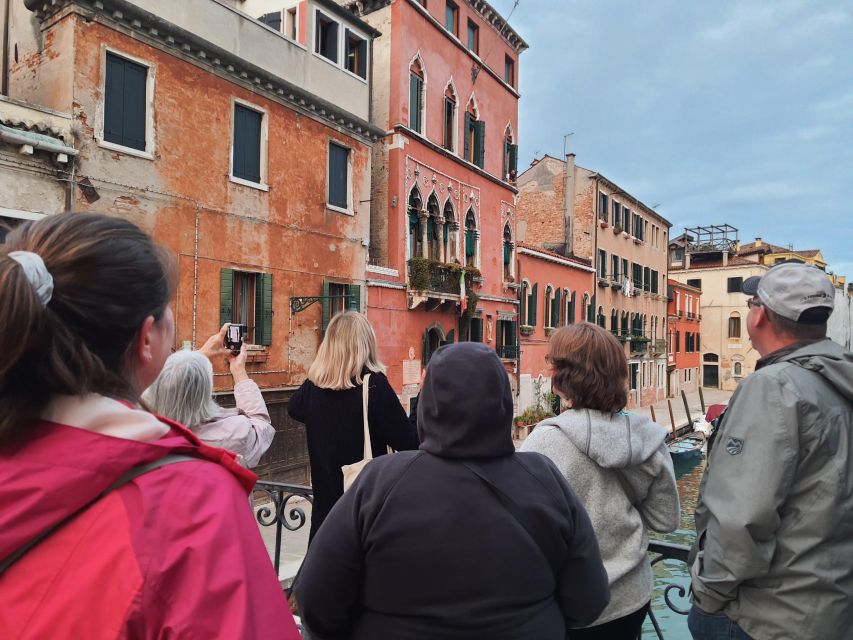
You’ll also see Basilica de’ Frari from outside. The walk doesn’t include entrance time, but that’s part of the practicality. You get the anchor point of a major church without losing your energy on queues or interior pacing.
What you gain is an ability to place major names and themes in your mental map. The tour notes that Titian is laid to rest here, and even hearing that reference before you arrive at later landmarks can sharpen what you notice.
If you like architecture and art, this stop gives you something to revisit later—without forcing the whole tour to stop for ticket logistics.
Finishing at St. Mark’s Square and the Dorsoduro-to-San-Marloarc Transition
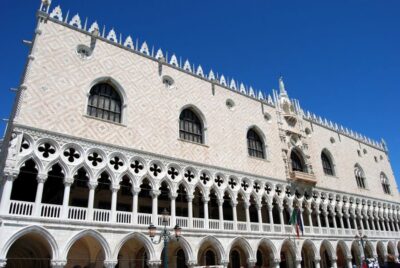
The tour ends in Piazza San Marco, where you’ll admire the Basilica and the Palazzo Ducale (viewed as part of your final big-picture arrival). Ending here is a smart design choice because you finish at a place you’ll want to explore anyway.
Even without entering, the square works as a visual finale. You can read the layout immediately: open space for orientation, grand buildings for scale, and a hub that connects you to multiple directions.
This ending also helps with your next steps. Once you finish, you’re positioned for a natural continuation—whether that’s more wandering, a vaporetto ride, or lining up a longer visit to one of the big sights.
Pacing, Shoes, and Weather: How to Stay Comfortable for 2 Hours
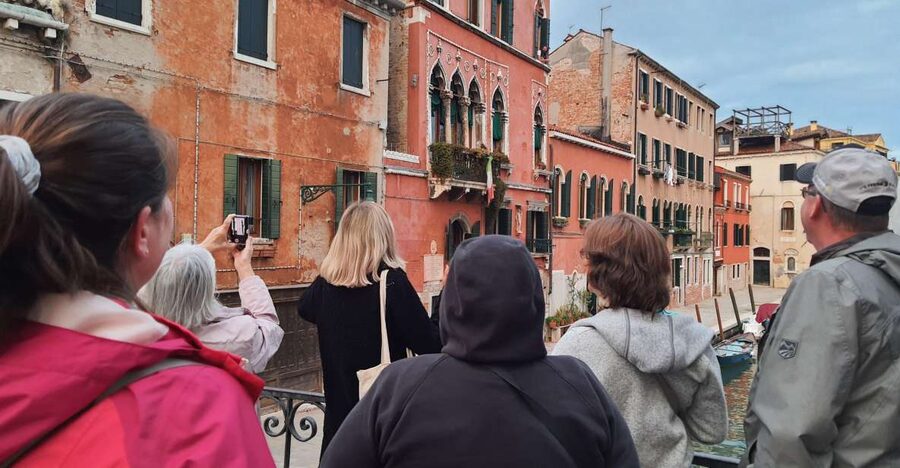
This is an outdoor walking tour across several central districts. That means weather matters, and so does footwear.
Bring weather-appropriate clothing and plan on being on your feet for the full 2 hours. One clear theme from guide praise is that good guides keep the pace manageable while still covering a lot of ground, but you still control how comfortable you are.
It’s also recommended to bring a bottle of water, because there aren’t added stops for supplies. If it’s hot or humid, this small item can be the difference between enjoying the stories and constantly thinking about your thirst.
Also, the tour is not suitable for wheelchair users. If mobility is limited, you’ll likely feel the route demands more than you expect.
The Small-Group Value Behind the $44 Price Tag
At $44 per person for about 2 hours, this tour is priced for “first-day usefulness.” In Venice, that matters more than you’d think.
You’re paying for three things that add up fast:
- a route that covers key districts in a short window
- an English-speaking local expert who turns sights into context
- a small-group experience that makes it easier to ask questions and stay with the group
You also avoid one common cost: entrance fees. The tour is designed as an outdoor learning walk, so you’re not budgeting for tickets on day one.
Is it a deal? For most first-time visitors, yes, because it helps you decide what’s worth a longer, ticketed visit later. For repeat visitors, it can still be a win if you’re craving better layout knowledge and street-level context.
What the Best Guides Seem to Do Well
Guides here earn praise for turning Venice into a guided conversation, not a script. Names like Analisa, Irena, Gianmarco, Flavia, Valentina, and Julia come up in standout ways, and the common thread is clarity plus energy.
A few practical patterns show up:
- They keep a steady walking rhythm so you don’t feel stuck in bottlenecks.
- They explain how Venice works socially and geographically, not just what you’re looking at.
- They often point out small details you’d normally miss while scanning for the big postcard shots.
One more nice-to-have reported by some groups: audio support such as headsets can help you hear the guide clearly in busy areas. If that option is offered on your departure, use it.
Should You Book This Venice Walking Tour?
Book it if you want a fast, friendly way to understand Venice before you go deeper on your own. This works especially well for first-timers, solo travelers who want direction, and anyone who’d rather learn the city’s layout than spend hours bouncing between landmarks without context.
Skip it (or choose another format) if you can’t handle 2 hours of outdoor walking, need accessibility accommodations, or expect that you’ll enter major sights during the tour. This is a walk-and-learn experience, not a ticketed museum plan.
Also, if you’re the type who enjoys practical orientation, ending in St. Mark’s Square is a big plus. You finish where you can immediately keep exploring, guided by the route knowledge you just earned.
FAQ
How long is the walking tour?
The tour lasts 2 hours.
What is the price per person?
The price is $44 per person.
Is the tour offered in English only?
Yes, the tour is done only in English.
Where is the meeting point?
You meet at Campiello dei Squelini near Ca’ Foscari University in the Dorsoduro district, by a colored wall.
What time should I arrive?
Please reach the meeting point 10 minutes before the tour starts. The group cannot wait more than 5 minutes.
Does the tour include entrance fees?
No. Entrance fees are not included, and the tour is done outdoors without entering sites.
Is transportation included?
Transportation to and from the meeting point is not included. The tour includes pickup from the meeting point.
Is this tour wheelchair accessible?
No. It is not suitable for wheelchair users.
What should I bring?
Wear comfortable shoes and bring weather-appropriate clothing. It’s also recommended to bring a bottle of water.
Is free cancellation available?
Yes. You can cancel up to 24 hours in advance for a full refund.
More Tour Reviews in Venice
- Venice: Doge’s Palace Reserved Entry Ticket
★ 4.6 · 42,716 reviews - Venice: Grand Canal Gondola Ride with App Commentary
★ 4.1 · 23,020 reviews - Venice: Grand Canal Gondola Experience with Live Commentary™
★ 4.2 · 16,504 reviews - Boat Trip: Glimpse of Murano, Torcello & Burano Islands
★ 4.3 · 15,699 reviews - Venice: La Fenice Opera House Entry Ticket with Audio Guide
★ 4.6 · 11,742 reviews - Murano & Burano: Boat Tour with Guide & Glass Factory Visit
★ 4.3 · 10,716 reviews
Venice on Foot, Continued
- Venice: Doge’s Palace and St Mark’s Basilica Walking Tour
★ 4.4 · 6,291 reviews - Venice: San Marco to Rialto Walk & Spritz Like a Local
★ 4.2 · 3,651 reviews - Venice Walking Tour and Gondola Ride
★ 3.5 · 3,630 reviews - Private 3 hrs Venice Tour: St Mark’s, Walking tour & Boat tour
★ 4.0 · 3,372 reviews - Venice: City Center Historical Guided Walking Tour
★ 4.2 · 1,873 reviews - Private Best of Venice Walking Tour with St Mark’s Basilica
★ 4.0 · 1,063 reviews
All the Headline Sights in a Day
- Murano, Burano and Torcello Half-Day Sightseeing Tour
★ 3.5 · 7,928 reviews - Venice In a Day: St Mark’s, Doges Palace Gondola Ride & City Tour
★ 5.0 · 3,588 reviews - Tour of The Real Hidden Venice
★ 5.0 · 2,006 reviews - Venice: City Center Historical Guided Walking Tour
★ 4.2 · 1,873 reviews - Venice: Sightseeing Tour with a Local expert
★ 4.7 · 1,425 reviews - Private Best of Venice Walking Tour with St Mark’s Basilica
★ 4.0 · 1,063 reviews
Fresh Off the Vaporetto: New Venice Reviews

Venice Sightseeing & City Tours, compared.
 ★ 3.5Murano, Burano and Torcello Half-Day Sightseeing TourFrom $257,928 reviews
 ★ 5.0Venice In a Day: St Mark’s, Doges Palace Gondola Ride & City TourFrom $1243,588 reviews
 ★ 5.0Tour of The Real Hidden VeniceFrom $472,006 reviews
 ★ 4.2City Center Historical Guided Walking TourFrom $141,873 reviews
 ★ 4.7Sightseeing Tour with a Local expertFrom $411,425 reviews
 ★ 4.0Private Best of Venice Walking Tour with St Mark’s BasilicaFrom $2421,063 reviews
 ★ 4.5Venice Sightseeing Small Group Walking Tour with a Local GuideFrom $48887 reviews
 ★ 4.5Best Of Venice: Saint Mark’s Basilica, Doges Palace with Guide and Gondola RideFrom $125800 reviews
Browse the lists this tour appears in