
A single hour in Murano, and you leave with beads. I like the small group size that keeps the coaching personal, and I like that you actually work the material (blowtorch and all) instead of just watching. One watch-out: this is not a sit-and-snack activity, since you’ll be working close to hot glass tools.
This workshop gives you a real slice of Murano life, not a canned souvenir stop. You start with a quick orientation to how their studio works, you see a glass-blowing demo, and then you make your own beads while instructors keep adjusting your technique.
Expect a laid-back, hands-on session in a working Murano studio, plus a coffee break at the end. It’s designed for people who want to try glassmaking and take home something made by their own hands.
In This Review
- Key things to know before you go
- Murano Glass in One Hour: what you can actually learn and do
- The studio visit: a working place, not a museum set
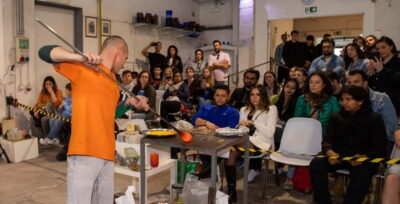
- Demo first: glass-blowing in a way beginners can follow
- Making your own Murano beads (with the blowtorch)
- Hair tie and safety reality check
- Coffee break and studio time: slow down and look at what you’re buying
- Price and value: why $41 feels fair here
- Languages and communication: easy to follow, with a small catch
- Who should book this Murano bead workshop
- Who might skip it
- Quick practical tips for a smoother visit
- Should you book this Murano glass bead workshop?
- FAQ
- How long is the Murano glass bead workshop?
- What is the price per person?
- Is it a small group class?
- What will I make during the workshop?
- Can I take the beads home?
- What’s included in the price?
- What languages are available for instruction?
- What should I bring?
- Is it suitable for children?
Key things to know before you go
- It’s hands-on from the start: a demo first, then you craft beads yourself with close guidance.
- You’ll make more than one bead: a few test beads plus a personalized decorated bead.
- Small group, max 6 people: easier instruction, quicker corrections, better results.
- Andrea Penzo and Cristina Fiore lead the experience: long experience meets real teaching skills.
- You take your beads home: the workshop is built around making a wearable keepsake.
- No extra fees during the class: you can buy studio pieces if you want, but the session price stays simple.
Murano Glass in One Hour: what you can actually learn and do
Murano glass has a famous reputation. This workshop is a smart way to experience it without signing up for a full day or a long class schedule. The time is tight—about an hour—but the structure is clear: a short intro, then a demonstration, then your turn.
I like that the session is built around practical technique. You’re not just learning glass facts. You’re using glass tools and shaping molten material under supervision. That’s the difference between a viewing experience and a skill attempt. In an hour, you’ll still be a beginner—but you’ll understand the process in a way that photos can’t do.
One reason this works so well for many people is the pace. You get enough time to try, fail safely, and adjust, without the session dragging on. Just remember: you’ll be focused. This isn’t a light “wander and browse” stop.
Further out: more days across Murano and Burano
- Murano: Glass Factory Experience with Tour and Demonstration★ 4.4 · 2,076 reviews
- Venice: Murano Glassblowing Show – Made in Italy Art & Walk★ 4.3 · 76 reviews
- Murano: make your item with a glass master and take it home★ 5.0 · 15 reviews
- Murano: Glass Art Workshop with Studio Visit & Bead Making★ 5.0 · 10 reviews
The studio visit: a working place, not a museum set
You meet in their Murano studio area at Opificio Vetro / Penzo+Fiore. There’s a sign outside the door—ring the bell and you’ll be let in. From the start, you get the feeling this is a real workspace.
Inside, you’re not just seeing finished jewelry. You’ll encounter contemporary art pieces and a look at how they make their products—mainly jewelry and small sculptures. That matters because it frames the bead you’re about to make. Your bead isn’t an isolated craft trick. It’s part of how Murano artists actually create items.
Two names anchor the experience. Andrea Penzo has over 30 years of glass experience, with a background that blends art lineage and theory. Cristina Fiore pairs strong creative talent with teaching and communication. In plain terms: you get both technique and explanation.
You’ll get a brief presentation of their work and how they run the studio. It’s short, but it helps you understand what you’re watching later in the demonstration. When you know what you’re trying to control—shape, temperature, and timing—the hands-on part makes more sense fast.
Demo first: glass-blowing in a way beginners can follow
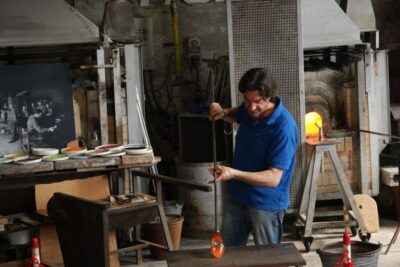
The workshop includes a glass-blowing demonstration. Even if you’ve never worked with glass before, the demo is paced to keep you from feeling lost. You’re seeing basic techniques in action, not just a high-speed show.
What I like here is the practical framing. The instructors don’t treat the demo like magic. They treat it like craft. You’re meant to walk from the studio intro into the bead-making table with a mental model of what’s happening.
Because the group is small (limited to 6), you can also ask questions during the flow of the class. That’s a big deal in glasswork. Small adjustments matter. When someone corrects your hand position or technique, you can actually incorporate it right away.
Making your own Murano beads (with the blowtorch)
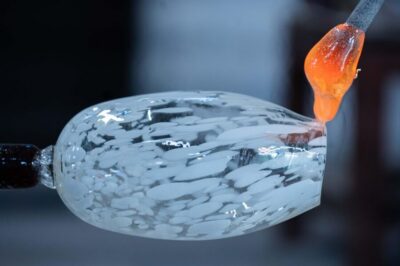
This is the heart of the experience. After the intro and demo, you work on creating beads using a blowtorch under constant guidance. The wording matters: constant guidance. You aren’t left to figure it out on your own.
Your bead process typically includes:
- crafting a few test beads
- then making a personalized decorated bead
That sequence is smart for first-timers. Test beads let you learn control and timing without the pressure of making your final piece instantly. Then the decorated bead becomes your chance to express your own style—still beginner-friendly, but with a personal touch.
Also, the class size is small enough that instructors can keep eyes on what you’re doing. Some people leave with around three to four beads, and in a few sessions people have made closer to six. The key takeaway isn’t the exact count. It’s that you get multiple attempts, which is how you improve in a single hour.
Hair tie and safety reality check
There’s one practical item you should bring: a hair tie. Since you’re working near tools and heat, loose hair is a bad idea. If you wear long hair, tie it back before you arrive.
And yes, this activity isn’t for everyone. It’s not suitable for visually impaired people, likely because the work involves heat, close tool use, and clear visual guidance. Children under 14 also aren’t suitable. If those rules affect your group, you’ll be happier choosing a different kind of Murano glass visit.
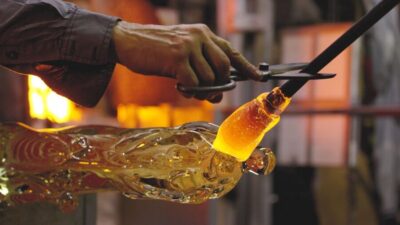
More furnaces lit on Murano

Coffee break and studio time: slow down and look at what you’re buying
You’ll end with a final coffee break. It’s included in the price, and it gives you a breather after working the tools. More importantly, it gives you time to look around the studio while you’re not in production mode.
This workshop is set up with more than just the class table in mind. You can buy objects and works in the studio—semi-finished pieces, finished pieces, multiples, and other artworks. There are no extra fees tied to taking the class. But if you fall for what you see while making beads, you can shop in a relaxed, informed way.
That’s one reason I think this workshop is a good first stop in Murano if you care about crafts. By the time you shop, you’ll actually understand what you’re looking at. You’ll recognize the difference between simple forms and more involved techniques, because you tried something basic yourself.
Price and value: why $41 feels fair here
At $41 per person for about one hour, this isn’t a “cheap souvenir” activity. It’s priced like a guided craft session—and the value comes from what’s included.
You get:
- use of glass and the equipment needed to create your beads
- beads made by you to take home
- the coffee break
And there are no extra fees during the class. That matters because lots of craft experiences sneak in add-ons. Here, the price stays simple. You might still choose to buy studio pieces if you want, but the workshop itself doesn’t turn into a surprise bill.
The other value point is the teaching ratio. Limited to 6 participants, you’re not fighting for attention. In glassmaking, that’s half the product. Better guidance usually means better beads in your hands—and you’re taking those beads home.
If you’re deciding between watching a glass show and doing a short workshop, this is the more rewarding choice for most people. Watching can be pretty. Making is the memory that stays.
Languages and communication: easy to follow, with a small catch
The instructor team can work in Italian, Spanish, English, and French. That’s helpful if you’re traveling with a mixed-language group or if you prefer one language for instruction.
One small consideration: some content may be shown in its original language. That doesn’t mean the experience becomes confusing. But it does mean you should expect a little bit of natural, workshop-style talk as part of the class flow.
If you want the smoothest experience, go in with the mindset of: you’re here to follow visual technique and practical coaching. You don’t need advanced vocabulary to shape glass.
Who should book this Murano bead workshop
I’d point you toward this workshop if you want:
- a hands-on Murano experience in only one hour
- a small-group class (max 6)
- a take-home item you made yourself
- a studio visit that feels like a real working place
It’s especially fitting for couples and friends who want a shared creative activity. You’ll talk while you work, laugh when the first bead isn’t perfect, and end with something personal in your pocket or bag.
You might also like it if you plan to spend time shopping in Murano. You’ll understand the craft context once you’ve tried the basics.
Who might skip it
Skip it if:
- you’re traveling with children under 14
- you or someone in your group needs accessibility accommodations that aren’t supported for visually impaired visitors
- you want a low-focus, sit-and-watch experience with no tool work
This class asks you to participate. If you’re comfortable with that, you’ll get a lot out of it.
Quick practical tips for a smoother visit
Here are the small things that help you enjoy the hour more:
- Bring a hair tie if you have long hair.
- Wear clothes you don’t mind being close to a workshop environment.
- Expect to stand and focus during the making portion.
- If you plan to buy studio items, give yourself time to browse after the coffee break—your understanding will be sharper then.
If you’ve ever bought a craft souvenir and felt it didn’t quite match the story, this class flips that. You can connect the bead in your hand to the process you practiced.
Should you book this Murano glass bead workshop?
Yes, if you want the most memorable kind of Murano souvenir: one you made yourself. The combination of a small group size, real instruction from Andrea Penzo and Cristina Fiore, and multiple bead-making attempts is exactly what makes the experience worth the hour.
Book it if you like practical learning and you want a clear “before and after” moment. You’ll start as a beginner. You’ll end with beads that prove you did the work, not just watched it.
Consider skipping if heat-tool work feels stressful, if accessibility needs aren’t a fit, or if you prefer a purely observational glass tour. For everyone else, this is a solid value: $41 includes your materials, your equipment time, your take-home beads, and coffee—and that’s a rare set of inclusions for a hands-on craft stop in Murano.
FAQ
How long is the Murano glass bead workshop?
It lasts about 1 hour.
What is the price per person?
The price is $41 per person.
Is it a small group class?
Yes. It’s limited to 6 participants.
What will I make during the workshop?
You’ll create a few test beads and then make a personalized decorated glass bead.
Can I take the beads home?
Yes. The beads you make are yours to take home.
What’s included in the price?
The price includes use of glass and the equipment, the beads you make to take home, and a coffee break.
What languages are available for instruction?
Instruction is available in Italian, Spanish, English, and French.
What should I bring?
Bring a hair tie.
Is it suitable for children?
No. It’s not suitable for children under 14.
More Tour Reviews in Murano
- Murano: Glass Factory Experience with Tour and Demonstration
★ 4.4 · 2,076 reviews - Venice: Murano Glassblowing Show – Made in Italy Art & Walk
★ 4.3 · 76 reviews - Murano: make your item with a glass master and take it home
★ 5.0 · 15 reviews - Private tour to Murano with Hotel pick up and glass factory
★ 4.9 · 8 reviews - Murano Glass Demonstration
★ 4.8 · 5 reviews
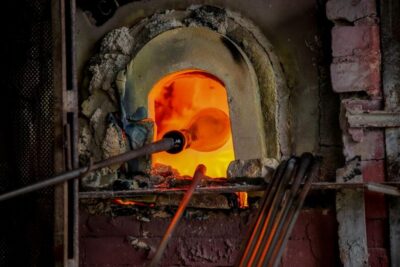
The Furnaces of Murano
- Murano: Glass Factory Experience with Tour and Demonstration
★ 4.4 · 2,076 reviews - Venice: Murano Glassblowing Show – Made in Italy Art & Walk
★ 4.3 · 76 reviews - Murano: make your item with a glass master and take it home
★ 5.0 · 15 reviews - Private tour to Murano with Hotel pick up and glass factory
★ 4.9 · 8 reviews - Murano Glass Demonstration
★ 4.8 · 5 reviews
Out to Murano and Burano
- Murano: Glass Factory Experience with Tour and Demonstration
★ 4.4 · 2,076 reviews - Venice: Murano Glassblowing Show – Made in Italy Art & Walk
★ 4.3 · 76 reviews - Murano: make your item with a glass master and take it home
★ 5.0 · 15 reviews - Private tour to Murano with Hotel pick up and glass factory
★ 4.9 · 8 reviews - Murano Glass Demonstration
★ 4.8 · 5 reviews
Fresh Off the Vaporetto: New Murano Reviews

Murano & Burano Island Tours, compared.
 ★ 4.3Boat Trip: Glimpse of Murano, Torcello & Burano IslandsFrom $2915,699 reviews
 ★ 4.3Murano & Burano: Boat Tour with Guide & Glass Factory VisitFrom $2310,716 reviews
 ★ 4.4Burano, Torcello & Murano Boat Tour w/GlassblowingFrom $2810,245 reviews
 ★ 3.5Murano, Burano and Torcello Half-Day Sightseeing TourFrom $257,928 reviews
 ★ 4.5Murano & Burano Islands Guided Small-Group Tour by Private BoatFrom $367,580 reviews
 ★ 4.4Murano & Burano Panoramic Boat Tour w/ GlassblowingFrom $296,212 reviews
 ★ 4.4Murano, Burano, Torcello: Tour with Guide & Glass FactoryFrom $286,187 reviews
 ★ 4.7Murano & Burano Guided Tour by Private Boat with GlassmakingFrom $355,658 reviews
Browse the lists this tour appears in