
Review · CITY TOURS
Venice City Escape: “Hunting for L’Omo dal Capelon”
A smartphone chase beats the usual Venice stroll. This Venice City Escape turns sightseeing into a self-guided mission where a chat on your phone nudges you from riddle to riddle, calli to calli. The theme is pure storybook mischief: you’re hunting a black-clad criminal wearing a huge hat, trying to bring order back to the Serenissima.
What I like most is how the game gives you a guided-feeling route without a guide standing over you, and how it pushes you into streets you’d normally speed past.
I also really like the format for mixed groups. It’s built for all ages, and the story does the heavy lifting for kids and adults alike. You’ll cover about 5 km in roughly 3 hours, which feels like a real mini-walk rather than a quick stop-and-go activity.
One thing to consider: because it’s self-guided, you won’t get instant clarification mid-puzzle. The experience can mean long stretches of walking, and in tight alleys you may find it harder to stop comfortably while you read and type answers.
In This Review
- Key points before you go
- A self-guided Venice riddle hunt in the calli
- Mission story: the black-hatted character you’re meant to catch
- Where you start: Calle Bergami 917, S. Croce
- How the smartphone game works (no app needed)
- Walking route and pacing: about 5 km in ~3 hours
- What you actually do: riddles, clues, treasures, and the final prize
- Venice “secret streets” factor: why it feels different
- Building text and puzzle clarity: what to expect from the questions
- Family fit: a story kids can hold onto
- Price and value: $40 per group up to 4
- Languages: Italian and English mission options
- Possible drawbacks: long stretches, narrow stops, and no guide on-site
- Should you book Hunting for L’Omo dal Capelon?
- FAQ
- Where does the Venice City Escape start?
- How long is the experience?
- How far will I walk?
- Is there a guide with you during the activity?
- Do I need to install an app?
- What do I receive with the experience?
- What language options are available?
- When can I play the mission?
- Is there a time limit while playing?
Key points before you go
- Self-guided mission with an in-app style chat that guides you as you play
- A themed Venice plot focused on catching a tall man in black with a large hat
- About 5 km / ~3 hours of walking through Venice’s calli
- No special app required—just a charged smartphone with internet
- English or Italian missions available, designed for all ages
- Starts at Calle Bergami 917 in S. Croce, so you can anchor your day easily
A self-guided Venice riddle hunt in the calli
Venice has plenty of walking tours. This one flips the script. Instead of following a voice, you follow a story prompt on your phone. You’re solving riddles, looking for clues, and chasing the next step as you move through the neighborhood streets that make Venice feel like a maze.
The biggest win is that it gives you a reason to pay attention. You’re not just admiring façades from the sidewalk. You’re looking for details the game wants you to notice, then reacting to what you find. That’s how a normal 5 km walk becomes something you remember.
You’ll also feel the advantage of the format: it’s not tied to a single pace. If your group moves faster, you’ll move faster. If you pause to read, you can pause without waiting for anyone else. The downside is that you need to be comfortable figuring things out yourself—at least until you get a hint that clicks.
Wider loops through the sestieri
- Venice In a Day: St Mark’s, Doges Palace Gondola Ride & City Tour★ 5.0 · 3,588 reviews
- Venice: City Center Historical Guided Walking Tour★ 4.2 · 1,873 reviews
- Venice: Walking Guided Tour of the City Must-See Sites★ 4.7 · 1,095 reviews
- Venice: City Pass with Museums including Doge’s Palace★ 4.1 · 1,020 reviews
Mission story: the black-hatted character you’re meant to catch
The plot is simple and effective: a shady character has appeared in Venice at night—tall, dressed in black, and wearing a strange big hat. He’s causing panic, harassing passers-by, and frightening people around the calli.
Your job is to catch him. Along the way, you’ll work through a sequence of tasks that involve riddles and treasure-finding style questions. Think of it like combining a scavenger hunt with a detective story. The chat doesn’t just tell you where to go—it keeps you inside the mission so the walk feels connected instead of random.
This theme matters because it turns Venice from a set of landmarks into a moving narrative. You’re not asking, What do I do next? You’re following the mission’s next instruction.
Where you start: Calle Bergami 917, S. Croce
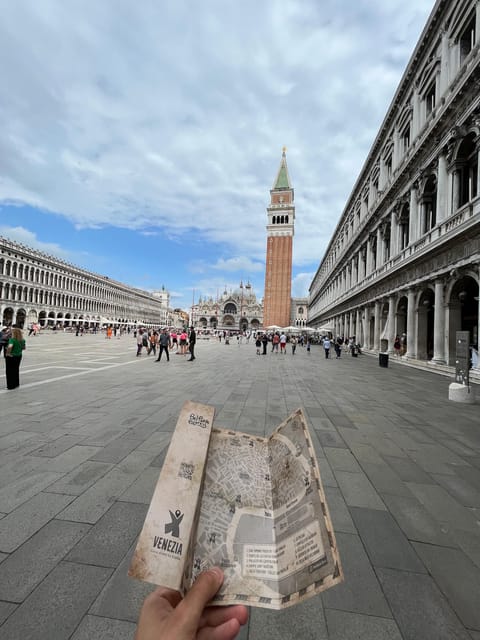
Your starting location is Calle Bergami 917, S. Croce. Having a fixed start point is handy in Venice, where direction can get confusing fast. If you’re trying to plan your day, this also helps you pair the game with other nearby sights in the same general area.
Because you’re starting in a specific calle, you’ll want to arrive a few minutes early so your phone is ready. With a self-guided activity, that pre-start moment matters more than it would with a group meeting at a museum door.
How the smartphone game works (no app needed)
You don’t download a special app. You just use your smartphone and internet connection. After you buy the experience, you’ll receive an access link by email. When you click it, an interactive chat appears and guides you through the adventure.
A few practical details that make the experience smoother:
- Bring a charged phone. You’ll want battery for reading and answering questions.
- Plan for internet. Venice can be hit-or-miss with signal in tight alleys, so having enough connectivity helps.
- Read the recap/timetable before starting. The mission includes a recap section with the starting point, experience length, and the schedule you need.
Also note the timing rules. The mission can be played every day except Tuesday, with hours listed from 8:30 am to 9:00 pm. Once you start, the experience is “valid” for 3 hours from first activation,” and there’s no time limit in the sense that you’re not forced to sprint to the finish.
If you’ve got kids, this chat format can be a lifesaver. You can keep the mission moving without constantly re-explaining where you are and what’s next.
Walking route and pacing: about 5 km in ~3 hours
The activity is listed as roughly 5 km and about 3 hours. In practical terms, that’s a solid Venice walk day—enough time to feel like you left the main lanes, but not so long that it eats your whole afternoon.
That said, pacing is where you’ll feel the difference between a smooth adventure and a frustrating one. One review highlighted that parts of the game involve long stretches of walking where there aren’t many stop-and-answer moments. If you’re the type of group that likes frequent pauses, you may need to manufacture your own breaks.
Here’s how I’d handle the pacing:
- Take short stops strategically. If a question arrives in a crowded or narrow spot, read the prompt, step back to a safer standing position if needed, and then type.
- Don’t try to solve while blocking foot traffic. Venice alleys can get tight. If you can’t stand comfortably, move a few steps away, read again, and then answer.
- Use the “mission hours” wisely. Late afternoons can mean more foot traffic. If you can, earlier in the allowed window can be easier for reading and moving.





What you actually do: riddles, clues, treasures, and the final prize
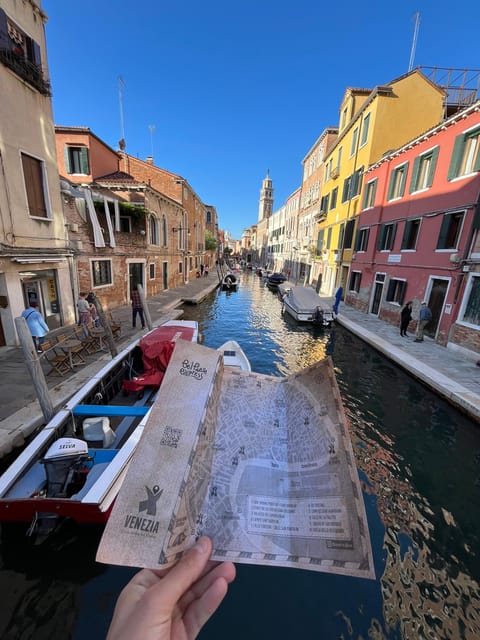
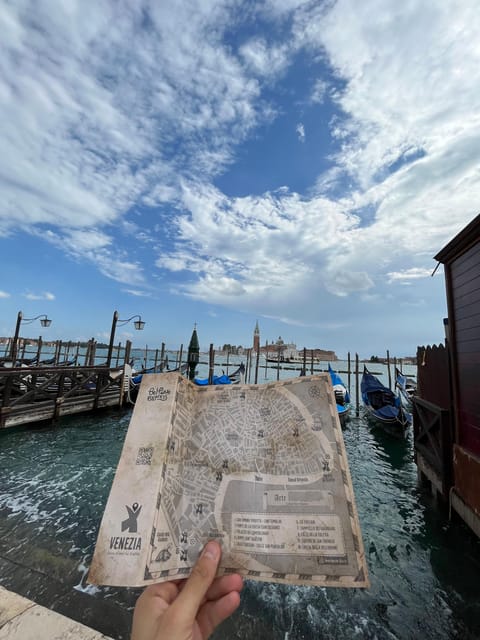
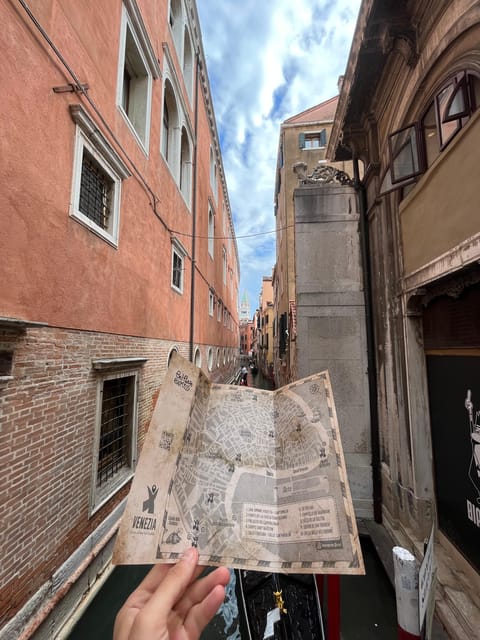
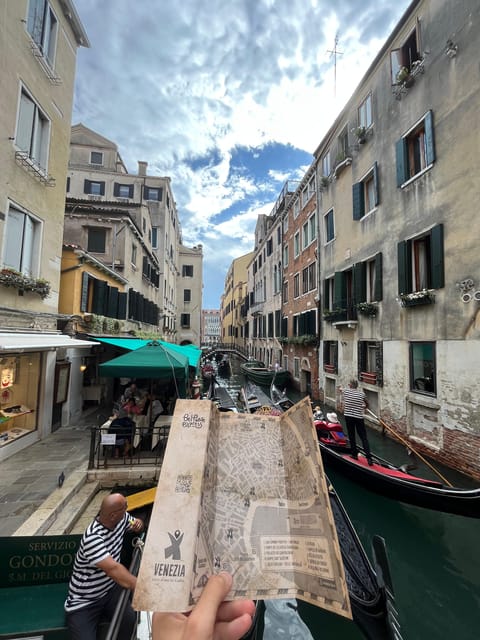
The game has clear mechanics: solve riddles, find clues, and progress through the chat-guided storyline until you reach the end. A map is included, along with the materials you need at the beginning of the experience.
There’s also a final prize. That detail sounds small, but in a city-wide puzzle hunt it helps motivate the kids (and keeps adults from checking out when a puzzle gets stubborn).
Along the way, you can expect a mix of:
- Question prompts that ask you to identify something based on what you find
- Hints that clarify direction when you’re stuck
- Text snippets about buildings and places that add context while you walk
One review note that’s worth your attention: some puzzle wording can feel unclear. The hints may be more straightforward than the questions themselves. Translation also matters—English and Italian missions exist, but if you’re playing in a second language, you might want to slow down and read carefully.
Venice “secret streets” factor: why it feels different
A big part of the appeal is the way the mission pulls you into Venice’s smaller streets—calli and vicoletti—rather than only sticking to the postcard routes. Even if you’ve visited Venice before, this approach can feel fresh because the game gives you a reason to turn corners and notice details.
One review also mentioned appreciating the collaboration with local small businesses. Even without naming specific partners here, that kind of integration tends to make a scavenger hunt feel more grounded. It’s not just a generic GPS-style path. It’s trying to connect the story to Venice in a lived-in way.
The best version of this experience is when you treat the game like a slow reveal. Instead of rushing to the next answer, you look at what’s in front of you and let the mission make you curious.
Building text and puzzle clarity: what to expect from the questions
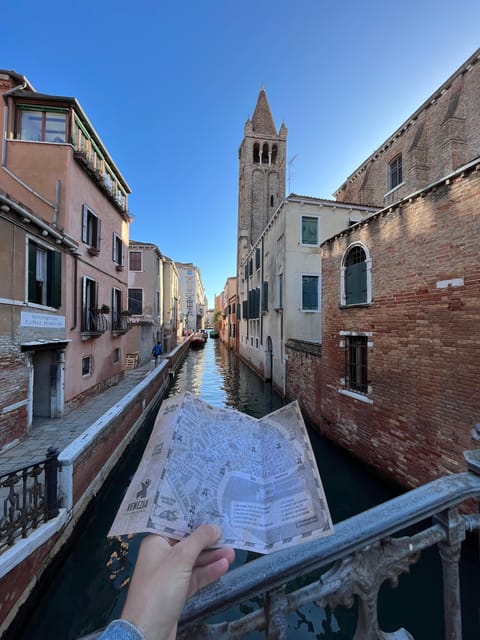
The game includes informational reading along the route—short facts tied to buildings and places. That can be great when it stays concise and useful. But one review pointed out that some text can be longer than you’d expect for a quick side note.
Another common friction point: questions can be harder to parse than the hints. If you’ve got a detail-focused group that loves logic puzzles, you’ll likely find plenty to enjoy. If your group prefers quick wins, you might sometimes feel like you’re working with imperfect clarity.
And because some questions appear in narrow alleys, the physical reality of Venice matters. You may not be able to stop in the middle of the walkway and read comfortably. I’d plan to:
- keep your phone screen bright enough to read in daylight
- stand slightly out of the flow when answering
- use your group to split tasks (one reads, one types, one scans the area)
Family fit: a story kids can hold onto
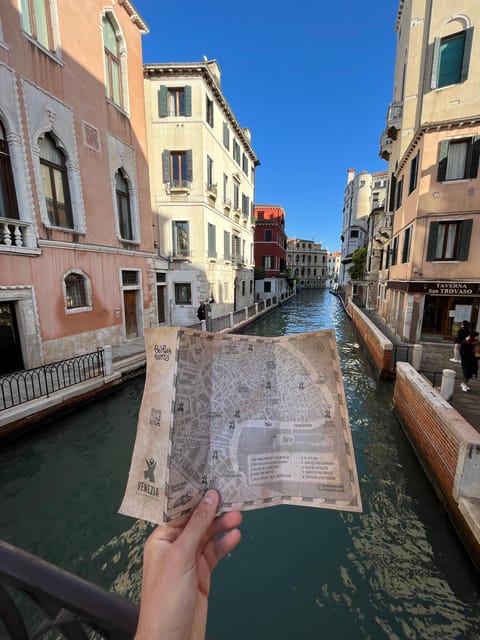
This is one of the stronger points. One review described the game as especially enjoyable for a 5-year-old, while adults still liked the overall concept. That usually means the story is simple enough to understand, and the “detective” theme doesn’t require deep background knowledge.
If you’re traveling with kids, you’ll appreciate that the game is built to work without constant adult coaching. You can hand off roles—reading prompts, checking the next step, or spotting clues—so everyone stays involved.
That doesn’t mean it’s only for families. If you’re an adult who gets tired of lectures and wants an activity-based sightseeing plan, this can also fit well. Just know it’s more “interactive walk” than museum deep dive.
Price and value: $40 per group up to 4
At about $40 per group (up to 4 people) for roughly 3 hours, the value can be very good—especially if you show up as a full group. Split four ways, you’re effectively paying around $10 per person.
The value isn’t just the math. You’re buying:
- a route through a part of Venice you might not explore on your own
- a guided-feeling chat that reduces decision fatigue
- a structured reason to walk a meaningful distance
- a final prize and a story arc
Where it might feel expensive is if you’re traveling solo or as a couple and you don’t mind doing self-guided puzzles anyway. In that case, you’re paying more per person than a family of four.
To get the most out of the price, aim for groups who enjoy problem-solving and who are happy to walk 5 km while stopping to read and answer.
Languages: Italian and English mission options
The mission is available in Italian and English, and the chat guides you in the chosen language. That’s a big deal in Venice, where a lot of casual sightseeing is easy but puzzle text can be tricky.
If you’re fluent in both, you can use whichever version is easiest for your group. If you’re not, pick the language you can read quickly. Puzzle speed matters because you’ll be moving.
Possible drawbacks: long stretches, narrow stops, and no guide on-site
Here’s the honest balance.
This is self-guided, which means there’s no guide or supervisor walking with you. That’s a plus for freedom. It’s also a minus if you get stuck and want someone to explain the logic.
A few issues that show up in feedback:
- Some sections involve long walking with fewer built-in pauses.
- Puzzle questions can feel unclear, even when hints are easier to understand.
- Some tasks land in narrow alleys where it’s difficult to stop and look around comfortably.
- The informational text can be long relative to the “small fact” feel of a clue.
If you’re the type who likes your itinerary tightly managed, this format might frustrate you. If you like experimenting and solving on your own, it’s a good match.
Should you book Hunting for L’Omo dal Capelon?
I’d book it if you want a different kind of Venice day—one where you walk with a mission, not just a map. It’s especially worth it for groups of up to four, families with kids, and travelers who like interactive puzzles more than lectures.
I’d think twice if you:
- hate solving riddles without help
- need frequent breaks and lots of guided moments
- struggle with reading phone prompts in noisy, narrow streets
- dislike self-guided activities where you handle every decision
If you’re on the fence, here’s my practical advice: go into it ready to play. Keep a charged phone, pick comfy shoes, and treat the puzzles as part of the sightseeing. When it works, it makes Venice feel like a story you’re walking through.
FAQ
Where does the Venice City Escape start?
It starts at Calle Bergami 917, S. Croce.
How long is the experience?
The experience is about 3 hours.
How far will I walk?
The itinerary length is about 5 km.
Is there a guide with you during the activity?
No. The mission is self-guided, without the presence of guides or supervisors.
Do I need to install an app?
No application is required. You only need a charged smartphone and an internet connection.
What do I receive with the experience?
You get web app access, a map, and a final prize.
What language options are available?
The experience is available in Italian and English.
When can I play the mission?
It’s available every day except Tuesday, from 8:30 am to 9:00 pm.
Is there a time limit while playing?
The listing says no time limit, and the experience is valid for 3 hours from first activation.
The City, Bridge to Bridge
- Venice In a Day: St Mark’s, Doges Palace Gondola Ride & City Tour
★ 5.0 · 3,588 reviews - Venice: City Center Historical Guided Walking Tour
★ 4.2 · 1,873 reviews - Venice: Walking Guided Tour of the City Must-See Sites
★ 4.7 · 1,095 reviews - Venice: City Pass with Museums including Doge’s Palace
★ 4.1 · 1,020 reviews - Venice: Shared Gondola Ride through the Lagoon City
★ 3.9 · 937 reviews - Venice: St. Mark’s City Pass with Doge’s Palace Entry
★ 4.1 · 742 reviews
More Tour Reviews in Venice
- Venice: Doge’s Palace Reserved Entry Ticket
★ 4.6 · 42,716 reviews - Venice: Grand Canal Gondola Ride with App Commentary
★ 4.1 · 23,020 reviews - Venice: Grand Canal Gondola Experience with Live Commentary™
★ 4.2 · 16,504 reviews - Boat Trip: Glimpse of Murano, Torcello & Burano Islands
★ 4.3 · 15,699 reviews - Venice: La Fenice Opera House Entry Ticket with Audio Guide
★ 4.6 · 11,742 reviews - Murano & Burano: Boat Tour with Guide & Glass Factory Visit
★ 4.3 · 10,716 reviews
Fresh Off the Vaporetto: New Venice Reviews





City Tours, compared.
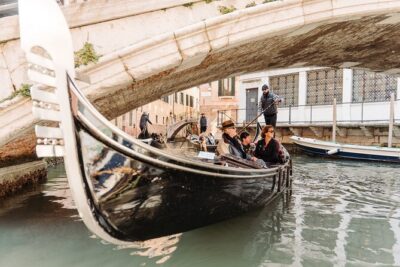 ★ 5.0Venice In a Day: St Mark’s, Doges Palace Gondola Ride & City TourFrom $1243,588 reviews
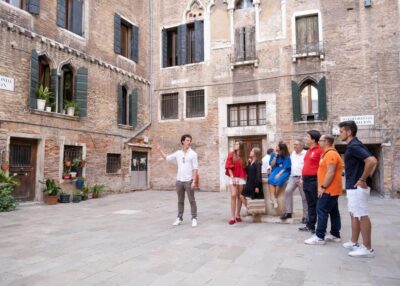 ★ 4.2City Center Historical Guided Walking TourFrom $141,873 reviews
 ★ 4.7Walking Guided Tour of the City Must-See SitesFrom $441,095 reviews
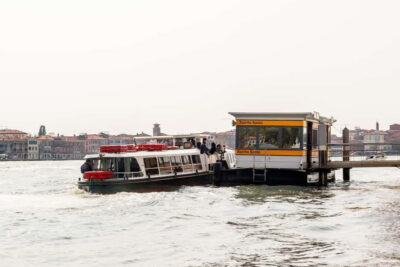 ★ 4.1City Pass with Museums including Doge’s PalaceFrom $741,020 reviews
 ★ 3.9Shared Gondola Ride through the Lagoon CityFrom $48937 reviews
 ★ 4.1St. Mark’s City Pass with Doge’s Palace EntryFrom $52742 reviews
 ★ 4.3City Center Walking Tour & Iconic Gondola RideFrom $63500 reviews
 ★ 3.0Winter Pass Top Attractions & City Walking TourFrom $18181 reviews
Browse the lists this tour appears in