
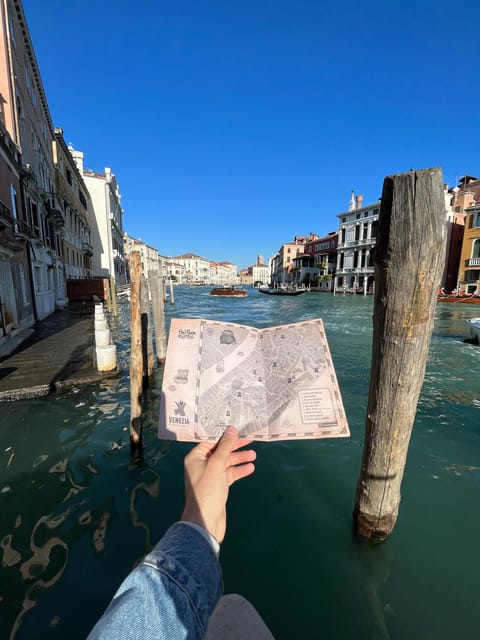
Review · CITY TOURS
Venice City Escape: “The beggar and the cloak”
Venice can be overwhelming. This game makes it playful. Venice City Escape: The beggar and the cloak is a self-guided “find the treasure” mission that uses a smartphone chat to turn a walk into a story you can solve step by step.
I like that it feels structured but not stiff—you get guidance from the web chat, yet you’re the one moving through the streets at your pace. I also like the format for first-time Venice visits: it’s a cultural, interactive walk built for all ages, and you don’t need to book around a timed-group tour.
One thing to consider: because there’s no live guide, you’ll rely on the clarity of the mission instructions, the hints, and the language you choose. If you hit a confusing riddle, you’ll be troubleshooting on your own rather than getting instant help.
In This Review
- Key points before you play
- Belpaese Express turns a cloak mystery into a city game
- How the mission works: web chat, riddles, and your smartphone as a compass
- Campo Sant’Anzolo start: what your first 20 minutes should feel like
- What’s included: map, props, web access, and the final prize
- The story focus: why riddles work better than standard sightseeing
- Price and value: $40 per group, up to 4, for about 2 hours
- English clarity and hints: how to avoid getting stuck
- Who should play this Venice City Escape (and who might not)
- Should you book Venice City Escape: The beggar and the cloak?
Key points before you play
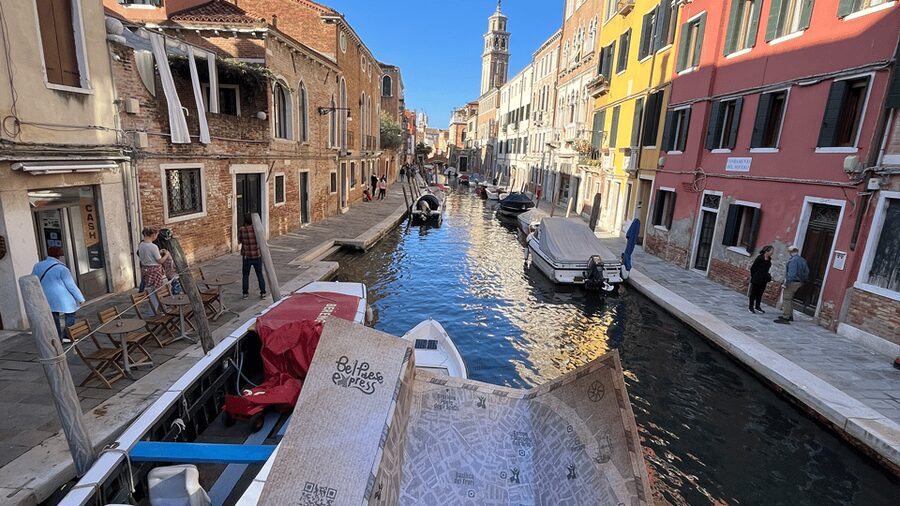
- Self-guided smartphone chat: guidance arrives in an interactive web chat, no special app needed.
- 2 hours on the clock, but no rush: the mission is about 2 hours, with a 2-hour validity window from first activation.
- A real Venice start point: you begin at Campo Sant’Anzolo and walk roughly 3 km.
- Story-driven riddles: your mission is to track an old cloak tied to coins and jewels.
- Works for groups up to 4: the price is per group, so it can be good value if you share.
- Language can affect flow: the mission is available in Italian, English, and Spanish, and the hint system may feel vague in English.
Belpaese Express turns a cloak mystery into a city game
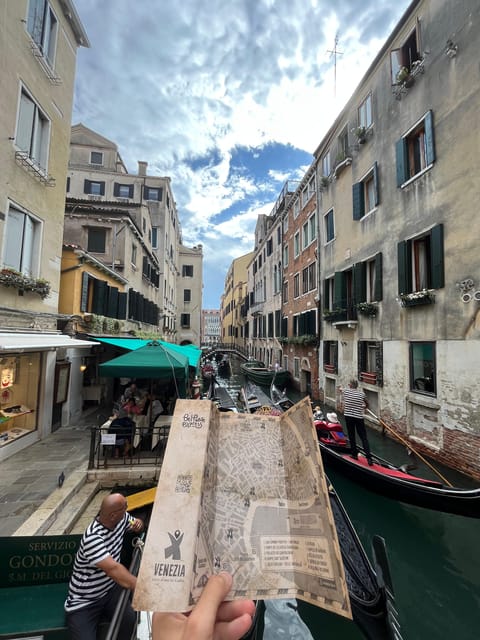
This isn’t the usual Venice plan of line up, look up, move on. Belpaese Express reframes sightseeing as a friendly challenge: riddles to solve, clues to follow, and a goal at the end. The story is simple and memorable. A desperate gentleman looks for a beggar after donating an old cloak—only to discover that what used to be priceless now seems lost. The catch? His mother had patched the cloak over her lifetime with coins and jewels, so there’s meaning behind the fabric.
For your day in Venice, that matters. When your attention is focused on solving the next step, you notice details you might otherwise walk past—doorways, small signs, street corners, and the way the city funnels foot traffic. It turns a “where do we go next?” problem into a “what’s the clue?” game.
And it’s designed to be practical. You don’t need a tour group meeting, a headset, or a guide who wants you to keep moving. You’re free to pause, think, and regroup—especially helpful if you’re traveling with mixed ages or energy levels.
The trade-off is the same reason it’s relaxing: you’re responsible for keeping the mission moving. If your phone battery dies or you’re stuck on a riddle longer than planned, there’s no supervisor to rescue you.
Wider loops through the sestieri
- Venice In a Day: St Mark’s, Doges Palace Gondola Ride & City Tour★ 5.0 · 3,588 reviews
- Venice: City Center Historical Guided Walking Tour★ 4.2 · 1,873 reviews
- Venice: Walking Guided Tour of the City Must-See Sites★ 4.7 · 1,095 reviews
- Venice: City Pass with Museums including Doge’s Palace★ 4.1 · 1,020 reviews
How the mission works: web chat, riddles, and your smartphone as a compass
You’ll play this as a self-guided experience. After purchase, you receive an access link by email. When you click it, an interactive chat appears, and that chat guides you through each part of the adventure.
The key idea here is that the mission doesn’t ask you to download an app. You just need:
- a charged smartphone
- an internet connection
At the beginning, you’ll get the materials you need, including the map and props. (Those props and the map are part of the experience design, so try not to skip ahead or assume you can guess the game flow.)
The mission is available in Italian and English (and the overall experience language is also listed as Spanish). You’ll follow instructions from the mission recap, including:
- the starting place
- approximate length (about 2 hours, roughly 3 km)
- timing expectations
There’s also a “smartphone + chat” rhythm to understand. Instead of one big lecture at the start, you get small prompts. That keeps attention up and helps you avoid the tired feeling that sometimes comes from guided walking tours.
For the best experience, I’d treat your phone like a real tool, not a souvenir. Keep the screen brightness up, bring a portable charger if you have one, and don’t wander far off in search of answers without checking the chat.
Campo Sant’Anzolo start: what your first 20 minutes should feel like
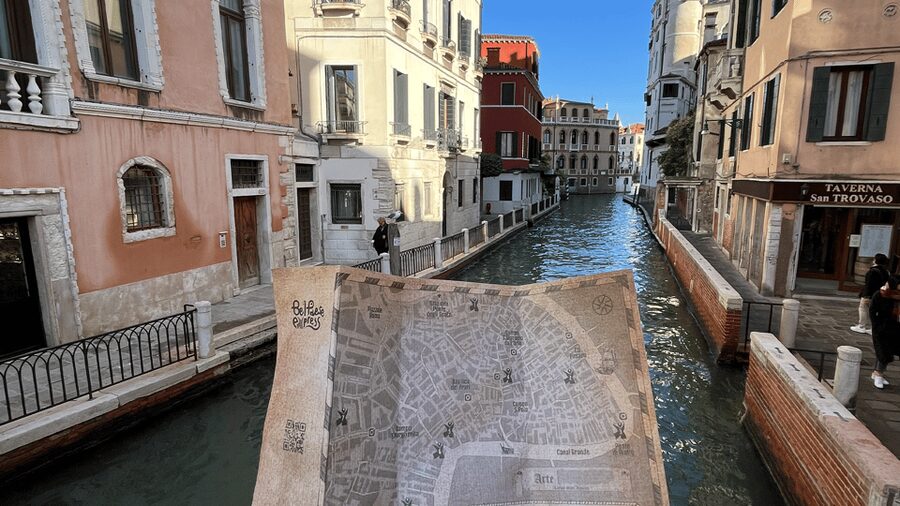
Your starting location is Campo Sant’Anzolo. From there, the walk is about 3 km and typically takes around 2 hours.
Because the route details aren’t presented as a traditional stop-by-stop itinerary, you’ll think in “mission phases” instead:
- Setup and first instructions: you’ll collect the materials and confirm you’re in the right place.
- Early riddles: you’ll learn the style of clues and how to interpret the mission prompts.
- Middle stretch: clues likely push you to pay attention to specific details around you, not just general landmarks.
- Final leg and prize: you’re guided toward a concluding moment where the mission wraps up.
One small but important practical point: the mission recap tells you exactly what to expect in terms of length and starting location, so skim that before you begin. This game is forgiving in pace, but it doesn’t work well if you’re guessing.
Also note the availability schedule: the mission can be played every day except Tuesday, with an operating window from 8:30 am to 9:00 pm. So you can fit it into a morning plan or an evening wandering session—just be sure you start with enough time.
If you want it to feel smooth, I suggest starting shortly after arrival in Venice, or right after you’ve settled into your day. That way, you’ll benefit from having your bearings fresh, and you won’t feel rushed to solve clues while you’re figuring out how the city works.
What’s included: map, props, web access, and the final prize
Included with your booking:
- Web app access
- a map
- a final prize
That “final prize” is a real motivator for a scavenger-hunt style experience. It gives the end a reason to exist beyond finishing the last clue.
Materials matter here. The map and props are provided at the beginning, meaning you don’t need to print anything or figure out complicated navigation apps. You can keep your attention on the mission chat and follow whatever guidance comes next.
There’s also a detail worth planning around for late December. On December 24, 25, and 26, the paper map is not available, and the reward can’t be physically picked up—you’d need to request it via email from the activity provider. If you’re traveling in that window, plan accordingly and don’t assume you’ll get the same physical materials as on other dates.
Another detail I like for flexibility: you can buy today and play whenever you want within the allowed timeframe. That’s handy when your Venice day changes due to weather or crowds.
Still, do keep one constraint in mind. The experience is valid for 2 hours from first activation. So even if the mission is described as about 2 hours, start when you’re ready to commit to that window.
The story focus: why riddles work better than standard sightseeing
Venice is a city where you can walk in circles if you’re not careful. This mission helps you move with purpose. The story about the cloak ties together a theme—value, inheritance, loss, and the hunt for something that used to mean everything.
The practical outcome is that you’re not just looking. You’re interpreting. Riddles push you to read small things. Clues make you check your context: What does the mission want? What does the clue imply? Where does the chat think you are?
That’s how you get more value out of a city where the best “sightseeing” often happens at street level. You’ll likely notice details you’d never target on a normal walk: subtle features and small visual cues that don’t scream for attention.
And the mission is designed for all ages. That’s a big deal. Many games become annoying fast for younger kids or for adults who don’t want puzzle overload. This format balances fun and culture in a way that stays approachable.
One caution: the clue system depends on language and instruction clarity. In English, the phrasing can feel less intuitive at times, and hints may be broad—like suggesting you search the area without pinning down where to focus. If you prefer precise directions, consider that as you choose your mission language and your expectations.





Price and value: $40 per group, up to 4, for about 2 hours
The price is $40 per group up to 4 for roughly a 2-hour experience.
That’s important context. If you travel solo, it’s still a fun use of time—but the value improves quickly with a small group. With two people, you’re effectively around $20 per person. With four people, it’s about $10 each. For a smartphone-guided city activity that includes map materials and a final prize, that can be a cost-effective way to spend part of your Venice day.
It also saves money in a different way: you don’t need to pay for multiple guided tickets or reorganize your schedule around a live tour. Since it’s self-guided, you’re paying for a contained adventure rather than a guide’s hours.
Where the value can slip is if you get stuck. If a riddle slows you down and you feel frustrated, you’re not just losing time—you’re losing the feeling that this is a smooth sightseeing shortcut. The mission is best when you come in with a playful attitude and a willingness to experiment.
If you’re the kind of traveler who likes puzzles and short missions, it’s an easy yes. If you prefer a traditional narrative tour with clear answers, you might find the self-guided nature less comfortable.
English clarity and hints: how to avoid getting stuck
This experience supports multiple languages, and that matters. If you choose English, you might run into occasional confusion when trying to interpret riddles or find information within the city setting. Some clues may feel like they lack context, so you may want to reread the mission recap carefully before you start.
Hints are meant to help, but the general hint style can be a little too wide at times. That means “search the area” might not tell you where your eyes should go next.
Here’s how I’d make that work in the real world:
- Take 30 seconds to match the chat instruction to what you can see around you, rather than guessing.
- If the hint feels vague, use it to narrow your strategy (for example, look for likely visual targets nearby) instead of walking randomly.
- In busy areas, slow down. Crowds make it harder to locate small details, and distractions can pull you off the intended spot.
There’s also one more practical timing issue to watch for. The system relies on email and an access link. If you don’t see the expected email quickly, check spam and other inbox folders. After that, use the access link to open the chat rather than waiting on last-second code messages.
And here’s a small lesson that can save you stress: make sure you start playing soon after you reach your starting point, because parts of the process depend on active engagement with the mission interface.
Who should play this Venice City Escape (and who might not)
I think this is a great fit if you want:
- a smart, interactive walk instead of a lecture
- a way to enjoy Venice without hunting for the next museum ticket
- an activity that works well for mixed ages
- a group plan where everyone can participate, not just watch
It’s also ideal for travelers who arrive in Venice wanting something lighter than a full day of intense sights. You get a mission structure, a story arc, and a reason to keep walking.
You might want to skip it if:
- you strongly dislike puzzles
- you prefer a live guide to interpret confusing moments
- you’re traveling with very limited phone data or you don’t have internet access beyond your hotel
Bottom line: it’s best when you’re in “let’s figure this out” mode.
Should you book Venice City Escape: The beggar and the cloak?
Book it if you want a playful, self-guided way to see Venice with clear boundaries: a starting point, a mission story, and an ending prize. It’s also strong value for groups up to four, especially when you’re splitting the cost.
I’d hesitate if you need step-by-step certainty or you’re worried you’ll get stuck on riddles without help. But if you’re okay with a bit of problem-solving—and you bring a charged phone—you’ll likely find it a fun, memorable alternative to a traditional walking tour.
The City, Bridge to Bridge
- Venice In a Day: St Mark’s, Doges Palace Gondola Ride & City Tour
★ 5.0 · 3,588 reviews - Venice: City Center Historical Guided Walking Tour
★ 4.2 · 1,873 reviews - Venice: Walking Guided Tour of the City Must-See Sites
★ 4.7 · 1,095 reviews - Venice: City Pass with Museums including Doge’s Palace
★ 4.1 · 1,020 reviews - Venice: Shared Gondola Ride through the Lagoon City
★ 3.9 · 937 reviews - Venice: St. Mark’s City Pass with Doge’s Palace Entry
★ 4.1 · 742 reviews
More Tour Reviews in Venice
- Venice: Doge’s Palace Reserved Entry Ticket
★ 4.6 · 42,716 reviews - Venice: Grand Canal Gondola Ride with App Commentary
★ 4.1 · 23,020 reviews - Venice: Grand Canal Gondola Experience with Live Commentary™
★ 4.2 · 16,504 reviews - Boat Trip: Glimpse of Murano, Torcello & Burano Islands
★ 4.3 · 15,699 reviews - Venice: La Fenice Opera House Entry Ticket with Audio Guide
★ 4.6 · 11,742 reviews - Murano & Burano: Boat Tour with Guide & Glass Factory Visit
★ 4.3 · 10,716 reviews
Fresh Off the Vaporetto: New Venice Reviews





City Tours, compared.
 ★ 5.0Venice In a Day: St Mark’s, Doges Palace Gondola Ride & City TourFrom $1243,588 reviews
 ★ 4.2City Center Historical Guided Walking TourFrom $141,873 reviews
 ★ 4.7Walking Guided Tour of the City Must-See SitesFrom $441,095 reviews
 ★ 4.1City Pass with Museums including Doge’s PalaceFrom $741,020 reviews
 ★ 3.9Shared Gondola Ride through the Lagoon CityFrom $48937 reviews
 ★ 4.1St. Mark’s City Pass with Doge’s Palace EntryFrom $52742 reviews
 ★ 4.3City Center Walking Tour & Iconic Gondola RideFrom $63500 reviews
 ★ 3.0Winter Pass Top Attractions & City Walking TourFrom $18181 reviews
Browse the lists this tour appears in