
Review · VENICE BACKSTREET WALKING TOURS
Venice City Self Guided Walking Tour with an APP
Venice, without the tour-timing stress. This self-guided walk uses the Trippy Tour Guide app to connect big-ticket landmarks to the side streets between them, with over 50 narration points as you go. You follow a clear route that starts in Piazza San Marco and ends at Punta della Dogana, with a mobile ticket on your phone.
I love the pace control: you can slow down at the places that catch your eye and speed through the rest. I also love that the app’s map experience works better than Google for Venice’s narrow lanes, making it easier to find shops and landmarks on the fly.
One thing to plan for: Doge’s Palace is the only stop listed as not included for admission, so you’ll need to handle entry separately if you want to go in.
In This Review
- Key highlights worth knowing
- How the Trippy app turns Venice into a walkable story
- St. Mark’s Square and Doge’s Palace: power, gold, and decision time
- Bridge of Sighs and Calle dei Fabbri: prison symbolism and working streets
- Ponte dei Fuseri and Carta Gate: 400-bridge Venice and a sharper city edge
- Rialto Bridge, San Giacomo di Rialto, and the Grand Canal view line
- Scuola Grande and Tintoretto’s home: art history with real place feeling
- Campos and bridges: Mori brothers, Guglie spires, and barefoot monks
- Calle Nuova Sant’Agnese, Campo San Rocco, and churches that tell odd truths
- Ponte dei Pugni and Dorsoduro at the end: legends, aperitivo, and a park reset
- Price and value: what $14.99 really buys you
- Who should book this Venice app walk
- Is this the right choice for you?
- FAQ
- What is included in the Venice City Self Guided Walking Tour?
- How long does the self-guided tour take?
- Where does the tour start and end?
- Is Doge’s Palace admission included?
- What language is the tour available in?
- Are snacks included?
- Can I cancel for a full refund?
- Final call: should you book it?
Key highlights worth knowing
- 50+ narration points delivered right on your phone for a smoother, less stop-and-start experience
- Pace at your own speed, including the ability to pause for shops and side detours
- Maps built for Venice’s narrow streets, where navigation can get messy fast
- A smart route flow: from St Mark’s to Rialto, then into Dorsoduro for the end stretch
- Mostly free walk-up sights, with a single paid-entry exception at Doge’s Palace
- Private-by-default setup, so it’s just your group doing the route
How the Trippy app turns Venice into a walkable story
This tour is built around a simple idea: instead of a group chasing a guide, you get an app that gives you the history at the right moments. You’ll use the Trippy Tour Guide app with over 50+ narration points tied to the landmarks on your route, so you’re not just staring at buildings—you’re getting context while you walk.
The biggest win is control. Venice is crowded and confusing in the same breath, and fixed schedules can feel like a trap. This format lets you move at your speed, pause when something small catches your eye (shop signs, a church façade detail, a bridge view), then jump back into the flow when you’re ready.
Value-wise, $14.99 is mostly paying for the app experience, not admission fees. Most of the stops listed are free to access on foot, so your main extra cost is the one place that doesn’t come included: Doge’s Palace. If you’re the type who likes to read and look closely while walking, you’re in the right lane.
On foot over the bridges, more routes
- Venice: Doge’s Palace and St Mark’s Basilica Walking Tour★ 4.4 · 6,291 reviews
- Venice: San Marco to Rialto Walk & Spritz Like a Local★ 4.2 · 3,651 reviews
- Venice Walking Tour and Gondola Ride★ 3.5 · 3,630 reviews
- Private 3 hrs Venice Tour: St Mark’s, Walking tour & Boat tour★ 4.0 · 3,372 reviews
St. Mark’s Square and Doge’s Palace: power, gold, and decision time
You start in St. Mark’s Square (Piazza San Marco), and the route wastes no time. The Procuratie buildings framing the piazza are introduced in the kind of detail that makes the square feel less like a photo backdrop and more like a living center of Venetian life. You’ll also hear about connections like Caffè Florian, tucked into the same historic stage.
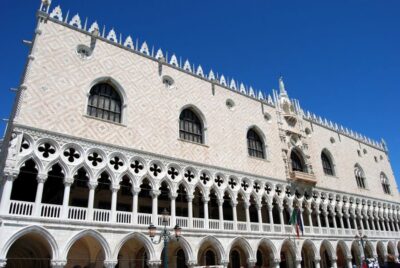
Then comes the real “seat of government” moment: Doge’s Palace (Palazzo Ducale). Expect Gothic architecture and an explanation of how this palace wasn’t just a residence—it was the heart of Venetian rule. The key practical note: admission for Doge’s Palace is not included, so this is where your planning matters.
If you’re the sort of traveler who likes to go inside major monuments, set aside time and budget for Doge’s Palace entry. If you’re mainly interested in the exterior atmosphere and the walk-by storytelling, you can still enjoy the setting, but the palace is the one stop where you may feel the absence of included admission.
Bridge of Sighs and Calle dei Fabbri: prison symbolism and working streets
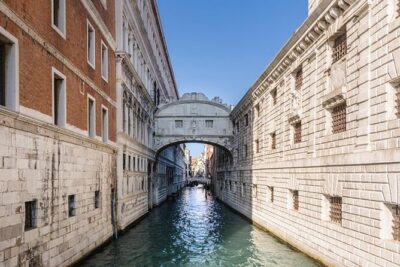
After Doge’s Palace, the route moves into a more intimate mood with the Bridge of Sighs. This bridge is introduced as a symbol tied to a darker Venetian past—your app narration encourages you to imagine the moment prisoners saw just before their situation closed in. It’s the kind of detail that makes a short crossing feel heavier than you’d expect.
Right after that, you shift into Venice’s maze logic with Calle de Fabbri. This street is connected to locksmiths, which gives your walk a “people who made things” angle instead of only a “look at monuments” angle. You’ll also cross Ponte Tron and get the feel of how bridges function like shortcuts in a city built for canals and narrow passageways.
Practical takeaway: this section is where the app does its best job. In Venice, it’s easy to get turned around when you’re only following intuition. The narration points plus a guided route help you keep moving without constantly stopping to re-orient.
Ponte dei Fuseri and Carta Gate: 400-bridge Venice and a sharper city edge
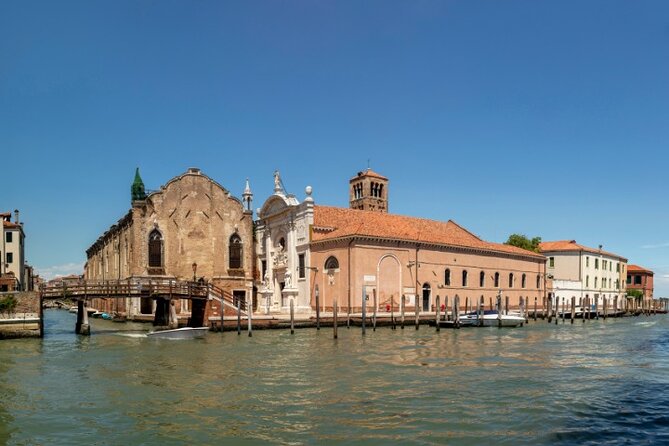
Next you cross Ponte dei Fuseri, described as one of Venice’s 400 bridges. That number is more than trivia. It’s your reminder that Venice isn’t one “big bridge moment.” It’s a city where daily movement is stitched together by small crossings, and this route lets you experience that rhythm.
From there, you’ll head toward Carta Gate, with narration that links the area to the Doge’s Palace setting and the Piazzetta San Marco space. You’ll spend time appreciating the architecture and symbolic details tied to Venetian power—especially the Gothic elements and the historic column features mentioned on this walk.
This is also a useful transition point. Up to now, you’ve been in the most famous cluster. The route begins to nudge you away from the loudest tourist pockets and toward streets where you’ll notice quieter architecture and more local atmosphere as you continue.
Rialto Bridge, San Giacomo di Rialto, and the Grand Canal view line
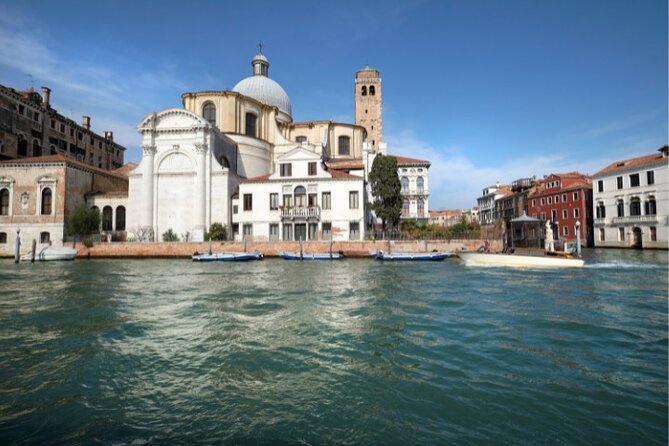
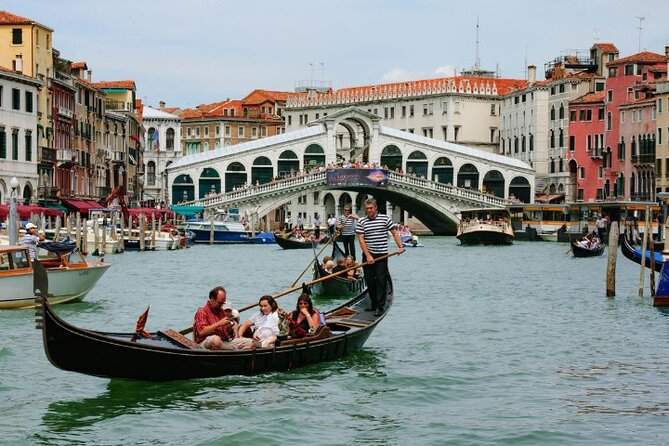
Then the route pivots hard toward commerce and classic Venice views. Ponte di Rialto is presented as the city’s oldest canal bridge, built in 1551 to replace an earlier wooden structure from 1173. You’ll also learn why the arch matters—ships could pass under it—and you’ll walk the area lined with shops for the payoff: strong views along the Grand Canal.
Right nearby, the route stops at Chiesa di San Giacomo di Rialto, described as Venice’s oldest church (from 421). The narration adds a fun twist: an inaccurate 15th-century clock. That’s exactly the sort of detail that makes a church stop feel more playful and specific rather than generic.
Next is the Grand Canal itself—framed as Venice’s main street shaped by the layout and growth from an earlier river-branch idea. The app points you to the idea that grand houses rose along the water because this was the place where money and status traveled. You also get a concrete number here: 170 historic buildings telling the story, which helps you understand why the canal looks like an open-air gallery.
If you love photo stops but hate “stand here for ten minutes” tours, this section fits. You can take short looks, then keep walking while the app keeps you anchored to what you’re seeing.
Venice at walking pace, more of the calli





Scuola Grande and Tintoretto’s home: art history with real place feeling
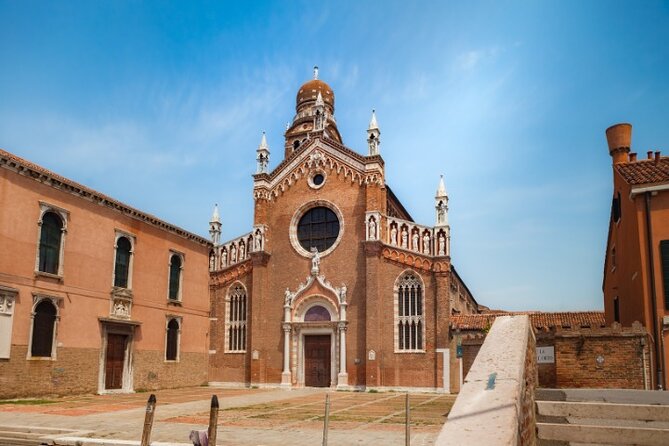
From Rialto’s shipping-and-shopping energy, the walk shifts into institutions and artists. The route includes Scuola Grande di Santa Maria della Misericordia, a historic institution dating to the 13th century, with design credited to Jacopo Sansovino in 1532. The narration connects classical Roman influence with Venetian grandeur, then points out how the site functions today as a gallery and event space that preserves 16th-century architecture.
Then you visit Casa del Tintoretto, Tintoretto’s home from 1574 to 1594. This is one of those stops that can feel surprisingly personal. When a place is tied directly to an artist’s daily life—rather than just a museum wall—you tend to “see” the style with more imagination.
If you’re traveling with someone who gets tired of only facades and viewpoints, this is a strong balance. You still get beautiful scenery, but you also get a clear sense of Venice as a place where art wasn’t decorative. It was part of the city’s identity.
Campos and bridges: Mori brothers, Guglie spires, and barefoot monks
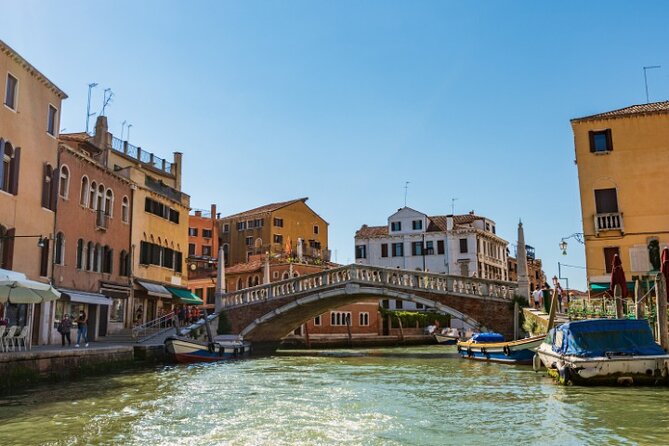
Now the route starts leaning into Venice’s smaller stories—statues, short spans of stone, and squares that locals actually use.
You’ll visit Campo dei Mori, built around statues of the Mori brothers, merchant figures from the 13th century who criticized Venice’s government. It’s a reminder that even the city’s public monuments have political tension underneath.
Then comes Ponte delle guglie, built in 1580. The narration highlights its stone structure and the distinctive spires—so instead of just a bridge, you’re looking at a deliberate design choice meant to be remembered.
Next is Ponte de Chiodo, a 15th-century bridge noted for being one of the two that preserve railings-free character. After that, Ponte degli Scalzi shows a contrast: completed in 1934 and named for nearby Carmelite monks, with the meaning of “Scalzi” tied to being barefoot. That modern-vs-historic contrast is useful because it keeps your eyes open to how Venice keeps changing while still honoring older patterns.
Calle Nuova Sant’Agnese, Campo San Rocco, and churches that tell odd truths
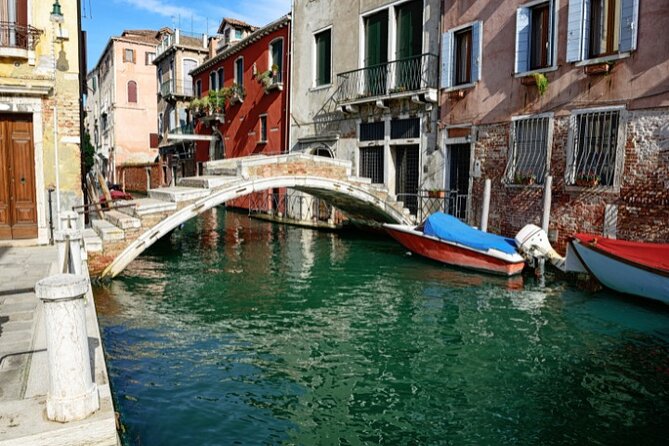
This part of the walk brings in real neighborhood texture—shopping lanes and squares that aren’t centered on the big-ticket landmark circuit.
You’ll follow Calle Nuova Sant’Agnese, described as a more local shopping route with Venetian goods and souvenir options from small boutiques. It’s a good place to pick up something that doesn’t look like it was printed in bulk, and it’s also a chance to take a breather from the densest sightseeing streets.
Then you hit Campo San Rocco, framed as a quieter square with art, history, and everyday life. The narration points out the 14th-century Church of Santa Maria dei Miracoli and its stunning frescoes. This stop helps you slow down, because squares in Venice are where you feel how the city works between big sights.
After that, the route includes Chiesa dei Santi Geremia e Lucia, rebuilt in 1753, connected to relics of Saint Lucy. The story here is explicitly about pilgrims seeking healing from eye ailments, which adds a spiritual thread to the walking route.
Ponte dei Pugni and Dorsoduro at the end: legends, aperitivo, and a park reset
The last stretch keeps Venice’s character playful and slightly dramatic. Ponte dei Pugni is tied to past fistfights between rival families. Today it’s treated like a reminder of the city’s rough-and-colorful human side—history that isn’t only about rulers and palaces.
Right after that, there’s a built-in moment for a break: the route suggests aperitif time at Cantine del Vino già Schiavi in Dorsoduro. Your walk isn’t calling for a formal sit-down dinner. It’s more like a nudge to switch from sightseeing mode to “sit, sip, and reset your feet.”
Then comes Campo Santa Margherita, known here for cafes and lively square life. The narration even calls out the red benches, which is exactly the kind of detail that helps you find a real pause point instead of just drifting.
Finally, you reach Giardini Papadopoli, described as Venice’s green oasis since the 19th century, tied to the Papadopoli family and now a city park with diverse trees and views. After hours of stone, water, and curves, a park stop matters. Even if you only spend a few minutes, it makes the end of the day feel like it has an actual landing.
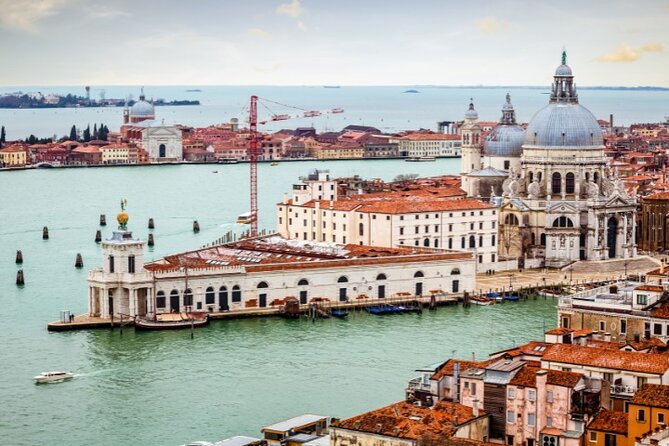
Your tour route concludes at Punta della Dogana – Pinault Collection in Dorsoduro, so this walk has a clean arc: start in St Mark’s, then work toward Rialto and finish on the Dorsoduro side.
Price and value: what $14.99 really buys you
At $14.99 per person, you’re paying for the app experience: access to the Trippy Tour Guide app, a mobile ticket, and over 50 narration points tied to your route. You’re not paying for museum entries across the board.
That matters because most of the stops are set up as walk-up sights with admission listed as free, with the major exception being Doge’s Palace. So if you’re willing to pay for that one entry separately (or decide you don’t need to go inside), you can keep your sightseeing cost very controlled.
Also, the 5 to 6 hour length is realistic for a self-guided format where you’ll actually look at things. It’s not a quick two-hour “rush through the highlights” situation. If you want a slow, steady day and you like learning while you walk, this price-to-time ratio feels fair.
The other value detail: it’s a private activity, meaning only your group takes the route. That helps if you don’t want to feel like you’re in someone else’s hurry.
Who should book this Venice app walk
This tour fits best if you:
- Want to move at your own pace instead of being shepherded from one stop to the next
- Like history told in small, timed chunks while you’re standing right in front of something
- Prefer navigation support for Venice’s narrow streets (the app maps are a big strength here)
- Are okay paying separately for Doge’s Palace if you want interior time
It may not be ideal if you:
- Only want one or two iconic stops and hate walking for half a day
- Expect every major monument to be fully ticketed and included
Is this the right choice for you?
If you’re doing Venice for the first time or the third time, this works because it connects the obvious sites (St Mark’s, Doge’s Palace, Rialto, Grand Canal) with the quieter bridges and lanes between them. The $14.99 cost makes sense when you care about narration and prefer self-guided flexibility—and the app’s navigation support is the kind of practical upgrade you’ll feel immediately in Venice.
I’d book it if you want an easy way to turn a long day of walking into a day that actually teaches you what you’re looking at.
FAQ
What is included in the Venice City Self Guided Walking Tour?
You get access to the Trippy Tour Guide app for the walking tour, plus a mobile ticket and 50+ narration points in English.
How long does the self-guided tour take?
The duration is approximately 5 to 6 hours.
Where does the tour start and end?
It starts at St. Mark’s Square (Piazza San Marco, 30124 Venezia VE, Italy) and ends at Punta della Dogana – Pinault Collection, Dorsoduro.
Is Doge’s Palace admission included?
No. Doge’s Palace admission is not included. Other listed stops are marked as free.
What language is the tour available in?
The tour is offered in English.
Are snacks included?
No. Snacks are not included.
Can I cancel for a full refund?
Yes. You can cancel up to 24 hours in advance for a full refund.
Final call: should you book it?
Book this if you want a walkable Venice route with history you can control—less waiting, more looking, and fewer wrong turns thanks to the app’s navigation. Skip it only if you’d rather buy a ticket-heavy guided experience where everything inside is bundled for you.
More Tours in Venice
- Murano & Burano: Boat Tour with Guide & Glass Factory Visit
★ 4.3 · 10,716 reviews - Doge’s Palace & St. Mark’s Basilica with Terrace Access Tour
★ 4.7 · 10,697 reviews - Venice: Burano, Torcello & Murano Boat Tour w/Glassblowing
★ 4.4 · 10,245 reviews - Murano, Burano and Torcello Half-Day Sightseeing Tour
★ 3.5 · 7,928 reviews - Murano & Burano Islands Guided Small-Group Tour by Private Boat
★ 4.5 · 7,580 reviews - Venice: Doge’s Palace and St Mark’s Basilica Walking Tour
★ 4.4 · 6,291 reviews
More Tour Reviews in Venice
- Venice: Doge’s Palace Reserved Entry Ticket
★ 4.6 · 42,716 reviews - Venice: Grand Canal Gondola Ride with App Commentary
★ 4.1 · 23,020 reviews - Venice: Grand Canal Gondola Experience with Live Commentary™
★ 4.2 · 16,504 reviews - Boat Trip: Glimpse of Murano, Torcello & Burano Islands
★ 4.3 · 15,699 reviews - Venice: La Fenice Opera House Entry Ticket with Audio Guide
★ 4.6 · 11,742 reviews - Murano & Burano: Boat Tour with Guide & Glass Factory Visit
★ 4.3 · 10,716 reviews
Venice on Foot, Continued
- Venice: Doge’s Palace and St Mark’s Basilica Walking Tour
★ 4.4 · 6,291 reviews - Venice: San Marco to Rialto Walk & Spritz Like a Local
★ 4.2 · 3,651 reviews - Venice Walking Tour and Gondola Ride
★ 3.5 · 3,630 reviews - Private 3 hrs Venice Tour: St Mark’s, Walking tour & Boat tour
★ 4.0 · 3,372 reviews - Venice: City Center Historical Guided Walking Tour
★ 4.2 · 1,873 reviews - Venice: Walking Guided Tour of the City Must-See Sites
★ 4.7 · 1,095 reviews
Fresh Off the Vaporetto: New Venice Reviews



Venice Backstreet Walking Tours, compared.
 ★ 4.4Doge’s Palace and St Mark’s Basilica Walking TourFrom $1016,291 reviews
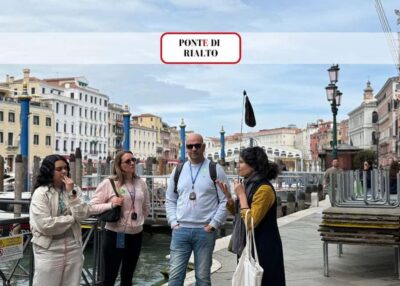 ★ 4.2San Marco to Rialto Walk & Spritz Like a LocalFrom $143,651 reviews
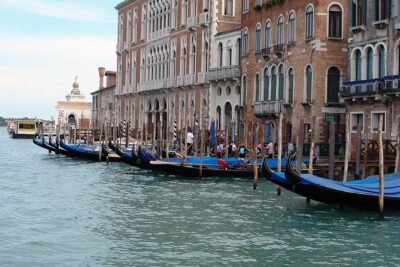 ★ 3.5Venice Walking Tour and Gondola RideFrom $723,630 reviews
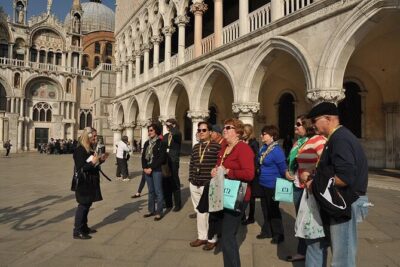 ★ 4.0Private 3 hrs Venice Tour: St Mark’s, Walking tour & Boat tourFrom $4803,372 reviews
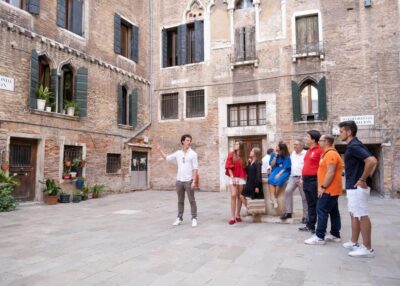 ★ 4.2City Center Historical Guided Walking TourFrom $141,873 reviews
 ★ 4.7Walking Guided Tour of the City Must-See SitesFrom $441,095 reviews
 ★ 4.0Private Best of Venice Walking Tour with St Mark’s BasilicaFrom $2421,063 reviews
 ★ 4.5Venice Sightseeing Small Group Walking Tour with a Local GuideFrom $48887 reviews
Browse the lists this tour appears in