
Venice is best learned on foot. This private Dorsoduro historic walk turns famous landmarks into everyday clues, showing how Venice works through quiet backstreets and working waterfront details. The route keeps you in a local rhythm, not a rush of selfie stops.
What I liked most is the way guides Nicoló and Alexandra explain Venice in plain language. I especially enjoyed how they teach key words for the city’s identity, like squero and palazzo, while pointing out the architecture and urban planning you’d otherwise miss.
One thing to plan for: entry inside some major sights costs extra. If you want to go inside Punta della Dogana or the Basilica di Santa Maria della Salute, those tickets are not included.
In This Review
- Key highlights you’ll feel right away
- Dorsoduro-first: why this walk feels more like Venice
- How Venice’s “building blocks” get explained on the way
- From Campo Santa Margherita to Scuola Grande dei Carmini
- Squero Domenico Tramontin e Figli: the gondola boatyard in context
- Osteria Al Squero: a Venetian aperitivo pause (without the alcohol pressure)
- Fondamenta Zattere and Campo Sant’Agnese: port life meets city planning
- Punta della Dogana to Santa Maria della Salute: commerce, customs, and tradition
- Ponte de la Toletta and the Venice of Carnival
- Giardini di Ca’ Rezzonico: palazzo Venice without the crowds
- Price and value: is $75.24 per person worth it
- Practical tips for a smooth Venice historic walk
- Should you book this Venice Historic Walk?
- FAQ
- How long is the Venice Historic Walk?
- Where does the tour start and end?
- What time does the tour begin?
- Is the tour private?
- Are tickets included for churches or palaces?
- Do I need to worry about an access fee?
Key highlights you’ll feel right away
- Dorsoduro, the local side of Venice: you’ll spend real time in the neighborhood where people live, hang out, and take weekend walks
- A guide-led language lesson: words like squero and palazzo make Venice start to make sense
- Squero boatyards up close: you’ll see where gondolas are tied to tradition and craft
- Apt timing for softer streets: starting in the morning helps you move through calmer corners
- A short Venetian aperitivo moment: an easy break that fits the theme, not a tourist trap
Dorsoduro-first: why this walk feels more like Venice
Venice can be pretty, but it can also feel like a theme park if you only stick to the big-ticket areas. This walk shifts the focus to Dorsoduro, one of the city’s most lived-in districts. You’re not just looking at buildings; you’re tracing how people use space—where they pause, where they gather, and how neighborhoods shape daily life.
That choice matters. Dorsoduro is where you can notice the smaller architecture cues that explain the big picture: how buildings face canals, how streets funnel foot traffic, and how the city’s layout supports boats as transportation long after most cities moved on. When your route includes quieter campi and working waterfronts, Venice starts to feel practical and human again.
And since it’s a private tour for your group, the pace is easier to manage. If you want slower explanations or you’re taking photos constantly, you can do that without the constant “move along” pressure.
Venice at walking pace, more of the calli
- Venice: Doge’s Palace and St Mark’s Basilica Walking Tour★ 4.4 · 6,291 reviews
- Venice: San Marco to Rialto Walk & Spritz Like a Local★ 4.2 · 3,651 reviews
- Venice Walking Tour and Gondola Ride★ 3.5 · 3,630 reviews
- Private 3 hrs Venice Tour: St Mark’s, Walking tour & Boat tour★ 4.0 · 3,372 reviews
How Venice’s “building blocks” get explained on the way
One of the best parts of this experience is that it teaches Venice like a system, not a set of random sights. You’ll learn about how the city was built and how its architecture and urban design evolved over time. You also get introduced to a handful of local terms that act like shortcuts to understanding what you’re seeing.
Here’s what that means in real life while you walk:
- Squero isn’t just a word; it’s a clue that Venice has specific places tied to gondola-making and upkeep. When you hear and see it in context, the canals stop being scenery and become part of an actual craft economy.
- Palazzo helps you read the grand buildings you’ll pass. Even if you don’t go inside, you start noticing the idea behind the facade: how wealth, family identity, and the city’s water-based layout shape design.
- Campos and fondamente act like Venice’s living rooms. You’ll understand why squares matter and how the waterfront promenade functions as a social spine.
This is the kind of guide work that changes your whole visit. Instead of treating Venice like a postcard factory, you’ll be able to look at a facade or canal edge and explain to yourself what you’re seeing and why it exists.
From Campo Santa Margherita to Scuola Grande dei Carmini
You start at Campo Santa Margherita, a Venetian square that’s known for everyday street life. This is a smart first stop because squares in Venice are never neutral. They’re meeting points, circulation hubs, and places where local identity shows up in architecture and routine. Even in a short visit, you can learn how a campo guides movement and creates a sense of neighborhood.
From there, you move to Scuola Grande dei Carmini. A stop like this works best when you learn what a scuola actually is. You’ll get the idea of what these schools were for—how lay organizations shaped community life and left behind buildings that still dominate the street view.
Why I like this pairing: the walk starts with a public square and then shifts to an institution-shaped building. That contrast teaches you quickly that Venice has different “types” of space. Squares are for people in motion; scuole are for people in community. Both matter, and both help explain Venice beyond the most famous canals.
At these early stops, the time investment is small—about ten minutes each—but the context pays off later. You’ll keep seeing the same patterns as you go: places where people gather, then places where they belonged.
Squero Domenico Tramontin e Figli: the gondola boatyard in context
Next comes one of the most distinctive parts of the route: Squero Domenico Tramontin e Figli. This is where you’ll learn what a squero is and why it’s central to Venetian life. If you only associate gondolas with tourism, a visit like this corrects that in a good way. You’re seeing the trade connections behind the iconic shape.
A boatyard is also a lesson in Venice’s working geography. The city didn’t just invent canals for looks—it organized life around water access. The craft spaces, the waterfront edges, and the way boats tie into neighborhoods all make more sense once you see the squero concept in real location.
Even if you don’t spend a lot of time inside a building (and at this stop the visit is free), the explanations can change what you notice afterward. You might start spotting similar waterfront logic elsewhere on your own.
Osteria Al Squero: a Venetian aperitivo pause (without the alcohol pressure)
You’ll then stop at Osteria Al Squero for a short Venetian aperetivo moment. This is a practical break built into the theme of the walk. It’s not a long sit-down meal; it’s a chance to reset while staying in the same story.
Since alcoholic beverages aren’t included, you can keep it flexible. If you want something non-alcoholic, it’s easier to manage your day. If you do want a drink, you’ll know to treat it as an extra cost rather than something bundled into the tour price.
This kind of pause also helps the route feel human. Venice streets ask a lot from your legs and attention. A built-in stop means you’ll keep your energy for the next stretches instead of trying to force it through.
Wider loops through the sestieri
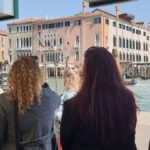
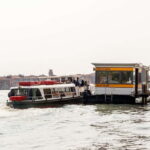
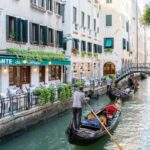


Fondamenta Zattere and Campo Sant’Agnese: port life meets city planning
After the aperetivo stop, the walk shifts toward Venice’s waterfront logic with Fondamenta Zattere. This is a great place to learn about the Venetian port and canals, because the setting naturally pushes you to think about trade and movement. You can look at the canal edges and start connecting them to how goods and people moved through the city.
Then you head to Campo Sant’Agnese, where the emphasis turns to Venetian urbanism. This is one of those stops where the explanation can matter more than the view itself. You’ll get a sense of how Venice’s layout works—how paths and gathering spaces form, how neighborhoods take shape, and why the city grew the way it did instead of like a grid.
I like pairing port life with urban planning in one walk. Port areas can feel chaotic if you only look at them as “pretty canal frontage.” Urbanism explanations help you see structure underneath the looks.
Punta della Dogana to Santa Maria della Salute: commerce, customs, and tradition
Two of the most important cultural stops on the route sit near the water traffic of the city: Punta della Dogana and Basilica di Santa Maria della Salute.
At Punta della Dogana, you’ll learn about the custom house and merchants of Venice. This stop ties Venice’s money, trade, and identity together. When you understand customs and commerce in the context of the geography, the city’s grandeur starts to feel earned. It’s not just that Venice got rich; it’s that its location and waterways made wealth possible in a very specific way.
Next is Basilica di Santa Maria della Salute, where the focus is on Palladio, Venetian Baroque, and life traditions. This is one of those moments where Venice’s architecture becomes a marker of civic culture. Even if you don’t go inside, you’ll likely come away with a clearer sense of why such a church matters in a place where public rituals and community identity were tightly linked.
Two practical notes from your planning view:
- The entry tickets for Punta della Dogana and Santa Maria della Salute are not included.
- The walk time at each stop is about 15 minutes, so you should expect guidance and key takeaways, not a long museum-style visit.
If you’re the type who likes to linger, it’s worth planning your personal timing after the tour so you’re not trying to cram a church visit into the end of a walk.
Ponte de la Toletta and the Venice of Carnival
Then you reach Ponte de la Toletta, connected here to Venetian Carnival. This is a fun shift, because it reminds you that Venice isn’t only built on commerce and architecture—it’s also built on celebration, costumes, and public performance.
Carnival symbolism often works best when the guide links it to the city’s physical spaces. You’ll start thinking about bridges, canals, and routes as part of how events happened. Instead of treating Carnival as a calendar date, you’ll see it as a way the city staged identity.
This stop is also a good mood change in the middle of the route. After heavy themes like customs and church design, Carnival brings you back to human culture and spectacle.
Giardini di Ca’ Rezzonico: palazzo Venice without the crowds
The final themed stop on the route is Giardini di Ca’ Rezzonico. Here you’ll learn about a Venetian palazzo connection and see how the palace world relates to gardens and public-facing space.
This works well as a closing chapter because a palazzo isn’t just an impressive facade. In Venice, it’s often tied to the city’s power structure and family identity. When you connect that concept to where people walk and how space is arranged, you get a more complete picture of Venetian social life.
You end at Campo San Barnaba, another square that feels like a natural release point after a compact morning narrative. It’s also a helpful place to regroup before heading back toward the main sights on your own.
Price and value: is $75.24 per person worth it
The price is listed as $75.24 per person for about 2 hours 30 minutes. For Venice, that’s not cheap, but it can be good value if you care about learning and not just ticking boxes.
Here’s how I think about value on a tour like this:
- You’re paying for a guided learning experience in a specific neighborhood (Dorsoduro) rather than a generic “highlights” loop.
- You get a clear structure across multiple types of sites: squares, a scuola, a squero boatyard, a waterfront port area, and major architecture.
- Your guide also teaches vocabulary (squero, palazzo) and connects architecture and urban design to how Venice evolved and lives today.
The main cost “gotcha” is that some entrances are not included, specifically Punta della Dogana and Basilica di Santa Maria della Salute. If you’re planning to go inside both, budget extra.
Also keep in mind the tour is private for your group, so the price is doing more work than it might on a big group tour. If you’re traveling with a partner or small family, it can feel like a smart way to get local perspective without getting stuck in a crowd.
Practical tips for a smooth Venice historic walk
A few things will help you enjoy this more:
- Start time matters: the walk begins at 9:00 am at Campo Santa Margherita. Morning timing usually means better light and calmer streets, which makes walking easier and photos cleaner.
- Wear shoes that handle stone and bridges: Venice walking is real. Plan for uneven surfaces and short canal crossings.
- Good weather is required: the experience depends on weather, so go in with a flexible attitude.
- Know about the €5 access fee on certain days: if you’re staying outside Venice and visiting for the day, a €5 access fee may apply on certain dates. Check the official details linked in the tour info so you’re not surprised.
- Bring water and a light layer: even when Venice is sunny, mornings can feel cooler, especially near the waterfront.
For ticketed interiors: the tour is built around exterior viewing and guided explanation, while church/palace interiors where tickets are required should be treated as optional add-ons.
Should you book this Venice Historic Walk?
Book it if you want Venice to feel lived-in and understandable. This is a strong choice for first-time visitors who have the basics covered and want something more local, plus repeat visitors who are bored of repeating the same few canal viewpoints.
Skip it (or at least adjust your expectations) if you’re only interested in long interior visits. The time at each stop is short, and tickets for certain places are not included, so this is better for people who enjoy walking, learning, and connecting dots.
My bottom line: if you like architecture, city design, and the working side of Venice—especially the squero and waterfront themes—this tour is a thoughtful way to spend a morning.
FAQ
How long is the Venice Historic Walk?
It lasts about 2 hours 30 minutes.
Where does the tour start and end?
It starts at Campo Santa Margherita, 30123 Venezia VE, Italy and ends at Campo San Barnaba, 30123 Venezia VE, Italy.
What time does the tour begin?
The listed start time is 9:00 am.
Is the tour private?
Yes. It’s a private tour/activity, meaning only your group participates.
Are tickets included for churches or palaces?
Tickets for interiors are not included. The tour notes ticketed entry is not included for Punta della Dogana and Basilica di Santa Maria della Salute.
Do I need to worry about an access fee?
If you’re staying outside Venice and visiting for the day, a €5 access fee may apply on certain dates. The tour info points to the official website for dates and exemptions.
The City, Bridge to Bridge
- Venice In a Day: St Mark’s, Doges Palace Gondola Ride & City Tour
★ 5.0 · 3,588 reviews - Venice: City Center Historical Guided Walking Tour
★ 4.2 · 1,873 reviews - Venice: Walking Guided Tour of the City Must-See Sites
★ 4.7 · 1,095 reviews - Venice: City Pass with Museums including Doge’s Palace
★ 4.1 · 1,020 reviews - Venice: Shared Gondola Ride through the Lagoon City
★ 3.9 · 937 reviews - Venice: St. Mark’s City Pass with Doge’s Palace Entry
★ 4.1 · 742 reviews
Venice Bridges and Backstreets on Foot
- Venice: Doge’s Palace and St Mark’s Basilica Walking Tour
★ 4.4 · 6,291 reviews - Venice: San Marco to Rialto Walk & Spritz Like a Local
★ 4.2 · 3,651 reviews - Venice Walking Tour and Gondola Ride
★ 3.5 · 3,630 reviews - Private 3 hrs Venice Tour: St Mark’s, Walking tour & Boat tour
★ 4.0 · 3,372 reviews - Venice: City Center Historical Guided Walking Tour
★ 4.2 · 1,873 reviews - Venice: Walking Guided Tour of the City Must-See Sites
★ 4.7 · 1,095 reviews
More Tour Reviews in Venice
- Venice: Doge’s Palace Reserved Entry Ticket
★ 4.6 · 42,716 reviews - Venice: Grand Canal Gondola Ride with App Commentary
★ 4.1 · 23,020 reviews - Venice: Grand Canal Gondola Experience with Live Commentary™
★ 4.2 · 16,504 reviews - Boat Trip: Glimpse of Murano, Torcello & Burano Islands
★ 4.3 · 15,699 reviews - Venice: La Fenice Opera House Entry Ticket with Audio Guide
★ 4.6 · 11,742 reviews - Murano & Burano: Boat Tour with Guide & Glass Factory Visit
★ 4.3 · 10,716 reviews
Fresh Off the Vaporetto: New Venice Reviews
Walking Tours, compared.
 ★ 4.4Doge’s Palace and St Mark’s Basilica Walking TourFrom $1016,291 reviews
 ★ 4.2San Marco to Rialto Walk & Spritz Like a LocalFrom $143,651 reviews
 ★ 3.5Venice Walking Tour and Gondola RideFrom $723,630 reviews
 ★ 4.0Private 3 hrs Venice Tour: St Mark’s, Walking tour & Boat tourFrom $4803,372 reviews
 ★ 4.2City Center Historical Guided Walking TourFrom $141,873 reviews
 ★ 4.7Walking Guided Tour of the City Must-See SitesFrom $441,095 reviews
 ★ 4.0Private Best of Venice Walking Tour with St Mark’s BasilicaFrom $2421,063 reviews
 ★ 4.5Venice Sightseeing Small Group Walking Tour with a Local GuideFrom $48887 reviews
Browse the lists this tour appears in