
Review · VENICE BACKSTREET WALKING TOURS
Venice Private Walking Tour
Venice clicks into place with the right guide. This 2-hour private walk helps you connect the dots fast, moving from famous canal views to the squares and monuments Venetians actually use in daily life. You can also pick a start time that matches your day in the city, so it fits real vacation schedules.
I especially like the hotel pickup from central Venice, which saves you from the usual fluster of finding a meeting point in a maze of lanes. I also like that it’s genuinely interactive: you can ask questions as you go and get explanations that feel normal, not scripted.
One thing to plan for: several big sights on the route have admission not included (including St. Mark’s Basilica and the Doge’s Palace area), so you should budget for tickets if you want to go inside rather than just look from outside.
In This Review
- Key things that make this tour worth your time
- A smart way to get oriented in Venice in just 2 hours
- Picking your start time: match it to your energy
- Rialto Bridge: the perfect first “Venice anchor”
- Teatro La Fenice: opera grandeur without the walking burden
- Campo San Zulian: where Venice feels lived-in
- St. Mark’s Basilica and Piazza San Marco: learn what you’re looking at
- Palazzo Ducale and Ponte dei Sospiri: power, prison, and the famous views
- Price and logistics: is $162.40 per person good value?
- What to ask your guide so the tour clicks
- Where this tour fits best (and who should skip it)
- Practical tips so your day feels smooth
- Should you book this Venice Private Walking Tour?
Key things that make this tour worth your time
- Private and at your pace: only your group, with a relaxed tempo that still covers the major landmarks.
- Hotel pickup in central Venice: less hassle, more walking on Venice time.
- Rialto to St. Mark’s loop: you get fast orientation without feeling like you’re power-sprinting.
- Teatro La Fenice + Campo San Zulian: culture stops that go beyond the postcard shots.
- St. Mark’s, Doge’s Palace, and Bridge of Sighs area: you’ll know what you’re looking at before you take photos.
A smart way to get oriented in Venice in just 2 hours
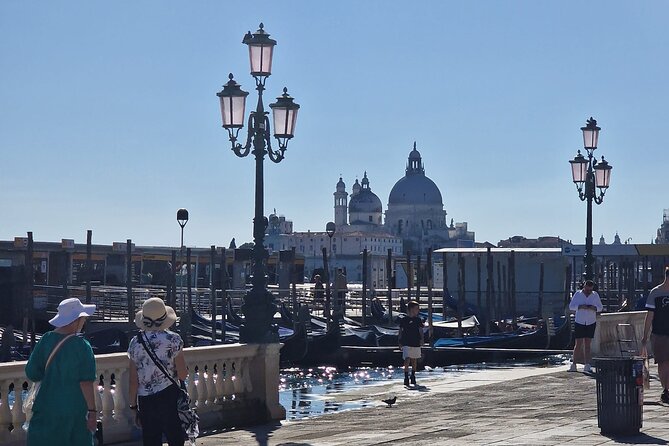
Venice can feel like a beautiful puzzle with no picture on the box. This tour is built to help you get your bearings fast—starting at Rialto and then moving toward St. Mark’s and the Doge’s Palace zone. In two hours, you cover major geography and the meaning behind what you’re seeing, so the rest of your trip feels easier.
I like that the tour isn’t just a list of monuments. You’ll hear how Venetians live and think about the city day to day—how squares function, why certain spaces matter, and what the landmarks meant when Venice was a powerful republic. That context matters because Venice doesn’t label its clues for you.
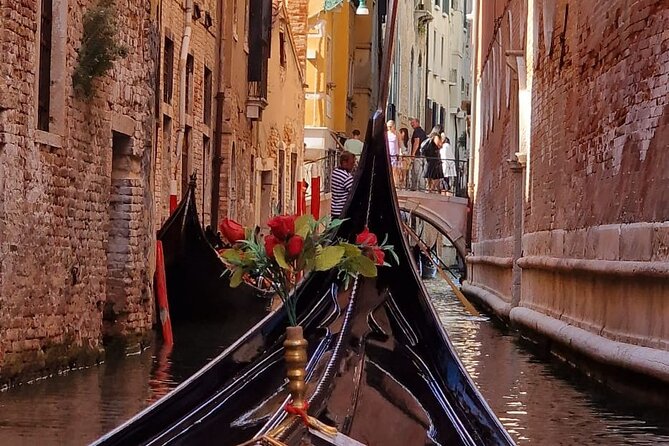
On foot over the bridges, more routes
- Venice: Doge’s Palace and St Mark’s Basilica Walking Tour★ 4.4 · 6,291 reviews
- Venice: San Marco to Rialto Walk & Spritz Like a Local★ 4.2 · 3,651 reviews
- Venice Walking Tour and Gondola Ride★ 3.5 · 3,630 reviews
- Private 3 hrs Venice Tour: St Mark’s, Walking tour & Boat tour★ 4.0 · 3,372 reviews
Picking your start time: match it to your energy
You choose the start time, and that’s more important than it sounds. If you start earlier, you usually have an easier time moving around the big sights and surrounding streets without as much crowd pressure. If you start later, you may want to lean into slower browsing and photo pauses, since your walking pace will feel more noticeable.
Either way, this tour is designed around a walk you can pace yourself. The experience is listed as light to moderate walking for most travelers, and the private format means you won’t get pushed along with a herd.
Rialto Bridge: the perfect first “Venice anchor”
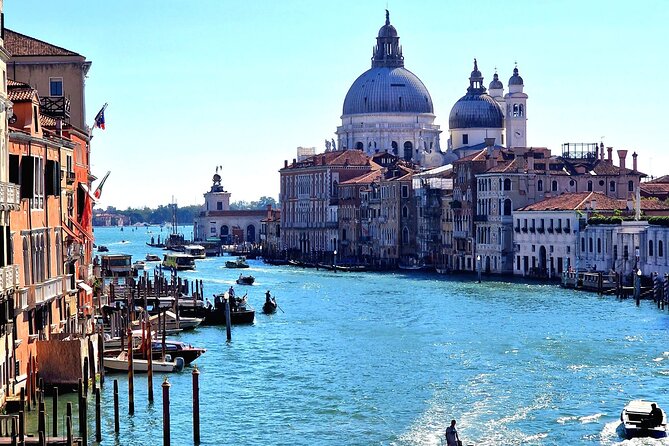
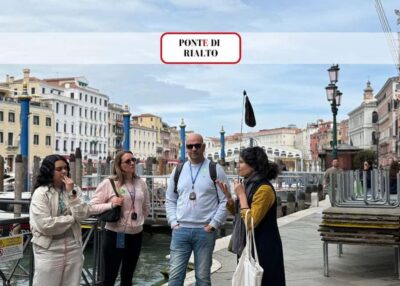
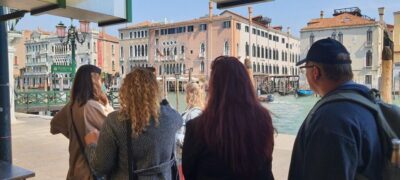
The tour begins at the Rialto Bridge (Ponte de Rialto), the oldest of the four Grand Canal bridges. That’s a strong starting point because it instantly situates you: you’re at one of the city’s classic sight-and-transport nodes, and you can feel why this place mattered.
You also get the best kind of early start: Rialto’s admission is free for the stop, so you’re not waiting on tickets before you even understand the route. You’ll spend about 20 minutes here, long enough to see it from the right angles and hear what made Rialto central in Venetian life.
Practical tip: at Rialto, keep your expectations realistic. This is a busy, photo-friendly area. Plan to stand back from the rail when you want a quieter view, and use your guide’s timing to move to better sight lines.
Teatro La Fenice: opera grandeur without the walking burden
After Rialto, you’ll head toward Teatro La Fenice, one of the most famous opera houses in Venice. The focus here is on context: why the theater matters in Italian opera, and why it became a major stage for notable premieres—especially in the 19th-century bel canto era (Rossini, Bellini, Donizetti, and Verdi are specifically tied to that story).
Here’s the key detail to plan for: admission is not included. That means you can treat this stop as a culture and architecture checkpoint—listening, looking, and learning—without committing to an entry ticket during your two-hour window.
If you’re an opera fan, this stop is a great primer. If you’re not, it still works because it shows how Venice is not just canals and costumes—it’s also music, public life, and civic pride.
Campo San Zulian: where Venice feels lived-in
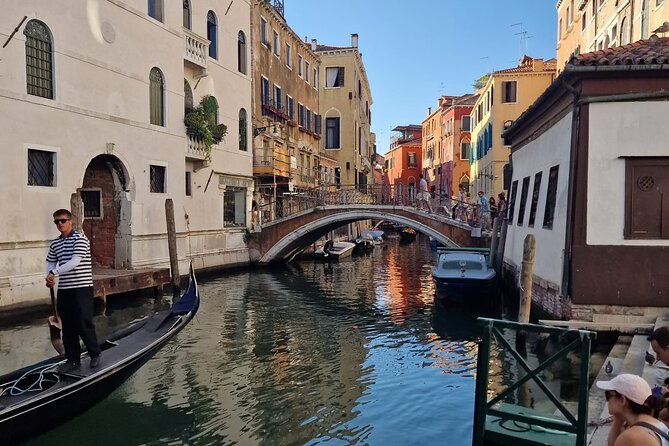
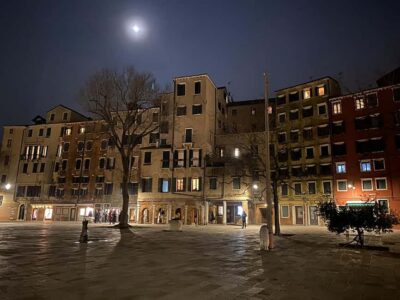
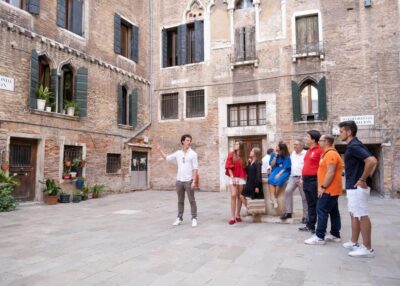
Next comes Campo San Zulian, a medieval-feeling square that has long served as a gathering place. What makes this stop valuable is the switch in tone. Rialto and St. Mark’s pull you toward “big landmark Venice.” Campo San Zulian pulls you toward normal Venice—markets in earlier days, festivals, daily rhythms, and elegant facades tied to wealthy families who lived along an important route between Rialto and St. Mark’s.
This stop is free for admission and typically lasts about 20 minutes. That time is useful because squares in Venice are not just decorative. They’re social infrastructure. Once you understand how that works, you start noticing things on your own—where people pause, how lanes funnel movement, and why some buildings face the square rather than hiding from it.
If you like street-level travel—seeing where daily life happens—this is one of the most satisfying parts of the walk.
Venice at walking pace, more of the calli

St. Mark’s Basilica and Piazza San Marco: learn what you’re looking at
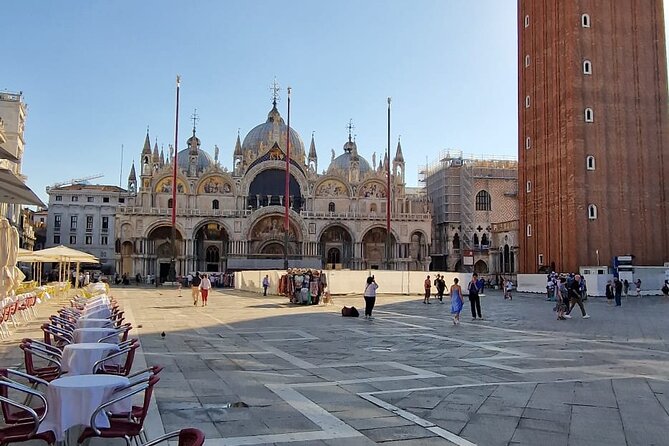
Then you move into the St. Mark’s area. Piazza San Marco (St. Mark’s Square) is the city’s main public square, and St. Mark’s Basilica is the cathedral church of the Patriarchate of Venice. It’s dedicated to Saint Mark the Evangelist and holds relics tied to the city’s patron saint.
This is where a good guide earns their pay. Without context, St. Mark’s can feel like a pile of stunning details. With context, you start recognizing what’s being celebrated and why the basilica’s role matters to Venice as a political and religious center.
Important planning note: admission is not included for St. Mark’s Basilica. So during the tour time, you may be looking at the basilica and learning the story, but you shouldn’t assume you’re automatically going inside. If you want entry, you’ll need to plan for tickets separately.
If you’re also trying to see other big churches in Venice, this is a moment to decide your priority. St. Mark’s is special, but it can also be a time sink. A guided primer helps you make that choice without feeling rushed.
Palazzo Ducale and Ponte dei Sospiri: power, prison, and the famous views
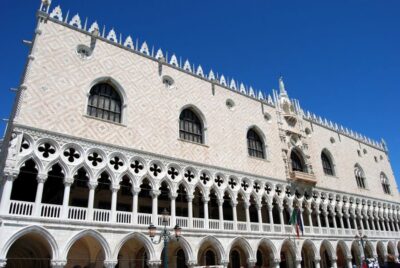
From St. Mark’s, the walk continues toward the political heart: Palazzo Ducale (Doge’s Palace). This Venetian Gothic landmark was the Doge’s residence and the home of the supreme authority of the former Republic of Venice. You’ll also hear the basics of its timeline—built in 1340 and changed and expanded over the following centuries.
Admission is listed as not included at Palazzo Ducale. That doesn’t make the stop less useful, though. Even from outside and in the surrounding areas, you can connect the building’s purpose to the nearby story of law and confinement.
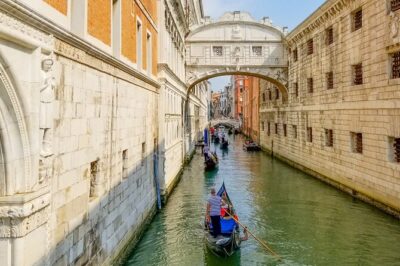
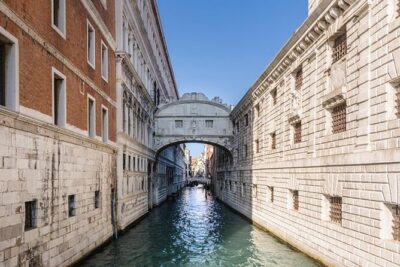
Then you reach Ponte dei Sospiri (Bridge of Sighs)—the enclosed white limestone bridge over the Rio di Palazzo that connects the New Prison to interrogation rooms in the Doge’s Palace. You’ll hear how it was designed by Antonio Contino (with a family link to Antonio da Ponte, designer of the Rialto Bridge) and built in 1600.
This is one of the best “meaningful photo stops” in the city. The structure is famous, yes, but the real value is understanding what it connected—rooms tied to justice, questioning, and confinement. Once you know that, your photos stop being just pretty stone and become pictures with a story.
Price and logistics: is $162.40 per person good value?
At $162.40 per person for about 2 hours, this tour sits in the private-tour category, meaning you’re paying for control and a guide who’s there for your group.
Here’s why I think the value can work well:
- You get a licensed local guide rather than an audio app or a quick group lecture.
- Hotel pickup reduces wasted time, especially in central Venice where finding your way can eat half your energy.
- It’s 100% private, so you’re not stuck following a pace that doesn’t match your legs or attention span.
- The itinerary hits big names and also adds human-scale stops like Campo San Zulian, so you don’t just see icons—you get context.
It may be less of a slam dunk if you’re the type who only wants to enter buildings and you already know what you want inside. In that case, you may spend extra on tickets that aren’t included, and you might wonder whether a shorter self-guided route would do. But if you want guidance that makes Venice make sense, the cost often feels justified.
What to ask your guide so the tour clicks
Because it’s private, you can steer the questions toward what you care about most. Here are practical prompts that fit what this route covers:
- For Rialto: ask how trade and canal life shaped Venice’s growth.
- For Teatro La Fenice: ask how opera fit into public life in a city like Venice.
- For Campo San Zulian: ask what this square functioned as historically and how Venetians use similar spaces today.
- For St. Mark’s Basilica: ask what features signal the basilica’s importance to the city.
- For Palazzo Ducale and Bridge of Sighs: ask what the building’s roles were in the Republic’s power system.
And if your guide is someone like Rossella, Michele, Emanuele, or Lucrenzia (names that have shown up in strong past experiences), you’ll likely get clear local explanations and helpful pacing. The best guides also share practical food and timing suggestions, which can turn this from a walk into a better day overall.
Where this tour fits best (and who should skip it)
This tour is a great fit if you want:
- a guided orientation without cramming in too many entries
- a private experience that lets you ask follow-up questions
- a route that includes both major landmarks and everyday-feeling Venice
It’s a weaker fit if:
- you only care about entering museums/churches and don’t want to pay additional admission
- you prefer a totally independent approach with no guide context
- your schedule is so tight that you’d rather spend your time in one interior attraction than walking between several
Practical tips so your day feels smooth
A few things I’d plan before you go:
- Wear good shoes. Venice streets are uneven and often steeper than they look in photos.
- Expect some crowd moments around major landmarks, especially near Rialto and St. Mark’s.
- Budget for entrance tickets where admission isn’t included (Teatro La Fenice, St. Mark’s Basilica, Palazzo Ducale, and Bridge of Sighs-related viewing).
- Use your start time wisely. Early can reduce the stress; later can mean more energy spent on avoiding people.
- If you have any needs, the tour notes service animals are allowed and that it’s near public transportation, which can matter for connections after the walk.
Also note the tour ends near Arsenale di Venezia (Campo de la Tana). That’s a handy landing spot if you’re planning to continue your day in that general direction rather than backtracking to the Rialto area.
Should you book this Venice Private Walking Tour?
If you want Venice to feel understandable instead of random, I’d book it. The combination of hotel pickup, licensed local guidance, and a route that links Rialto, Campo San Zulian, St. Mark’s, and the Doge’s Palace zone is a smart way to spend 2 hours.
Skip it only if you’re already confident you’ll self-direct every step and you plan to prioritize paid interior entries so heavily that a short guided primer won’t add value. For most people, though, this tour does exactly what a good guide should do: you finish the walk seeing more than stone—you see how the city works.
More Tours in Venice
- Murano & Burano: Boat Tour with Guide & Glass Factory Visit
★ 4.3 · 10,716 reviews - Doge’s Palace & St. Mark’s Basilica with Terrace Access Tour
★ 4.7 · 10,697 reviews - Venice: Burano, Torcello & Murano Boat Tour w/Glassblowing
★ 4.4 · 10,245 reviews - Murano, Burano and Torcello Half-Day Sightseeing Tour
★ 3.5 · 7,928 reviews - Murano & Burano Islands Guided Small-Group Tour by Private Boat
★ 4.5 · 7,580 reviews - Venice: Doge’s Palace and St Mark’s Basilica Walking Tour
★ 4.4 · 6,291 reviews
More Tour Reviews in Venice
- Venice: Doge’s Palace Reserved Entry Ticket
★ 4.6 · 42,716 reviews - Venice: Grand Canal Gondola Ride with App Commentary
★ 4.1 · 23,020 reviews - Venice: Grand Canal Gondola Experience with Live Commentary™
★ 4.2 · 16,504 reviews - Boat Trip: Glimpse of Murano, Torcello & Burano Islands
★ 4.3 · 15,699 reviews - Venice: La Fenice Opera House Entry Ticket with Audio Guide
★ 4.6 · 11,742 reviews - Murano & Burano: Boat Tour with Guide & Glass Factory Visit
★ 4.3 · 10,716 reviews
Venice on Foot, Continued
- Venice: Doge’s Palace and St Mark’s Basilica Walking Tour
★ 4.4 · 6,291 reviews - Venice: San Marco to Rialto Walk & Spritz Like a Local
★ 4.2 · 3,651 reviews - Venice Walking Tour and Gondola Ride
★ 3.5 · 3,630 reviews - Private 3 hrs Venice Tour: St Mark’s, Walking tour & Boat tour
★ 4.0 · 3,372 reviews - Venice: City Center Historical Guided Walking Tour
★ 4.2 · 1,873 reviews - Venice: Walking Guided Tour of the City Must-See Sites
★ 4.7 · 1,095 reviews
Fresh Off the Vaporetto: New Venice Reviews

Venice Backstreet Walking Tours, compared.
 ★ 4.4Doge’s Palace and St Mark’s Basilica Walking TourFrom $1016,291 reviews
 ★ 4.2San Marco to Rialto Walk & Spritz Like a LocalFrom $143,651 reviews
 ★ 3.5Venice Walking Tour and Gondola RideFrom $723,630 reviews
 ★ 4.0Private 3 hrs Venice Tour: St Mark’s, Walking tour & Boat tourFrom $4803,372 reviews
 ★ 4.2City Center Historical Guided Walking TourFrom $141,873 reviews
 ★ 4.7Walking Guided Tour of the City Must-See SitesFrom $441,095 reviews
 ★ 4.0Private Best of Venice Walking Tour with St Mark’s BasilicaFrom $2421,063 reviews
 ★ 4.5Venice Sightseeing Small Group Walking Tour with a Local GuideFrom $48887 reviews
Browse the lists this tour appears in