
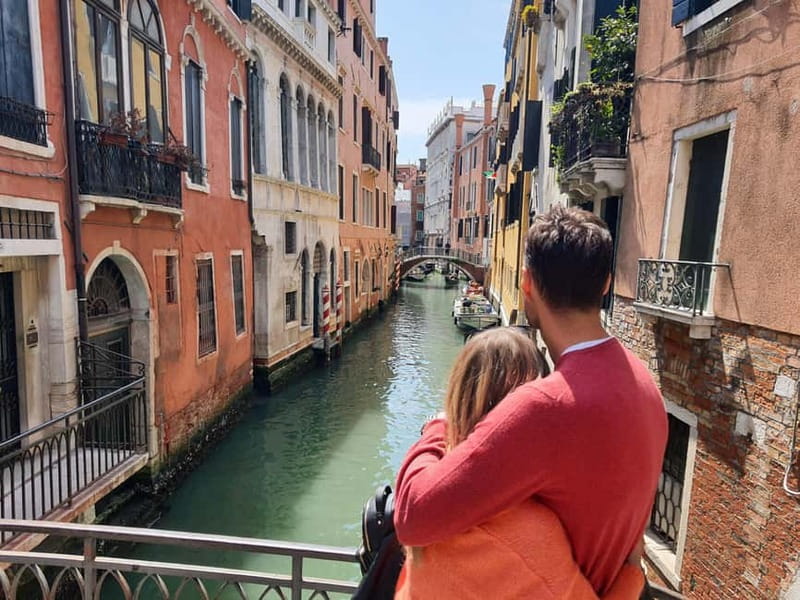
Review · VENICE BACKSTREET WALKING TOURS
Venice: Small Group Walking Tour of Most-Famous Sites
Venice is perfect when you know where to start. I like how this tour begins in Dorsoduro and builds toward the big monuments without wasting your time. I also like the stop at San Pantalon, where you get a rare look at The Martyrdom of St. Pantalon ceiling painting.
The main thing to think about is logistics on a walking route: the meeting spot can be a little tricky to spot, and some parts (including the steps near Rialto Bridge) may feel tough if you’re not used to walking at a steady pace.
In This Review
- Key things to know before you go
- A two-hour route through Venice’s must-sees (without feeling rushed)
- Where you meet in Dorsoduro (and how not to miss the group)
- San Pantalon: the ceiling masterpiece and the unfinished facade contrast
- Campo San Polo: a huge square that still feels like a real neighborhood
- Scuola Grande di San Rocco: Tintoretto’s paintings and the confraternity story
- Rialto Bridge: classic views, plus a practical heads-up on steps
- Basilica dei Santi Giovanni e Paolo (San Zanipolo): doges’ final resting place
- Piazza San Marco: landing in the place everyone imagines
- Price and value: why $29 can work in Venice (if you like walking)
- Group pace, uneven streets, and who should choose this tour
- Practical tips: shoes, water, and finding the guide quickly
- Should you book this Venice walking tour?
- FAQ
- How long is the Venice walking tour?
- Where is the meeting point?
- Is the tour small group or private?
- What languages are offered?
- What sites will we visit?
- Is hotel pickup or drop-off included?
- Are food and drinks included?
- Is the tour suitable for wheelchair users or mobility impairments?
- What should I bring?
Key things to know before you go
- Dorsoduro to Piazza San Marco in just 2 hours, with a mix of major sights and quieter streets
- San Pantalon for Giovanni Antonio Fumiani’s huge ceiling work, plus the striking unfinished facade
- Scuola Grande di San Rocco and Tintoretto paintings, tied to the site’s confraternity past
- Rialto Bridge with classic canal views and enough steps to plan your pace
- San Zanipolo (Santi Giovanni e Paolo) as one of Venice’s biggest church stops and a doges’ final resting place
- Valentina has been specifically praised for inside stories, though the guide can be hard to identify at first
A two-hour route through Venice’s must-sees (without feeling rushed)
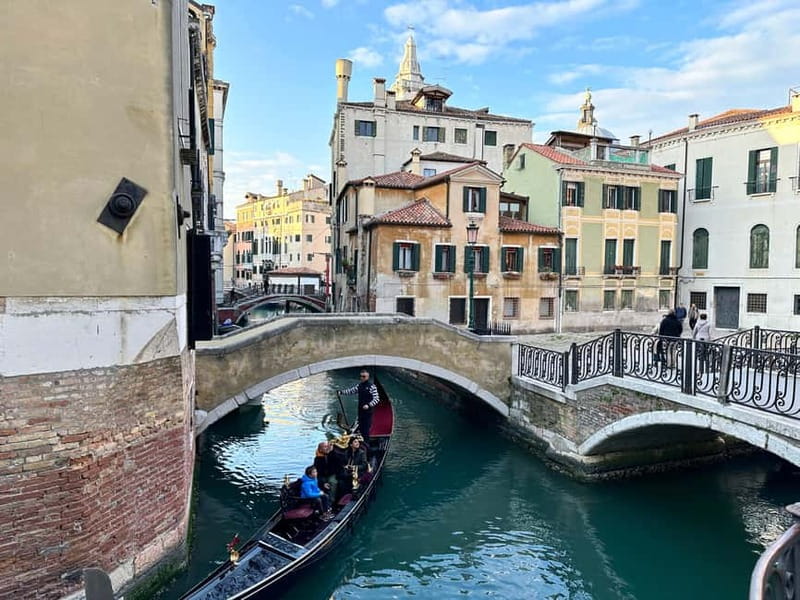
This is the kind of Venice tour that helps you get oriented fast. In two hours, you’ll hit a string of top-name landmarks, but you’re not stuck only in the busiest photo spots. The route is designed to move you from Dorsoduro toward Piazza San Marco, with stops that explain what you’re seeing as you go.
For me, the value is in the combination: you get famous architecture like Rialto Bridge and Piazza San Marco, but you also get art and Venetian religious culture at San Pantalon and Scuola Grande di San Rocco. That mix makes the time feel more useful than just snapping pictures.
One practical note: at this length, pacing matters. You’ll walk on uneven surfaces, and certain transitions (especially near bridges) can slow people down. If you’re traveling with friends who prefer a slow wander, set expectations before you meet.
On foot over the bridges, more routes
- Venice: Doge’s Palace and St Mark’s Basilica Walking Tour★ 4.4 · 6,291 reviews
- Venice: San Marco to Rialto Walk & Spritz Like a Local★ 4.2 · 3,651 reviews
- Venice Walking Tour and Gondola Ride★ 3.5 · 3,630 reviews
- Private 3 hrs Venice Tour: St Mark’s, Walking tour & Boat tour★ 4.0 · 3,372 reviews
Where you meet in Dorsoduro (and how not to miss the group)
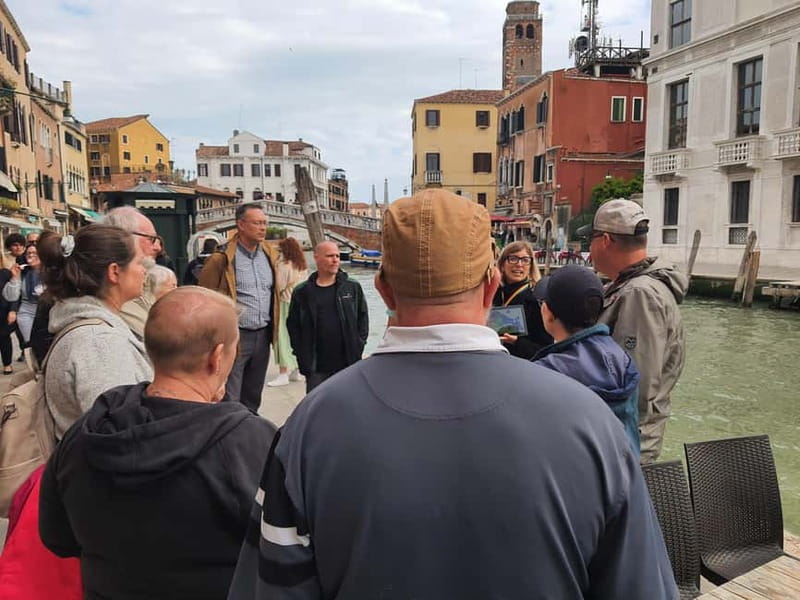
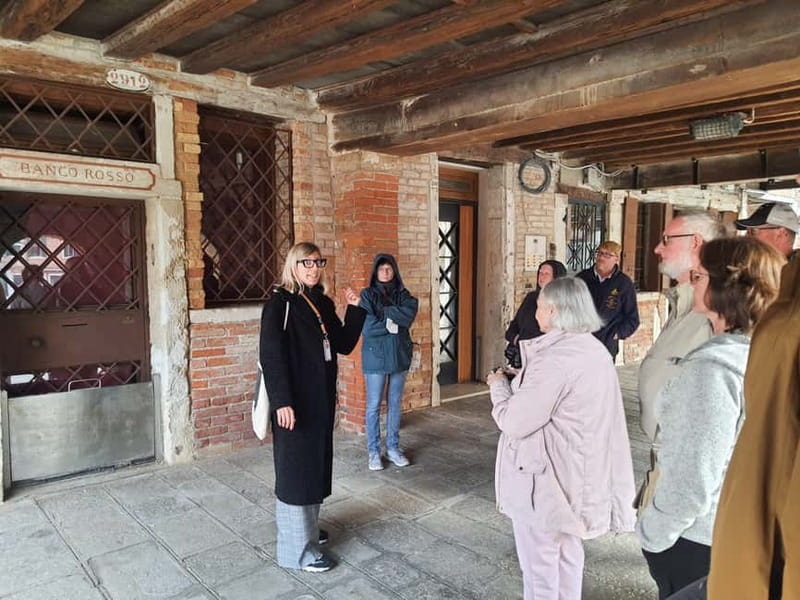
Your meeting point is Campiello dei Squellini, near Ca’Foscari University in Dorsoduro, by the colored wall. That detail matters. Venice doesn’t hand you street signs like a normal city, so being accurate here saves stress.
A helpful reality check from real-world timing: on at least one departure, the meeting time was 10:15 with a 10:30 start. So I’d treat the meeting point as a get-there-early moment, not a casual stroll.
Also, the guide may not be instantly obvious at first. One booking issue noted it was hard to identify who the guide was initially, so plan to be patient for a minute or two and look around the meeting area before you start moving with your own group.
San Pantalon: the ceiling masterpiece and the unfinished facade contrast
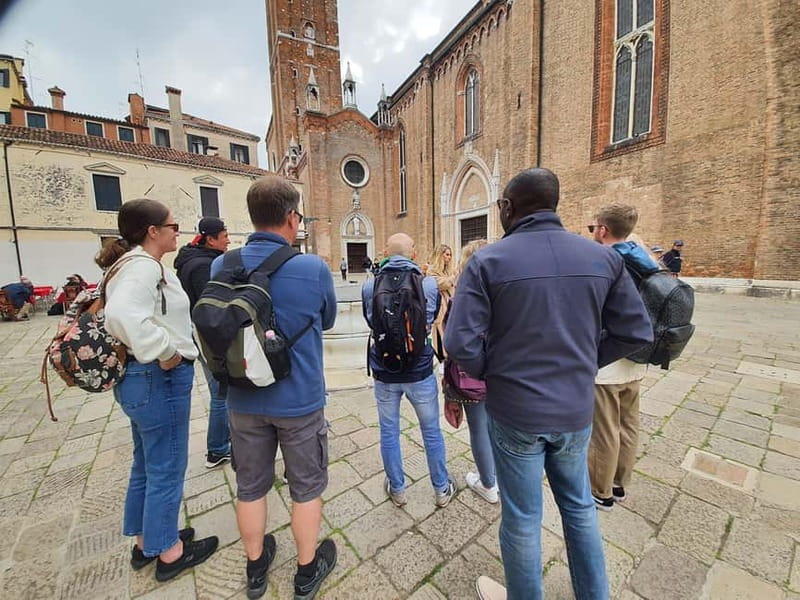
The tour’s early stop is Church of San Pantalon, and it’s one of those places that flips your Venice expectations. This church is known for the largest canvas painting in the world, The Martyrdom of St. Pantalon by Giovanni Antonio Fumiani. The painting covers the entire ceiling, so you’ll want to look up right away and give your neck a break only when you need it.
What makes this stop click is the contrast. The church is also noted for an unfinished facade—a rough, incomplete exterior that clashes with the elaborate interior. You don’t just learn what’s inside; you also see how Venice can be unfinished, practical, and artistic at the same time.
If you’re the type who thinks you’ve already “seen churches,” this one is different because the ceiling art is so specific. It’s also a great early stop: it sets a theme for the rest of the tour—Venice as a place where art and belief overlap in big ways.
Campo San Polo: a huge square that still feels like a real neighborhood
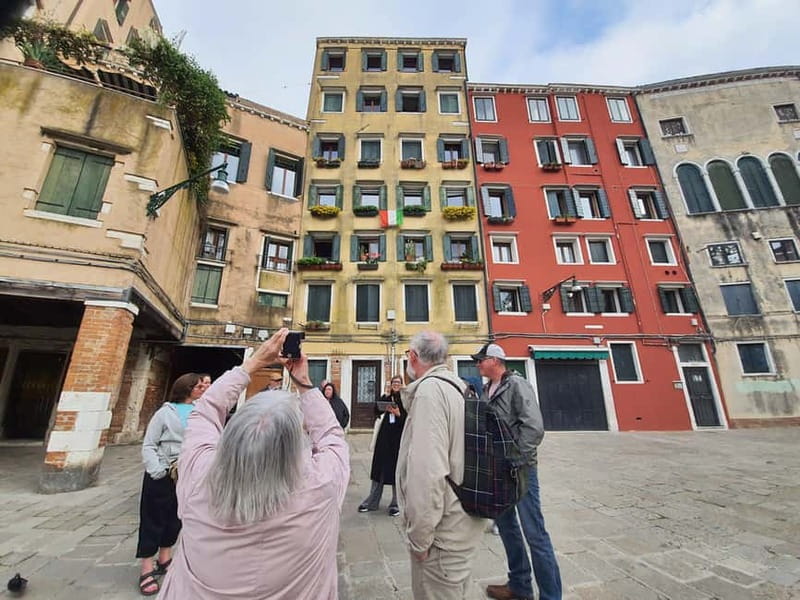
Next up is Campo San Polo, one of Venice’s largest squares. This isn’t a tiny scenic plaza made only for postcard moments. It has long served as a site for public gatherings and festivities, so it has a social role, not just a visual one.
You’ll get a sense of how Venetians use space day-to-day—how squares work as community stages. Even if the exact scene you see changes with the time of day, you’re walking through a place with a long pattern of people meeting, trading, and showing up for events.
It’s a good “reset stop” before you move back into the landmark-heavy stretch near the water.
Scuola Grande di San Rocco: Tintoretto’s paintings and the confraternity story
Then you’ll head to Scuola Grande di San Rocco, a former lay confraternity site. If that sounds niche, don’t worry: the payoff is the art. This place is famed for its exceptional collection of paintings by Tintoretto, which makes it a major stop for anyone who cares about how Venice’s art scene worked.
The reason this stop is worth your time on a short tour is that you get context. The building isn’t just a museum shell; it’s tied to a community tradition. That helps you connect the dots when you’re later looking at other religious and political power centers in Venice.
If you like art but don’t want a full day in museums, this is a strong compromise: you get the big-name artist focus, but you still keep moving through Venice’s streets and squares.
Venice at walking pace, more of the calli
Rialto Bridge: classic views, plus a practical heads-up on steps
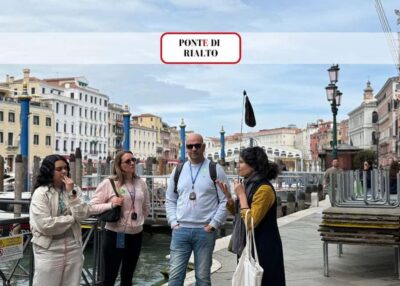
Of all the stops, Rialto Bridge is the one most people already recognize. It spans the Grand Canal and has been a bustling commercial hub for centuries—so when you’re there, you’re standing at a piece of Venice’s business history, not just a romantic photo spot.
The practical consideration is physical. One booking note mentioned difficulty for people who struggled with walking pace or steps on the bridge area, and the group almost lost a couple of slower walkers. So if you know you’ll need frequent pauses, or if you’re traveling with someone who isn’t comfortable with stairs, plan to take it easy and don’t sprint to the front.
The upside is worth it: this is one of the best places on a short schedule to understand why Venice’s geography shaped its commerce. You’re literally crossing where trade and crowds made the city move.
Basilica dei Santi Giovanni e Paolo (San Zanipolo): doges’ final resting place
After the canal-crossing, the tour shifts to one of Venice’s biggest church stops: Basilica dei Santi Giovanni e Paolo, also called San Zanipolo. It’s described as an important monumental complex, surrounded by historic buildings, and the basilica itself is one of the largest churches in Venice.
Here’s what makes it more than a photo stop: it serves as the final resting place of many Venetian doges. That means you’re not only looking at architecture and religious art—you’re also seeing how power was remembered and displayed.
You’ll likely notice how the site fits the surrounding buildings, creating a sense of scale that smaller churches don’t always deliver. If you want your Venice tour to feel political and cultural at the same time, this is your anchor stop.
Piazza San Marco: landing in the place everyone imagines
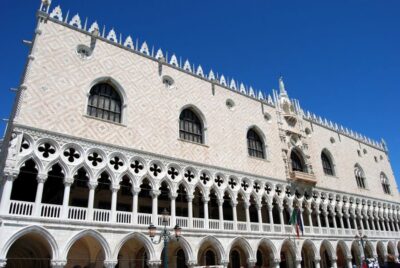
Your tour concludes at Piazza San Marco, Venice’s central stage. This is where the city’s big, ceremonial vibe takes over—surrounded by architectural masterpieces, including the Basilica di San Marco and the Doge’s Palace.
For me, the payoff is that you’ve already gathered clues about Venice’s art and institutions earlier in the walk. When you reach the square, it’s easier to read what you’re seeing: this isn’t only stunning stonework; it’s also where church authority and civic power face off in public.
It’s also a good ending point because the square is easy to orient from, so once your two hours are up, you can keep exploring without feeling lost.
Price and value: why $29 can work in Venice (if you like walking)
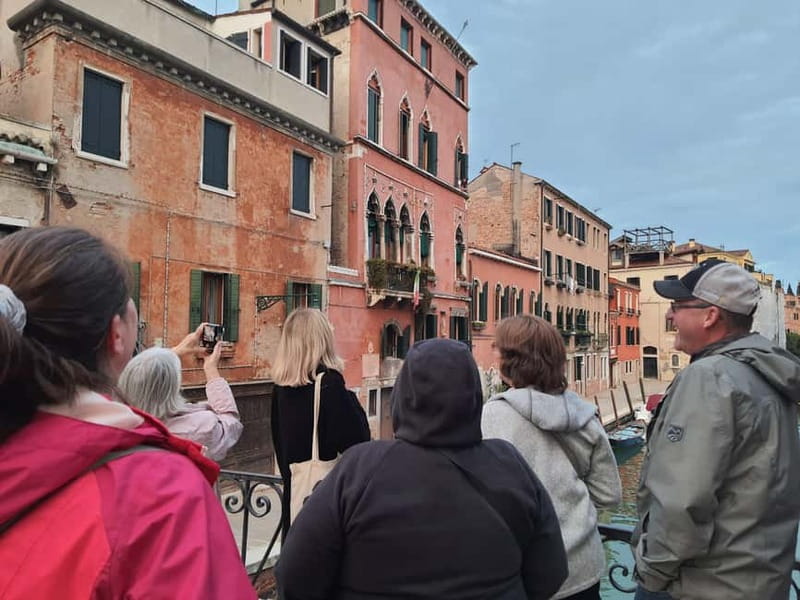
At $29 per person for a 2-hour guided walk, the deal usually comes down to what you want out of Venice.
You’re getting:
- an English live guide
- a small group experience
- visits to major landmarks plus a few quieter stops
- the advantage of someone pointing out what matters as you move
That guide-led value can be real in Venice, because so much is easy to overlook when you’re just passing through. The art stops (especially San Pantalon and Scuola Grande di San Rocco) are the type of things that become way more interesting when someone explains what you’re looking at and why it was made.
If you’re the type who hates guided tours and prefers to wander freely, you might find the structure limiting. But if you want a fast, high-signal route that still gives you local color, this price level can make sense.
Also worth noting: there’s an option for a private tour, which can be a better fit if you’re traveling with family members who need a slower pace or want more direct questions.
Group pace, uneven streets, and who should choose this tour
Venice is walkable, but it’s not gentle. This tour involves uneven surfaces, and you’ll be on foot for the full 2 hours. You also should expect at least some stair-step moments near landmarks like Rialto Bridge.
The tour is not suitable for people with mobility impairments or wheelchair users due to the nature of Venice’s streets and bridges. If you fall into that category, you’ll be happier with a different format that’s designed for accessibility.
Who this tour fits best:
- couples and friends who like a structured walk
- art lovers who want Tintoretto and a major ceiling painting without a museum day
- first-timers who need “big Venice” in one compact loop
If you’re extremely time-sensitive and you want the essentials only, this is strong. If you want a slow sit-down-and-snack day, you may feel the pace.
Practical tips: shoes, water, and finding the guide quickly
Bring comfortable shoes first. That sounds basic, but it’s the difference between enjoying the walk and spending the whole tour mentally negotiating with your feet.
Also bring:
- water (hydration helps, especially when you’re stopping less frequently than a longer tour)
- a camera
- weather-appropriate clothing, because Venice weather changes quickly
A small but important tip: if you’re worried about identifying the guide, use the meeting point details as your anchor: Campiello dei Squellini near Ca’Foscari University, by the colored wall. Arrive a few minutes early so you’re not improvising when other people start filing in.
Photography is allowed, but you should stay aware that there can be restrictions in certain areas—so keep your camera ready, but don’t block entryways or slow down the group.
If something goes wrong—like rain, a crowd surge, or confusion—your best move is to stay calm and stick close to the meeting area rather than wandering off. One booking issue included a case where the guide didn’t arrive, and that’s a good reminder to double-check your confirmation details and give yourself a little buffer.
Should you book this Venice walking tour?
If you want Rialto Bridge, San Zanipolo, and Piazza San Marco in a tight 2-hour plan, this is a sensible pick. The art stops—San Pantalon’s ceiling canvas and Scuola Grande di San Rocco’s Tintoretto paintings—add real substance beyond the obvious postcard landmarks.
I’d especially recommend it if you like a guide who gives you context as you walk, and if you enjoy seeing how Venice’s religious art and civic power overlap.
Skip it if:
- you can’t handle uneven walking and bridge steps
- you’re expecting a leisurely pace
- you strongly prefer to explore without a guided structure
If you can walk comfortably and you want a high-value route, booking this one can save you time while still feeling like you got the Venice you came for.
FAQ
How long is the Venice walking tour?
The tour lasts about 2 hours.
Where is the meeting point?
You meet at Campiello dei Squellini, near Ca’Foscari University in the Dorsoduro district, by the colored wall. It’s important to confirm this exact spot.
Is the tour small group or private?
It’s available as a small group experience, and there is also a private tour option (private group available).
What languages are offered?
The live guide speaks English.
What sites will we visit?
You’ll visit Rialto Bridge, Basilica dei Santi Giovanni e Paolo (San Zanipolo), and Piazza San Marco, plus additional stops including San Pantalon, Campo San Polo, and Scuola Grande di San Rocco.
Is hotel pickup or drop-off included?
No. Hotel pickup and drop-off are not included.
Are food and drinks included?
No. Food and drinks are not included.
Is the tour suitable for wheelchair users or mobility impairments?
No. The tour is not suitable for people with mobility impairments or wheelchair users.
What should I bring?
Wear comfortable walking shoes and bring water and a camera. Dress for the weather, and plan for uneven surfaces.
More Tours in Venice
- Murano & Burano: Boat Tour with Guide & Glass Factory Visit
★ 4.3 · 10,716 reviews - Doge’s Palace & St. Mark’s Basilica with Terrace Access Tour
★ 4.7 · 10,697 reviews - Venice: Burano, Torcello & Murano Boat Tour w/Glassblowing
★ 4.4 · 10,245 reviews - Murano, Burano and Torcello Half-Day Sightseeing Tour
★ 3.5 · 7,928 reviews - Murano & Burano Islands Guided Small-Group Tour by Private Boat
★ 4.5 · 7,580 reviews - Venice: Doge’s Palace and St Mark’s Basilica Walking Tour
★ 4.4 · 6,291 reviews
More Tour Reviews in Venice
- Venice: Doge’s Palace Reserved Entry Ticket
★ 4.6 · 42,716 reviews - Venice: Grand Canal Gondola Ride with App Commentary
★ 4.1 · 23,020 reviews - Venice: Grand Canal Gondola Experience with Live Commentary™
★ 4.2 · 16,504 reviews - Boat Trip: Glimpse of Murano, Torcello & Burano Islands
★ 4.3 · 15,699 reviews - Venice: La Fenice Opera House Entry Ticket with Audio Guide
★ 4.6 · 11,742 reviews - Murano & Burano: Boat Tour with Guide & Glass Factory Visit
★ 4.3 · 10,716 reviews
Venice on Foot, Continued
- Venice: Doge’s Palace and St Mark’s Basilica Walking Tour
★ 4.4 · 6,291 reviews - Venice: San Marco to Rialto Walk & Spritz Like a Local
★ 4.2 · 3,651 reviews - Venice Walking Tour and Gondola Ride
★ 3.5 · 3,630 reviews - Private 3 hrs Venice Tour: St Mark’s, Walking tour & Boat tour
★ 4.0 · 3,372 reviews - Venice: City Center Historical Guided Walking Tour
★ 4.2 · 1,873 reviews - Venice: Walking Guided Tour of the City Must-See Sites
★ 4.7 · 1,095 reviews
Fresh Off the Vaporetto: New Venice Reviews
Venice Backstreet Walking Tours, compared.
 ★ 4.4Doge’s Palace and St Mark’s Basilica Walking TourFrom $1016,291 reviews
 ★ 4.2San Marco to Rialto Walk & Spritz Like a LocalFrom $143,651 reviews
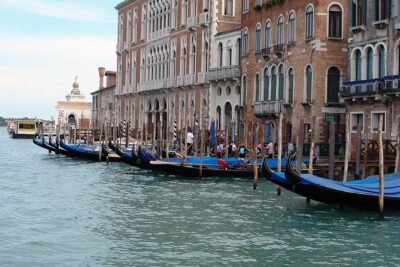 ★ 3.5Venice Walking Tour and Gondola RideFrom $723,630 reviews
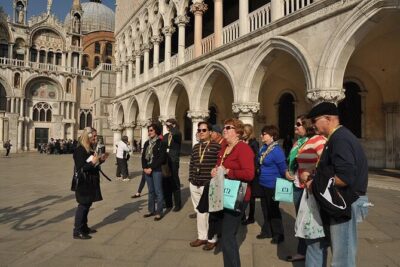 ★ 4.0Private 3 hrs Venice Tour: St Mark’s, Walking tour & Boat tourFrom $4803,372 reviews
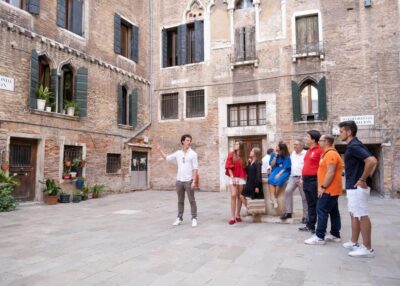 ★ 4.2City Center Historical Guided Walking TourFrom $141,873 reviews
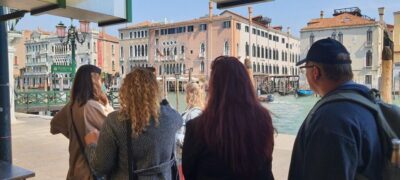 ★ 4.7Walking Guided Tour of the City Must-See SitesFrom $441,095 reviews
 ★ 4.0Private Best of Venice Walking Tour with St Mark’s BasilicaFrom $2421,063 reviews
 ★ 4.5Venice Sightseeing Small Group Walking Tour with a Local GuideFrom $48887 reviews
Browse the lists this tour appears in