
Review · TICKETS
Venice: Ticket to Scuola Grande San Giovanni Evangelista
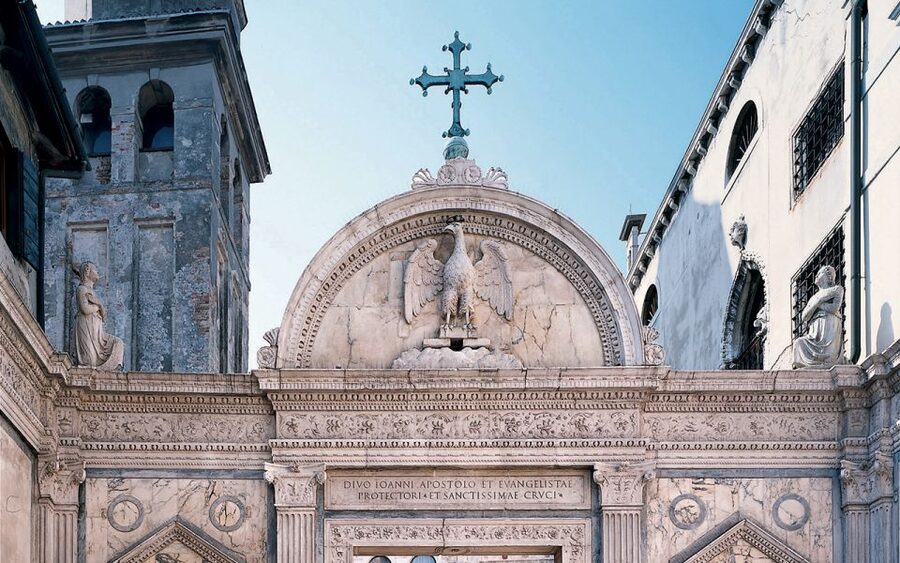
Venice has a habit of hiding its best stuff. This ticket takes you into the Scuola Grande San Giovanni Evangelista, a lay brotherhood founded in 1261, where the walls hold centuries of religious art and architecture in one compact visit. I love how you get a real mix of styles—Gothic columns downstairs and the big Renaissance stair experience—without bouncing between multiple sites. I also love the religious focus here, including the relic of the True Cross, which ties art to belief in a very specific way. One thing to keep in mind: there’s no guide included, so if you want extra interpretation, plan to go a bit curious and use the on-site info to connect the dots.
What makes it feel worth your time is the sense of “how it worked” in Venice. You’ll walk through assembly spaces that were designed for brothers and pilgrims, then move into rooms where the stories of faith were staged through art. Add in names like Mauro Codussi (his staircase added in 1498), painters such as Domenico Tintoretto, Giandomenico Tiepolo, and Jacopo Marieschi, and it becomes more than a pretty building—it’s a museum of how this institution saw itself. The ticket is just one day, and for the small price, you’re buying access to a place many people never think to visit.
In This Review
- Key highlights at a glance
- Why this Scuola feels different from Venice’s headline sights
- Price and value: what this $9 ticket really buys
- Timing and how long to plan for a one-day entry
- The marble septum and Gothic Columns Hall: where assemblies happened
- Mauro Codussi’s staircase (added in 1498) and the move into Renaissance space
- Chapter Hall: Baroque-era storytelling begins to take over
- Oratory Hall and the True Cross relic (1369): faith with a story you can follow
- Paintings and names you’ll recognize: Tintoretto, Giandomenico Tiepolo, Marieschi
- Where this visit shines most—and where it might not
- Should you book the Scuola Grande San Giovanni Evangelista ticket?
- FAQ
- How long does the Scuola Grande San Giovanni Evangelista visit take?
- What’s included with the ticket?
- Where do I show my ticket?
- What languages are available?
- What will I see during the visit?
- Is it free to cancel?
Key highlights at a glance
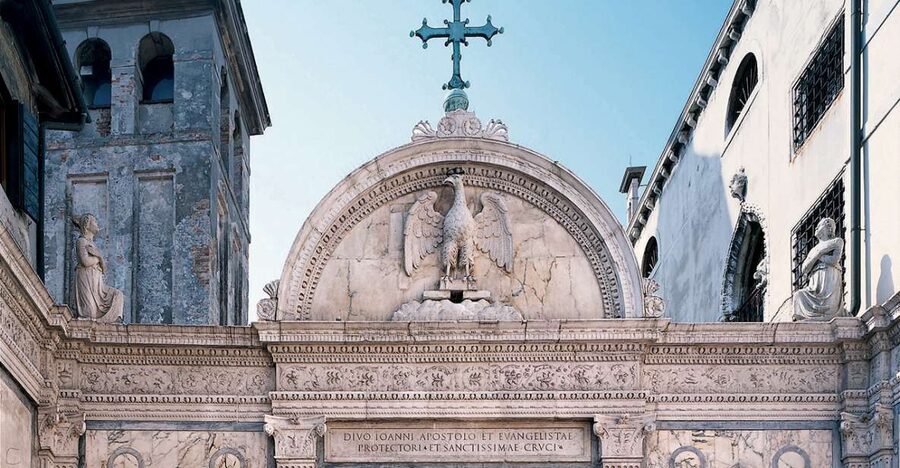
- Founded in 1261: one of Venice’s oldest lay brotherhoods and a major historical thread
- Mauro Codussi’s Renaissance staircase (added in 1498): big, monumental, and easy to spot in motion
- Gothic Columns Hall and Chapter Hall: rooms shaped for meetings, processions, and communal life
- The Oratory Hall relic of the True Cross (1369): faith shown through objects and stories
- Major artists on the walls: Domenico Tintoretto, Giandomenico Tiepolo, and Jacopo Marieschi
- Good value ticket: a low-cost visit packed with architecture, not just paintings
Why this Scuola feels different from Venice’s headline sights
If you spend enough time in Venice, you’ll notice the “famous” pattern: crowds, big squares, and the same photo angles over and over. The Scuola Grande San Giovanni Evangelista is different. It’s a quieter kind of Venetian world—an institutional space built for devotion, charity, and community—so the art doesn’t feel like a detached collection. It feels like it had a job.
The building’s core identity comes from being a scuola, a lay brotherhood. These weren’t monasteries, but they weren’t just casual clubs either. They were organized communities with ceremonies, gatherings, and places for pilgrims to enter the religious life of Venice. The architecture matches that purpose, so you can “read” the building as you walk through it.
Worth weighing up before you book this Venice outing:
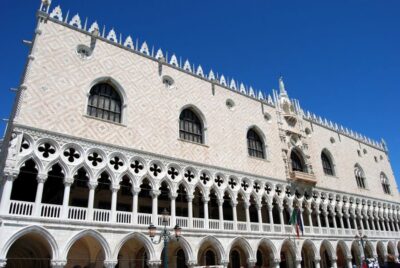
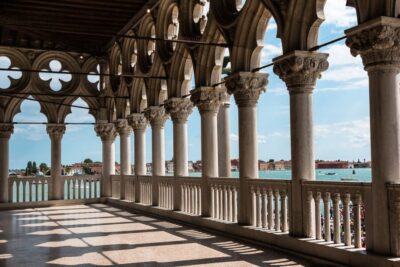
- Venice: Doge’s Palace Reserved Entry Ticket★ 4.6 · 42,716 reviews
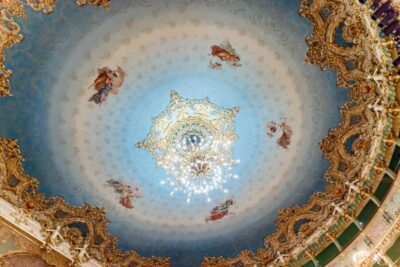
- Venice: La Fenice Opera House Entry Ticket with Audio Guide★ 4.6 · 11,742 reviews
- Venice: Leonardo Da Vinci Museum Entrance Ticket★ 4.5 · 3,560 reviews
- Venice: St. Mark’s Basilica & Doge’s Palace Tour with Ticket★ 4.7 · 3,375 reviews
Price and value: what this $9 ticket really buys
A $9 per-person ticket for a 1-day visit is the kind of deal that makes you wonder why you ever paid more for less. The value isn’t only that the ticket is inexpensive. It’s that the experience covers a lot of visual territory in one go: marble elements, Gothic spaces meant for assemblies, a Renaissance staircase that’s designed to be noticed, and then Baroque splendor in the art and rooms that come after.
Also, you’re not just seeing one style. You’re moving through the evolution of taste and religious storytelling—Gothic to Renaissance to Baroque—inside one institution. If you’re building a “great art in limited time” plan for Venice, this is the kind of stop that helps you avoid the all-or-nothing trap.
My practical take: if you’ve got even a half day’s flexibility, this ticket is an efficient use of time because it’s focused, indoor, and structured around rooms you can actually follow.
Timing and how long to plan for a one-day entry
The ticket is valid for 1 day, with starting times based on availability. That matters because Scuole aren’t usually open like a simple street shop with endless walk-in hours. Plan to arrive close to your start time so you don’t feel rushed once you’re inside.
In terms of pacing, you’ll want enough time to pause at the architectural highlights and the rooms where the religious story becomes clearer. There are stairs, including Mauro Codussi’s monumental Renaissance staircase added in 1498, so don’t schedule this as a “quick sprint between canals” stop. Comfortable shoes help, because you’ll be moving through multiple floors and halls.
If you like slower travel—reading a room, noticing how the space is shaped for people—this visit will click. If you only want one or two photos and then out, you’ll still get plenty, but you may miss the fun of seeing how the design guides your attention.
The marble septum and Gothic Columns Hall: where assemblies happened
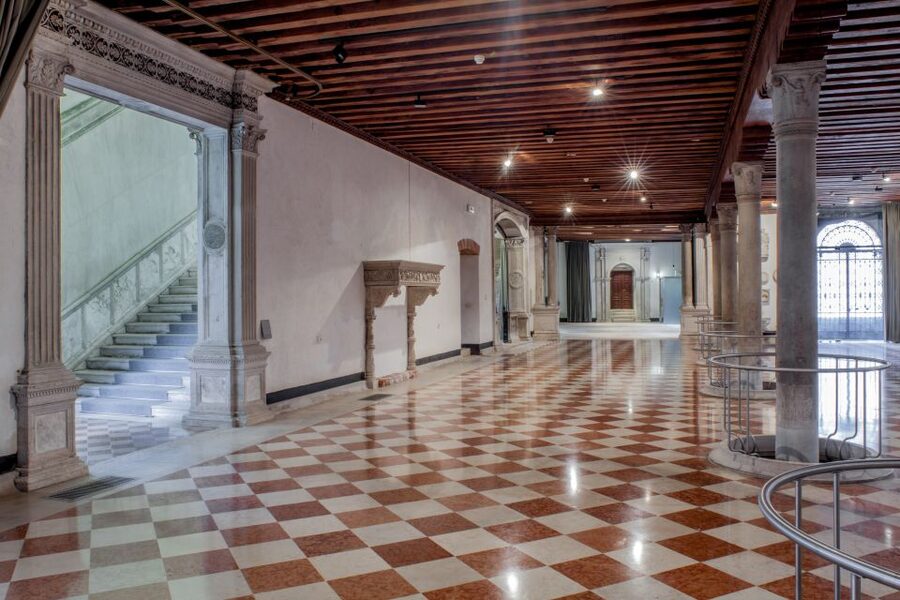
Your visit starts by stepping into the physical “logic” of the scuole. One early highlight is the marble septum, a striking feature that sets the tone: this was a place where movement and separation mattered. In older religious and civic spaces, details like this weren’t decorative filler. They helped shape how people approached ceremonies and gatherings.
Then comes the Gothic Columns Hall. This hall is described as a space intended for welcoming assemblies of the brothers and pilgrims. In other words, it’s not just a room with nice columns. It’s a room designed to handle arrivals and collective moments—exactly what you’d expect from a lay brotherhood that received visitors and supported its community.
What you’ll love here: the way Gothic architecture can feel both formal and welcoming. The columns give the hall rhythm, and the layout helps you feel where groups would gather.
What to watch for: because this is a meeting space style, the “wow” is in the structure and the overall proportions. If you go in expecting only single painting masterpieces, give yourself permission to enjoy the architecture as the main event.
Mauro Codussi’s staircase (added in 1498) and the move into Renaissance space
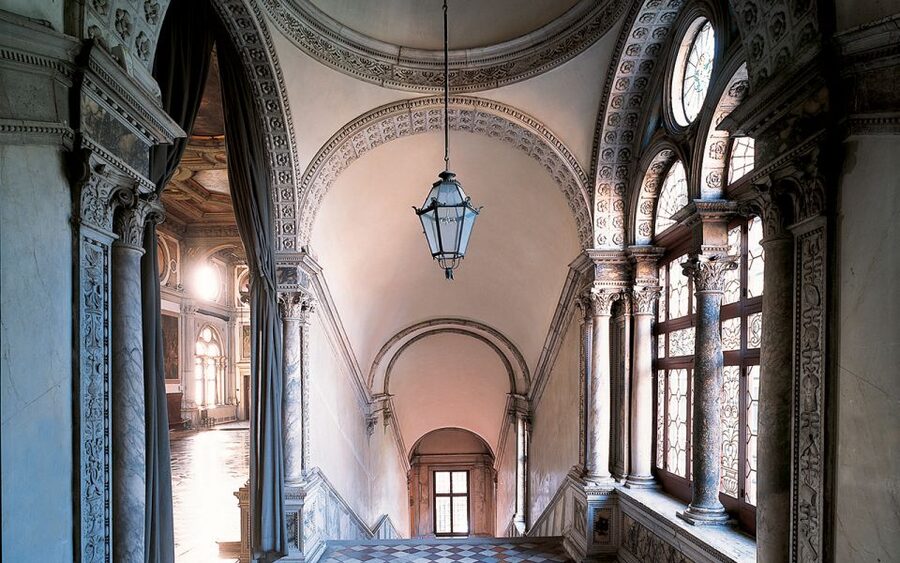
One of the smartest reasons to buy this ticket is the staircase. Mauro Codussi’s monumental Renaissance staircase—added in 1498—becomes your visual staircase to a different chapter of Venice.
Climbing it changes how you see the scuole. You’re literally moving from one historical attitude to another. Gothic Venice often feels vertical and ceremonial; Renaissance Venice feels more controlled, more architectural. Even if you don’t know the jargon, you’ll feel the shift in the building’s rhythm as you move upward.
This is also where you start to appreciate why the visit is structured like a guided path even without a guide. Each room hands you a new “lens” for the art. You don’t just look at paintings; you look at them from a building that was built to frame how they were meant to be encountered.



Chapter Hall: Baroque-era storytelling begins to take over
After the staircase, you reach the Chapter Hall. This is one of the key transitions in the visit because it connects the communal side of the scuole to the deeper layers of ritual and representation.
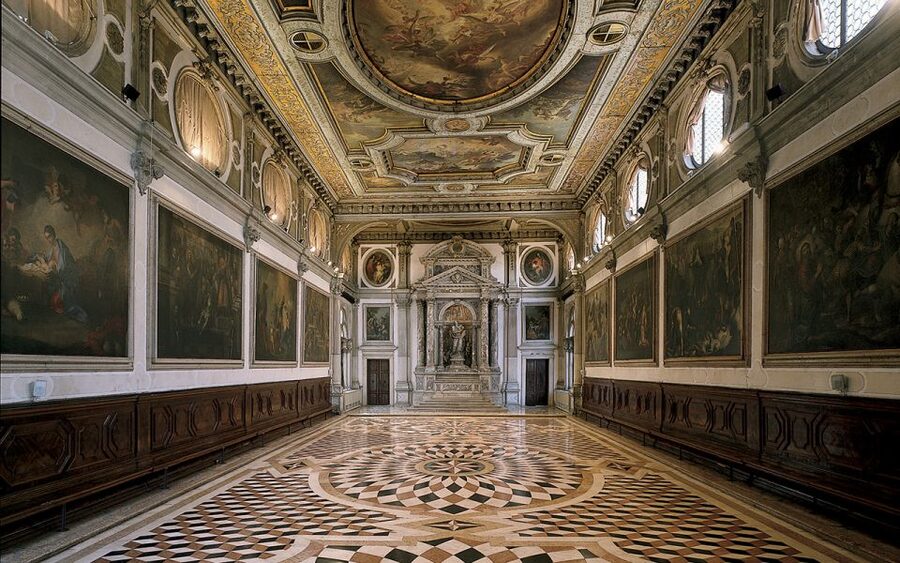
From there, the experience builds toward Baroque splendor, with art linked to specific major artists you’ll recognize. The hall spaces are part of the message: religious art wasn’t only meant to impress. It was meant to teach, persuade, and strengthen faith through visual drama.
If you’re a fan of how Baroque art uses emotion, movement, and intensity, you’ll feel it here—not because the building is loud, but because the rooms prepare you for the change in tone. The architecture sets the stage. The art delivers the story.
Oratory Hall and the True Cross relic (1369): faith with a story you can follow
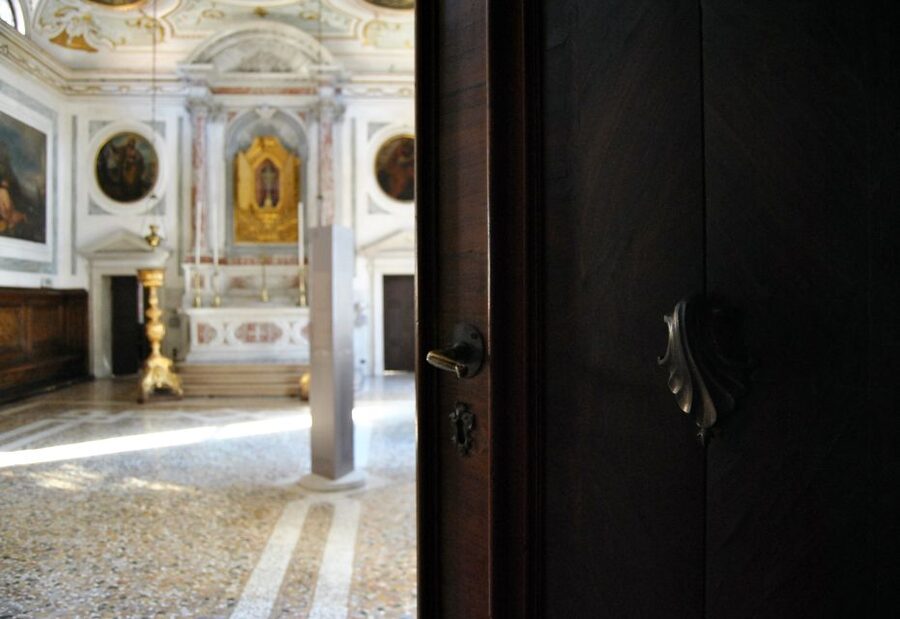
One of the most distinctive parts of this visit is the Oratory Hall and the relic of the True Cross, dated to 1369. Even if you’re not religious, this is the kind of object-based history that makes the past feel concrete. It’s not a “theme.” It’s a specific relic tied to a specific time.
You’ll also see how the relic inspired a Cycle on the Miracles of the Cross. That’s important for your understanding. When a building focuses on one object and its associated miracle stories, the art becomes a narrative system. You’re not just viewing separate works—you’re seeing how faith was retold and reinforced through images over time.
My tip: spend a little extra time here. This is where the scuole concept becomes emotionally understandable, not just architecturally impressive.
Paintings and names you’ll recognize: Tintoretto, Giandomenico Tiepolo, Marieschi
The art at the Scuola Grande San Giovanni Evangelista includes works associated with painters like Domenico Tintoretto and Giandomenico Tiepolo, along with Jacopo Marieschi. This is one of the reasons the ticket earns such consistently high marks—because you’re not dealing with purely local works. You’re seeing major figures in a setting that feels less treated like a tourist stage.
There’s also a useful caution based on what some art-savvy visitors have noticed: you may find that certain celebrated paintings (teleri) aren’t all displayed in the same way you might expect, since some works are now in other collections. The good news is that even with that context, the overall architectural and religious experience still lands.
How to enjoy the paintings more: don’t rush from name to name. Use the rooms to guide you. If a scene feels connected to the Cross story, slow down and ask what role it’s playing in the larger narrative.
Where this visit shines most—and where it might not
This is a great fit if you:
- Want high-value Venice art and architecture without committing to a full day elsewhere
- Like quieter, less crowded places where the setting matters
- Enjoy religious history as it’s presented through objects and institutions
- Appreciate architecture as much as painting (stairs, halls, and design are a big deal here)
It may be less perfect if you:
- Want a live guide explaining details line-by-line (there’s no guide included)
- Prefer extremely famous “must-see” sites over places with a more local, institutional feel
If you fall into the second group, you can still enjoy it—you just have to bring slightly more curiosity. I’d suggest reading a bit beforehand about the True Cross relic and the miracle cycle, so your eyes have a framework once you walk in.
Should you book the Scuola Grande San Giovanni Evangelista ticket?
Yes, if you want an efficient, meaningful Venice stop that mixes Gothic, Renaissance, and Baroque in real physical rooms. At $9, it’s hard to argue with the value: you get architecture with purpose, notable artists, and a relic-centered story that makes the building feel alive in context.
Book it especially if you’re tired of the biggest crowd traps and you’d rather spend your time seeing how Venetian institutions worked—how people gathered, worshipped, and commissioned art in the same walls where you stand.
I’d skip it only if your ideal Venice day is exclusively about the most famous showpieces and you don’t enjoy older buildings where you need to slow down to appreciate the details.
FAQ
How long does the Scuola Grande San Giovanni Evangelista visit take?
The ticket is valid for 1 day. Exact time spent inside isn’t listed, but you’ll want enough time to move through multiple rooms and climb the staircase.
What’s included with the ticket?
The Scuola Grande San Giovanni Evangelista ticket is included. A guide is not included.
Where do I show my ticket?
Show your ticket at Scuola Grande San Giovanni Evangelista di Venezia.
What languages are available?
Italian and English are available.
What will I see during the visit?
You can expect to see Gothic and Renaissance architecture, including the Gothic Columns Hall and Mauro Codussi’s Renaissance staircase (added in 1498), plus religious pieces such as the relic of the True Cross (1369) and its miracle-cycle context, along with artworks associated with painters like Domenico Tintoretto, Giandomenico Tiepolo, and Jacopo Marieschi.
Is it free to cancel?
Yes, free cancellation is available up to 24 hours in advance for a full refund.
More Tickets in Venice
- Venice: Doge’s Palace Reserved Entry Ticket
★ 4.6 · 42,716 reviews - Venice: La Fenice Opera House Entry Ticket with Audio Guide
★ 4.6 · 11,742 reviews - Venice: Leonardo Da Vinci Museum Entrance Ticket
★ 4.5 · 3,560 reviews - Venice: St. Mark’s Basilica & Doge’s Palace Tour with Ticket
★ 4.7 · 3,375 reviews - Venice: Palazzo Contarini del Bovolo Entrance Ticket
★ 4.3 · 1,991 reviews - Doge’s Palace & St. Mark’s Basilica Tickets + Tour Options
★ 4.5 · 1,841 reviews
More Tour Reviews in Venice
- Venice: Doge’s Palace Reserved Entry Ticket
★ 4.6 · 42,716 reviews - Venice: Grand Canal Gondola Ride with App Commentary
★ 4.1 · 23,020 reviews - Venice: Grand Canal Gondola Experience with Live Commentary™
★ 4.2 · 16,504 reviews - Boat Trip: Glimpse of Murano, Torcello & Burano Islands
★ 4.3 · 15,699 reviews - Venice: La Fenice Opera House Entry Ticket with Audio Guide
★ 4.6 · 11,742 reviews - Murano & Burano: Boat Tour with Guide & Glass Factory Visit
★ 4.3 · 10,716 reviews
Fresh Off the Vaporetto: New Venice Reviews
Tickets, compared.
 ★ 4.6Doge’s Palace Reserved Entry TicketFrom $4142,716 reviews
 ★ 4.6La Fenice Opera House Entry Ticket with Audio GuideFrom $1411,742 reviews
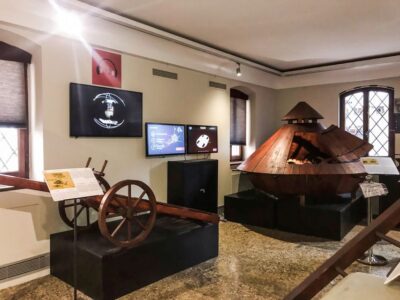 ★ 4.5Leonardo Da Vinci Museum Entrance TicketFrom $103,560 reviews
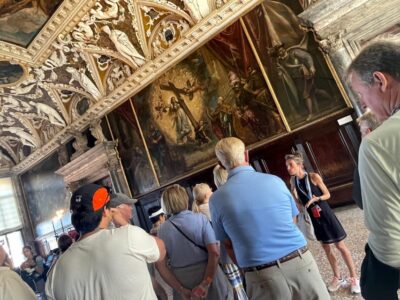 ★ 4.7St. Mark’s Basilica & Doge’s Palace Tour with TicketFrom $943,375 reviews
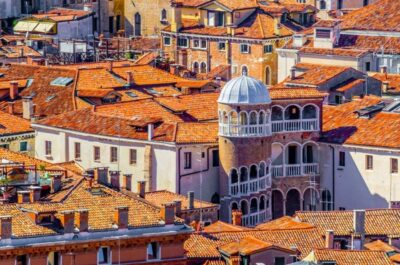 ★ 4.3Palazzo Contarini del Bovolo Entrance TicketFrom $101,991 reviews
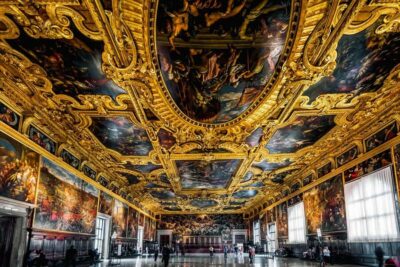 ★ 4.5Doge’s Palace & St. Mark’s Basilica Tickets + Tour OptionsFrom $811,841 reviews
 ★ 3.4St. Mark’s Basilica Ticket with Audio GuideFrom $361,645 reviews
 ★ 4.0Doge’s Palace Skip-the-Line Ticket with GuidebookFrom $511,196 reviews