
Review · MUSEUMS
Venice: Leonardo Da Vinci Museum Entrance Ticket
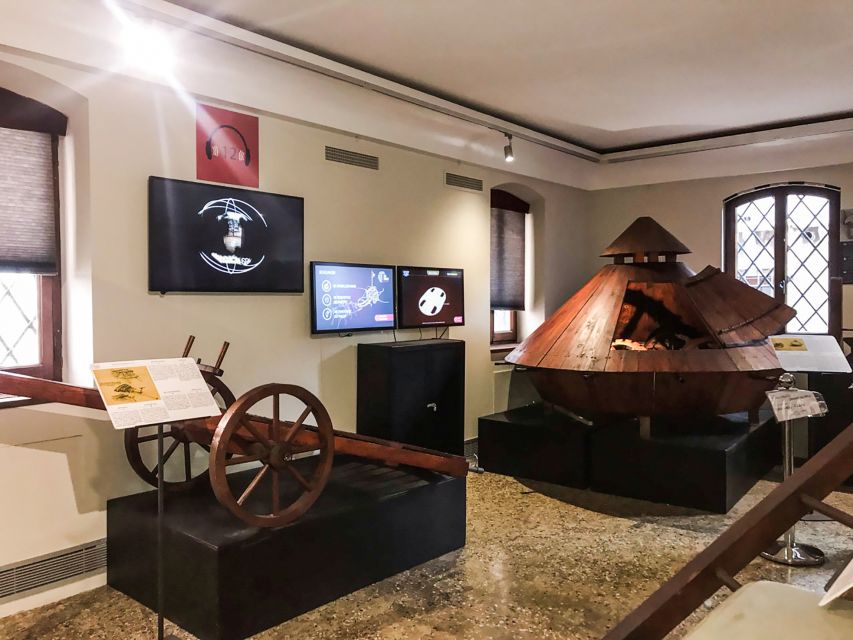
Da Vinci’s ideas are fun when they move. The Interactive Da Vinci Museum turns his inventions into hands-on, working exhibits grouped by the four elements, so you’re not just looking.
I especially like that the museum feels interactive without being overwhelming, with plenty you can try even if you’re not a museum person.
My second favorite part is the mix of art and science: you get human anatomy studies plus high-resolution backlit replicas of his paintings, with multimedia support and descriptions in multiple languages. One potential drawback: it’s a smaller museum, so if you’re expecting a huge, all-day site, you may wish it were bigger.
In This Review
- Key things to know before you go
- Entering the Leonardo da Vinci Museum in Venice: Where to go fast
- Earth, Water, Air, Fire: How the exhibits guide your attention
- Working machines, mirror rooms, and the art of actually using your hands
- Da Vinci wasn’t only an artist: Anatomy studies and painting replicas
- Language support and audio tips (so you don’t miss the good stuff)
- Photos, souvenirs, and the 10% bookshop discount
- How long to spend: 30-60 minutes or a full 1.5 hours
- Who this ticket is best for (and when it’s not)
- Quick “day plan” idea that keeps you sane
- Should you book the Leonardo da Vinci museum ticket in Venice?
- FAQ
- How much time should I plan for the museum?
- Is a guided tour included with the ticket?
- Can I take photos inside the museum?
- What languages are available for the exhibits?
- Are children allowed, and do they get free entry?
- Is there a bookshop discount?
- Where is the meeting point?
- What is the last time I can enter?
Key things to know before you go
- Four element zones (Earth, Water, Air, Fire) keep the visit organized and easy to follow
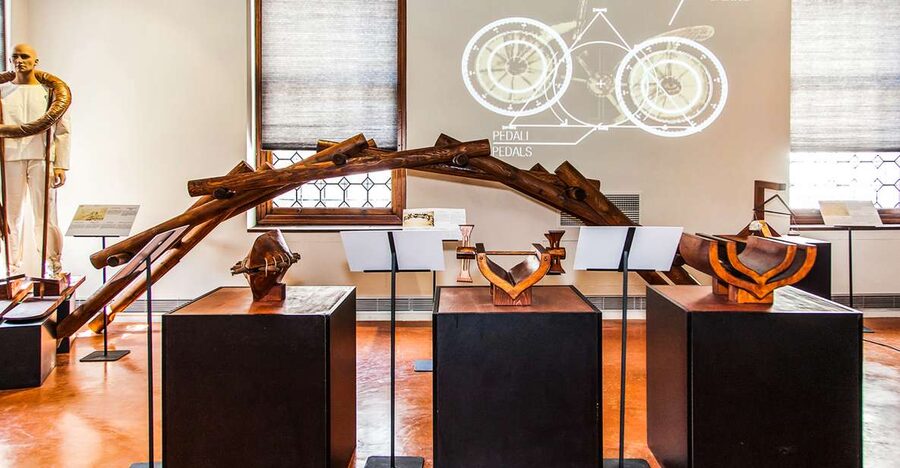
- Working models you can operate make Da Vinci’s ideas feel practical, not just historical
- Anatomy studies + painting replicas show the full range of his talent
- Hands-on puzzles and play areas work well for kids and adults
- Photo friendly inside so you can capture your favorites
Entering the Leonardo da Vinci Museum in Venice: Where to go fast
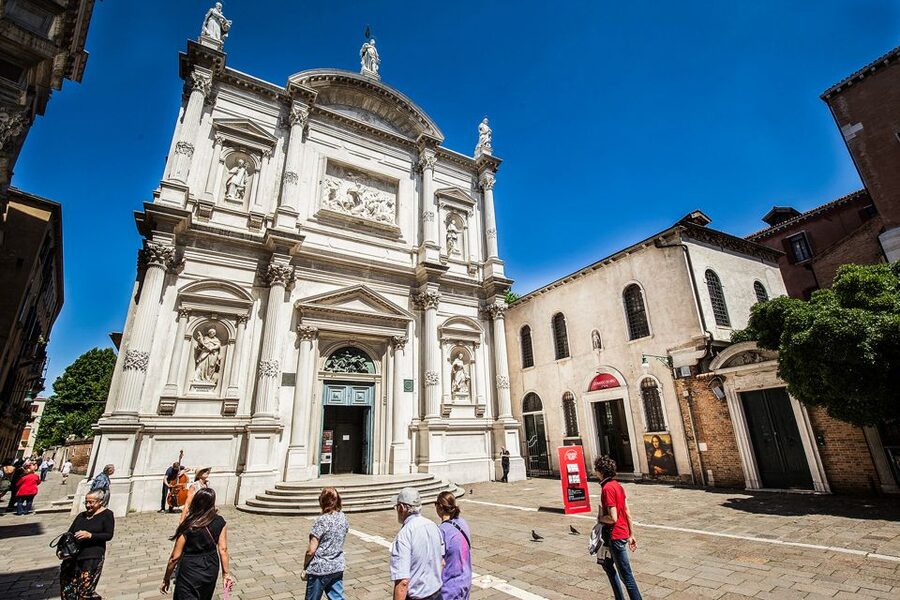
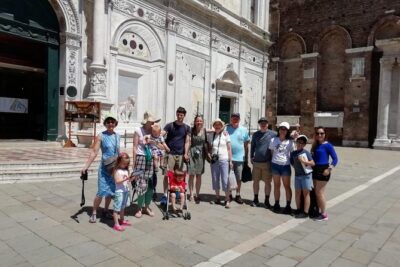
Your starting point is the Leonardo da Vinci Interactive Museum, Campo San Rocco, 3052 Venezia. You’ll be at Edificio Scoletto di San Rocco, in front of the Scuola Grande di San Rocco, and behind the church called dei Frari.
This matters more than you’d think. Venice is a maze, and the museum is easy to miss if you’re wandering with no landmark. Once you’re in the right spot, you’ll basically just walk in with your timed ticket and enter—this isn’t a “meet your guide and wait” kind of setup.
Also note the practical rule for planning: the last entrance is 1 hour before closing time. That means you shouldn’t treat this like a casual, flexible stop you can drop in late. If you’re also doing big sights the same day, plan this as a “use your time well” visit, not an afterthought.
Worth weighing up before you book this Venice outing:
- Venice: Doge’s Palace Reserved Entry Ticket★ 4.6 · 42,716 reviews
- Venice: La Fenice Opera House Entry Ticket with Audio Guide★ 4.6 · 11,742 reviews
- Venice: Leonardo Da Vinci Museum Entrance Ticket★ 4.5 · 3,560 reviews
- Venice: St. Mark’s Basilica & Doge’s Palace Tour with Ticket★ 4.7 · 3,375 reviews
Earth, Water, Air, Fire: How the exhibits guide your attention
The museum’s structure is clever. It splits into four sections themed around Earth, Water, Fire, and Air, and the exhibits in each zone connect to Da Vinci’s designs. Instead of a generic “inventions gallery,” you get a guided mental framework: each room helps you think about the physical world the way he did.
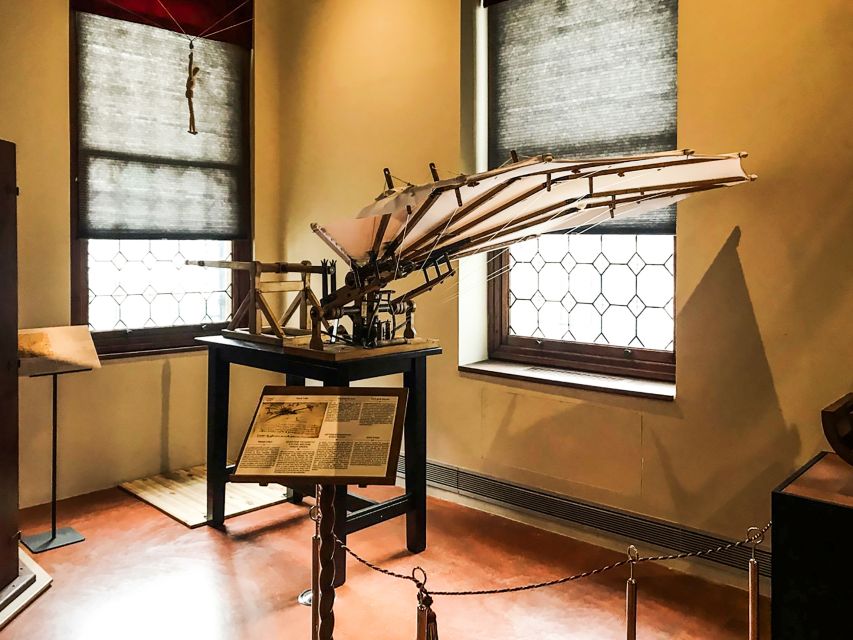
Earth and its machines give you the feel of Da Vinci as a maker—more engineering than imagination. Water-themed displays push the inventor side: movement, mechanics, and how forces work on real materials. Fire brings in the energy and transformation angle, where you’re trying to understand function instead of admiring glass-and-brass for its own sake. And Air is where many people start to notice how “modern” his thinking is, especially when the exhibits focus on principles you recognize today.
The real win for you is pacing. You can do this museum at your speed, but the four-part layout keeps you from drifting. It’s also easier to move through with kids because they can mentally “collect” each element.
Working machines, mirror rooms, and the art of actually using your hands
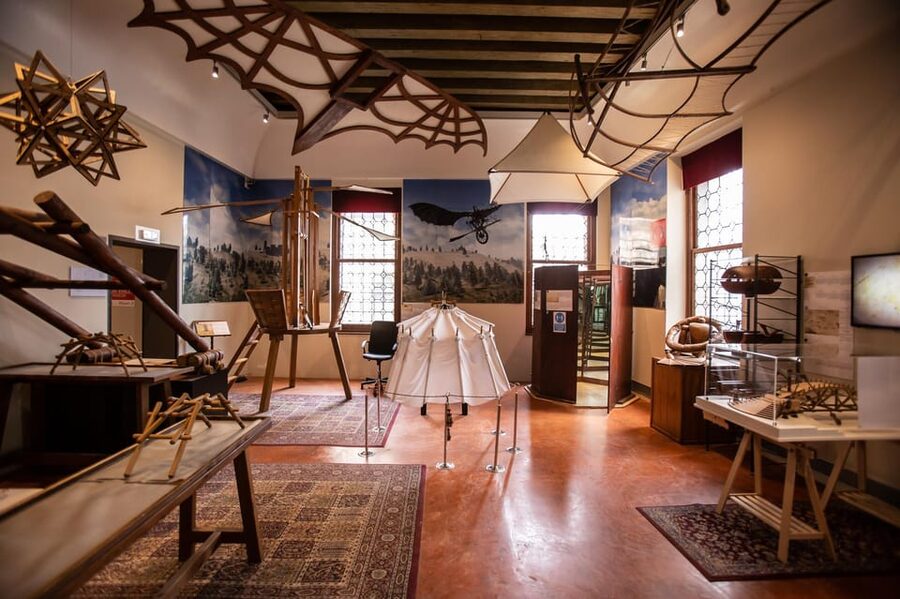
This is an interactive museum, meaning you won’t just wander past labels. You’ll find faithful reproductions of Da Vinci’s inventions and machines, rebuilt according to his designs. The museum also points out that proportions may have needed adjustments for practical reasons—which is honest and helpful, not a buzzkill.
Here’s what I’d prioritize once you’re inside:
- Seek out the hands-on areas first. The interactive pieces tend to set the tone, and once you’re warmed up, the information sections land better.
- If you like puzzles, don’t rush. There’s a wood bridge puzzle on the second floor, and a second person really helps with it.
One of the most talked-about features is visual and physical at the same time: the mirror box on the ground floor and the 360-degree mirror room. This is the kind of exhibit that turns your brain into a lab. You can watch how the room shifts your perspective and how your movement changes the effect. It’s simple, but it sticks with you.
And yes, it’s family friendly in a way that doesn’t feel like a toy store. There are activities suited for different ages, including iPads for children to draw like Da Vinci. That’s useful for you if you’re traveling with kids, because it gives them a task instead of just asking them to sit and be quiet.
Da Vinci wasn’t only an artist: Anatomy studies and painting replicas
Da Vinci is famous for art. But this museum makes sure you meet the full person: artist, engineer, and anatomist.
You’ll see exhibits tied to his studies of human anatomy, and you’ll also get high-resolution backlit replicas of major paintings. The backlit style matters. It keeps the details visible without the harsh glare you might expect in some indoor displays.
What I like about this balance is that it prevents a common “either/or” mindset. You don’t have to treat him like a painter who also scribbled science. You can see how his curiosity about the human body connects to his observational skill as an artist.
The museum also uses multimedia displays to explain his life and works. Descriptions are available in Italian, English, French, German, Spanish, and Russian. For you, that means you can pick the language that keeps your brain engaged, especially if you’re tired after a long day of walking.
Language support and audio tips (so you don’t miss the good stuff)
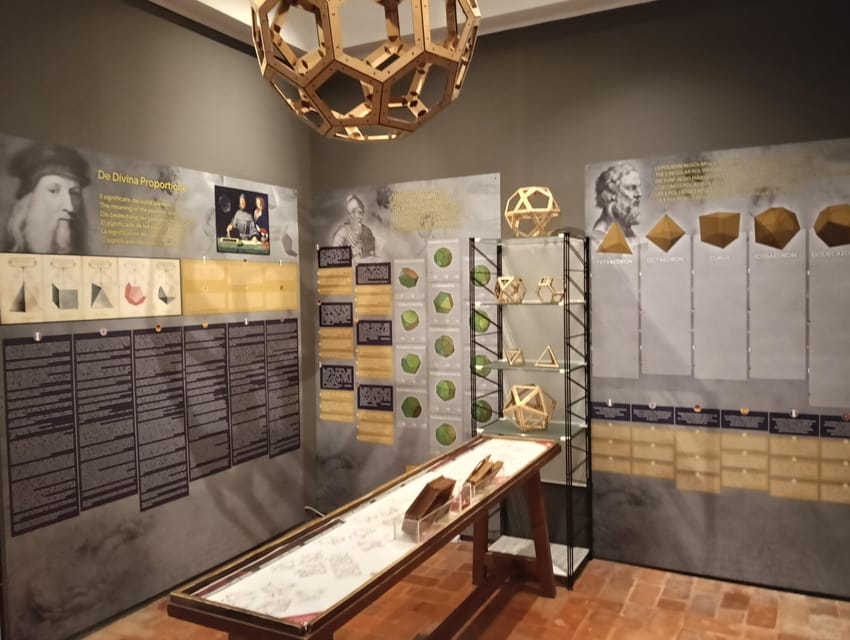
The museum gives you descriptions in six languages, plus multimedia. That’s great if you’re traveling as a group with mixed language comfort. Everyone can still follow the key ideas without feeling lost.
One small but important tip: there’s an audio guide accessed through a QR code found at the front of the shop. One visitor noted they weren’t told at arrival and had to go back to scan it later. So do this once you walk in: check the shop area for the QR code and start the audio early.
Is it required? No details say you must use it. But if you’re the type who likes context while you look, the audio makes your time feel more “guided” even without a formal guide.
More gallery hours out of the sun


Photos, souvenirs, and the 10% bookshop discount
You can take photos inside, which is handy in a place with working models and mirror rooms. Just keep an eye on exhibit behavior—some interactive areas are meant to be used carefully, not tackled like a playground.
Then plan a little time for the bookshop. It’s not just clutter. You’ll find Leonardo-themed gifts and souvenirs, and you get a 10% discount on bookshop purchases with your ticket.
For me, that discount makes it easier to justify a small keepsake without turning the day into a shopping detour. If you’re buying for a kid (or future you), this is a practical place to pick something fun that still fits the museum theme.
How long to spend: 30-60 minutes or a full 1.5 hours
The museum is described as small, but people consistently come away feeling like they did more than they expected. That’s the interactive trick at work. You stop more often, test more things, and spend time figuring out how machines work.
If you’re in a hurry, you can make it work in about 30 to 60 minutes. If you want to try the hands-on exhibits at a relaxed pace, plan for about 1.5 hours.
My advice for you: don’t schedule another timed activity right after you plan to arrive. Leave a buffer. In Venice, the streets slow you down, and the museum’s best moments often happen when you’re not rushing.
Who this ticket is best for (and when it’s not)
This is a strong fit if you:
- Want something practical and interactive rather than purely visual
- Travel with kids or teens who like to touch, solve, and experiment
- Enjoy art that comes with explanations of how ideas work
- Prefer a break from the big-ticket Venice crowds
It’s also a smart add-on if you’re doing major landmarks in the same area and need a “think and play” stop. People have compared it well to other Italian cultural hits, partly because it connects multiple disciplines in one place.
When it might not be the best choice: if you want a huge museum experience with lots of rooms and long guided content, the museum size may feel short. The upside is that you can still get a satisfying visit without burning your whole day.
Quick “day plan” idea that keeps you sane
Here’s a simple rhythm you can copy:
- Start with the interactive machines (so you’re fully awake and curious).
- Move through each element zone—Earth to Air—like you’re collecting themes.
- Then slow down for anatomy and the painting replicas, since those benefit from reading and looking longer.
- Finish with the mirror room and one last interactive area before you head out.
- Stop at the shop and use the 10% discount.
If you’re traveling with kids, keep an eye on which exhibits they can operate without getting overly wild. It’s a learning experience, and the museum works best when everyone treats the displays as hands-on tools, not free-for-all toys.
Should you book the Leonardo da Vinci museum ticket in Venice?
Yes, you should book if you want a high-value, low-stress way to connect with Da Vinci while you’re already in Venice. At $10 per person (with free entry for children under 3), the price is reasonable for what you get: interactive machines, multi-language explanations, photo opportunities, and time that won’t swallow your entire day.
Skip it only if you’re specifically looking for a large-scale museum campus or a guided tour—because this ticket is for admission, not a guided walkthrough.
If you’re deciding today, my suggestion is simple: pick a time earlier in your day so you can take your time, and remember the last entrance happens 1 hour before closing. That alone can save you from the most frustrating Venice problem: running out of daylight and being one step too late.
FAQ
How much time should I plan for the museum?
Most visits feel short-to-medium. Many people spend around 1 hour to 1.5 hours, depending on how much you want to try the interactive exhibits and puzzles.
Is a guided tour included with the ticket?
No. A guided tour is not included with this entrance ticket.
Can I take photos inside the museum?
Yes. There is an opportunity to take photos inside.
What languages are available for the exhibits?
Descriptions are available in Italian, English, French, German, Spanish, and Russian, supported by multimedia displays.
Are children allowed, and do they get free entry?
Children under 3 years old have free admission. Children under 15 can only enter if accompanied by an adult.
Is there a bookshop discount?
Yes. You get a 10% discount on bookshop purchases.
Where is the meeting point?
Leonardo da Vinci Interactive Museum, Campo San Rocco, 3052 Venezia, Edificio Scoletto di San Rocco, in front of the Scuola Grande di San Rocco behind the Chiesa dei Frari.
What is the last time I can enter?
Last entrance is 1 hour before closing time.
Indoors Done Well: Venice Galleries
- Venice’s Best: Basilica, Doge’s Palace, Gondola & History Gallery
★ 4.5 · 2,478 reviews - Venice: Vivaldi’s Four Seasons Concert & Music Museum Visit
★ 4.8 · 2,065 reviews - Charming Gondola Ride on the Grand Canal & Gondola Gallery™
★ 4.0 · 1,313 reviews - Venice: City Pass with Museums including Doge’s Palace
★ 4.1 · 1,020 reviews - Venice: Bell Tower & St Mark’s Square History Gallery Ticket
★ 4.3 · 910 reviews - Venice Museum Pass & Doge’s Palace Entrance Ticket
★ 3.9 · 769 reviews
More Tickets in Venice
- Venice: Doge’s Palace Reserved Entry Ticket
★ 4.6 · 42,716 reviews - Venice: La Fenice Opera House Entry Ticket with Audio Guide
★ 4.6 · 11,742 reviews - Venice: St. Mark’s Basilica & Doge’s Palace Tour with Ticket
★ 4.7 · 3,375 reviews - Venice: Palazzo Contarini del Bovolo Entrance Ticket
★ 4.3 · 1,991 reviews - Doge’s Palace & St. Mark’s Basilica Tickets + Tour Options
★ 4.5 · 1,841 reviews - Venice: St. Mark’s Basilica Ticket with Audio Guide
★ 3.4 · 1,645 reviews
More Tour Reviews in Venice
- Venice: Doge’s Palace Reserved Entry Ticket
★ 4.6 · 42,716 reviews - Venice: Grand Canal Gondola Ride with App Commentary
★ 4.1 · 23,020 reviews - Venice: Grand Canal Gondola Experience with Live Commentary™
★ 4.2 · 16,504 reviews - Boat Trip: Glimpse of Murano, Torcello & Burano Islands
★ 4.3 · 15,699 reviews - Venice: La Fenice Opera House Entry Ticket with Audio Guide
★ 4.6 · 11,742 reviews - Murano & Burano: Boat Tour with Guide & Glass Factory Visit
★ 4.3 · 10,716 reviews
Fresh Off the Vaporetto: New Venice Reviews

Museums, compared.
 ★ 4.5Venice’s Best: Basilica, Doge’s Palace, Gondola & History GalleryFrom $1292,478 reviews
 ★ 4.8Vivaldi’s Four Seasons Concert & Music Museum VisitFrom $462,065 reviews
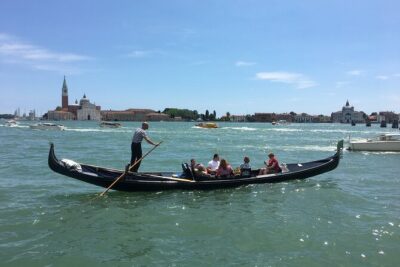 ★ 4.0Charming Gondola Ride on the Grand Canal & Gondola Gallery™From $471,313 reviews
 ★ 4.1City Pass with Museums including Doge’s PalaceFrom $741,020 reviews
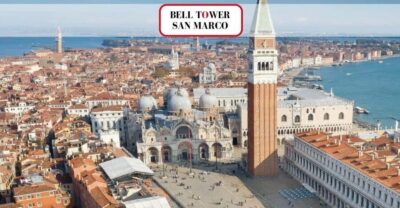 ★ 4.3Bell Tower & St Mark’s Square History Gallery TicketFrom $44910 reviews
 ★ 3.9Venice Museum Pass & Doge’s Palace Entrance TicketFrom $41769 reviews
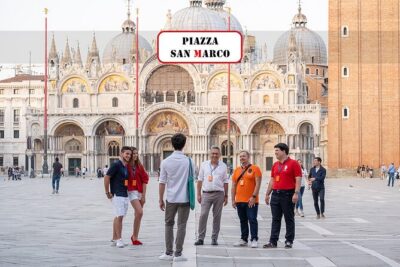 ★ 5.0Basilica, Doge’s Palace, History Gallery & Bell Tower OptionFrom $116586 reviews
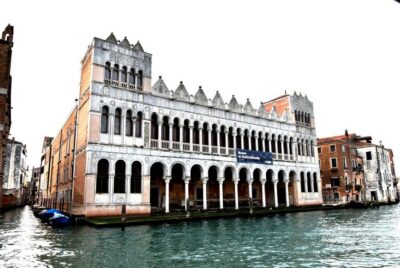 ★ 4.7Natural History Museum Entry TicketFrom $11312 reviews
Browse the lists this tour appears in