
Review · TICKETS
Venice: Tickets to Negozio Olivetti
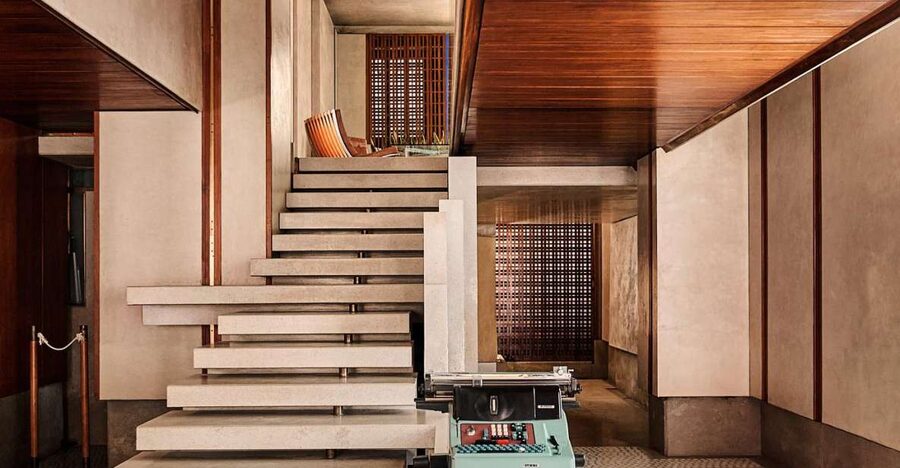
Carlo Scarpa’s work turns a business space into art. The Negozio Olivetti sits in St. Mark’s Square, and it’s one of those Venice stops where design, architecture, and everyday objects all share the same spotlight. It’s centered on the 1957–58 Olivetti showroom setting, restored for public visits, and framed by the elegant structure of the Procuratie Vecchie colonnades.
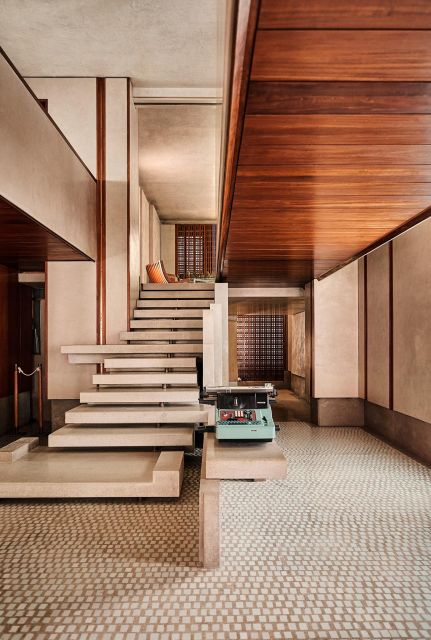
I love two things here right away. First, the building treatment is pure Scarpa: you can see how he reorganized space, handled light, and worked with luxury materials like Aurisina marble and ebony. Second, it’s a rare chance to experience a mid-20th-century brand space that still feels intentional and preserved, not like a museum that’s frozen in time.
One possible drawback: the interior is small, so crowding can affect your pace. On paper you’ll have a scheduled entry, but if more people than expected drift in at the same time slot, you’ll feel it quickly in the rooms.
In This Review
- Key Points You Should Know Before You Go
- Carlo Scarpa’s Olivetti Store in St. Mark’s Square
- The 1957–58 Showroom Setting (And Why the Restoration Matters)
- Procuratie Vecchie Colonnades: The Warm-Up Before the Interior
- Inside Scarpa: Light, Volume, and the Luxe Detail Work
- Tickets, Entry, and Why the Room Size Changes Everything
- Price Value: Why $11 Is Reasonable for This Kind of Design
- Who Should Book (And Who Might Prefer Something Else)
- Should You Book Negozio Olivetti?
- FAQ
- Is an entrance ticket included?
- Is an audio guide included, and what languages are available?
- How big are the groups?
- How long do I have to use the ticket?
- Are food and drinks allowed inside?
- Can I take photos with flash?
- What is the cancellation policy?
- Is smoking allowed indoors?
Key Points You Should Know Before You Go
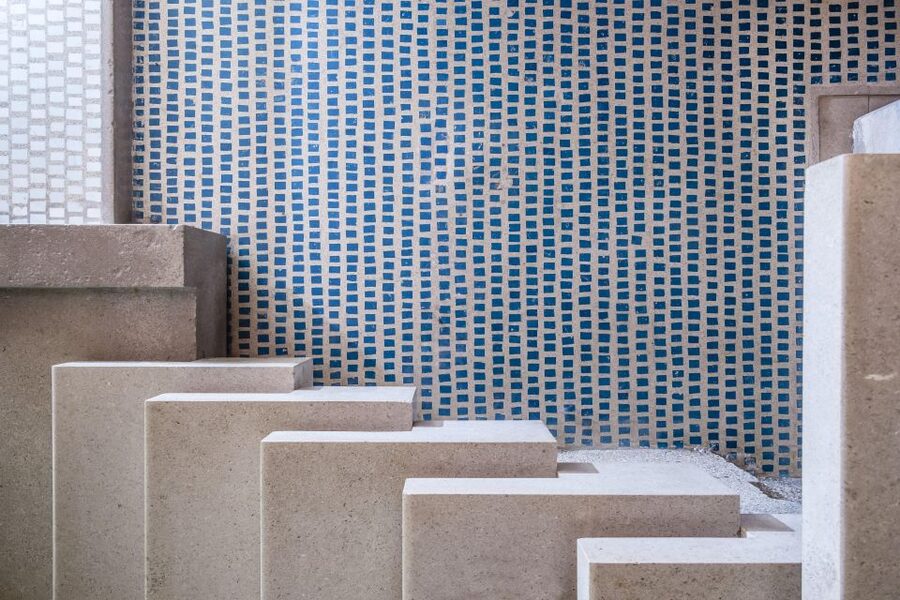
- Scarpa’s architectural thinking: a reworking of the original unit focused on light, volume, and precise placement
- Original Olivetti showroom (1957–58): restored for the public after careful work done in 2010
- Small group size: limited to 10 participants, which matters in a tight interior
- Audio guide in Italian and English: included, so you can move at your own speed
- Materials you can spot: Aurisina marble and ebony show up in the details
- Possible temporary exhibits: the display of objects and layout may shift at certain times
Carlo Scarpa’s Olivetti Store in St. Mark’s Square
St. Mark’s Square is full of spectacle, but the Negozio Olivetti is different. You’re not here for a view or a grand façade. You’re here for how an interior can be designed like a small piece of theatre—controlled, careful, and built for close reading.
You’ll start in the St. Mark’s Square area, where the Procuratie Vecchie colonnades wrap around you with a sense of rhythm and permanence. In this setting, the Negozio Olivetti feels like a deliberate pocket of modern thinking. The story behind it is tied to Adriano Olivetti’s idea that the company’s cultural values could be communicated through design in a modern way, without trampling the historic surroundings.
And then the architecture takes over. Carlo Scarpa was given a challenging commission: he had to work with what was there, but completely reshape how the space functions. The result is a showroom interior that feels both composed and slightly surprising. Instead of treating it like a generic sales room, Scarpa turns it into a study in proportion—how you walk, where light lands, and how objects relate to surfaces.
Worth weighing up before you book this Venice outing:
- Venice: Doge’s Palace Reserved Entry Ticket★ 4.6 · 42,716 reviews
- Venice: La Fenice Opera House Entry Ticket with Audio Guide★ 4.6 · 11,742 reviews
- Venice: Leonardo Da Vinci Museum Entrance Ticket★ 4.5 · 3,560 reviews
- Venice: St. Mark’s Basilica & Doge’s Palace Tour with Ticket★ 4.7 · 3,375 reviews
The 1957–58 Showroom Setting (And Why the Restoration Matters)
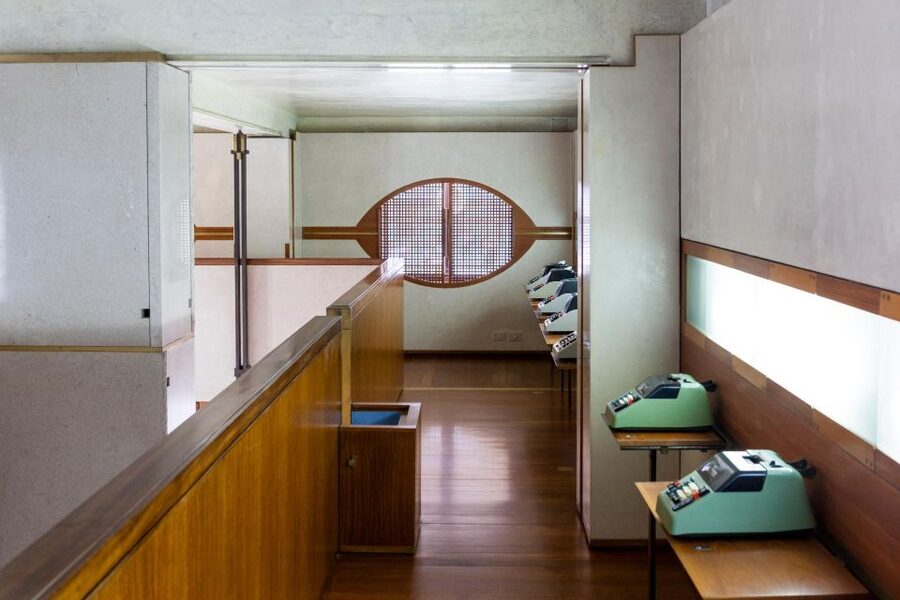
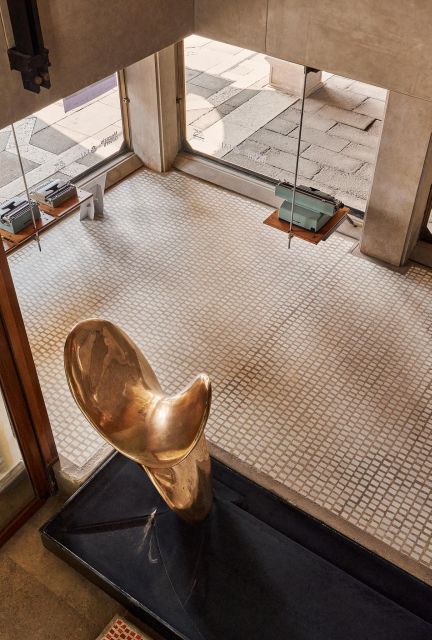
The heart of the visit is the original Olivetti showroom setup from 1957–58. This matters more than it sounds. Many design museums borrow objects or present replicas. Here, you’re seeing a space presentation meant for that era of technology—typewriters, calculators, and the brand world built around them—then restored so the architecture and staging read clearly today.
The restoration you care about is specific: the showroom was carefully restored in 2010 and reopened to the public again in 2011. That timeline is useful because it tells you this isn’t a quickly staged exhibit. It’s a protected interior meant to be experienced as a whole, not just a collection of products.
You also get context through an audio guide in Italian and English. You’re not forced to stay with a group script. Instead, you can pause where the room begs you to pause—at thresholds, corners, display boundaries, and the junctions where materials meet.
One practical note: the space can sometimes host a temporary exhibition. When that happens, the content and the organization of the objects can change slightly. That’s not a downgrade—it’s part of how the site stays alive—just be aware that you may not see the exact same arrangement every time you go.
Procuratie Vecchie Colonnades: The Warm-Up Before the Interior
Before you enter the showroom rooms, you’re walking under the colonnades of the Procuratie Vecchie. That sounds like a simple prelude, but it’s actually a key part of why the visit works.
Scarpa’s interior design is meant to be understood through contrast. St. Mark’s Square gives you the historic weight of Venice. Then the showroom gives you a controlled modern space where light and surfaces are treated with almost sculptural attention. The shift from outdoors-to-colonnade-to-interior helps you notice how the building itself changes your experience.
It also helps you understand the mission behind the commission: Adriano Olivetti wanted a modern messaging environment, but it had to respect the older setting. The Procuratie Vecchie creates that respectful backdrop. The showroom feels like an intelligent conversation rather than an abrupt insert.
If you’re coming at a busy time of day, the colonnades can get crowded around you in the broader square. That doesn’t ruin the visit, but it’s smart to give yourself a few extra minutes so you’re not rushing through the approach. A calmer arrival makes the interior feel calmer too.
Inside Scarpa: Light, Volume, and the Luxe Detail Work
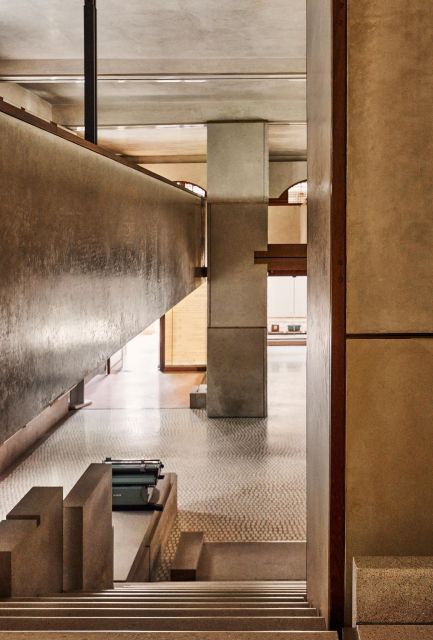
What makes Negozio Olivetti special is that it behaves like architecture first, showroom second. Scarpa didn’t just decorate an existing room. He overhauled it with a re-organization of space designed to reshape volumes and guide movement.
As you walk in, look for how the space controls your attention. You’ll see the strategy in how boundaries are drawn and how light is handled. Even without technical knowledge, you can feel the difference: the rooms are arranged so your eyes know where to go next.
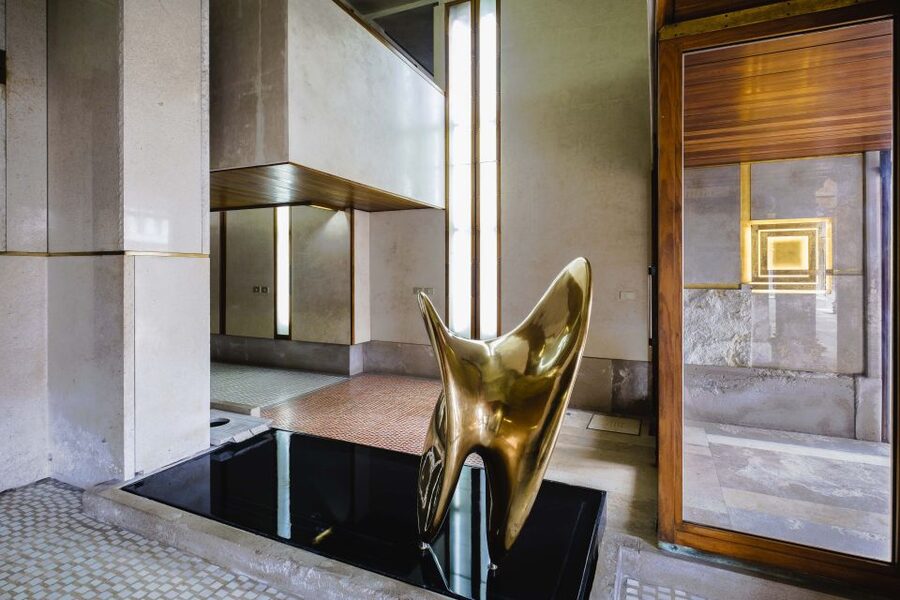
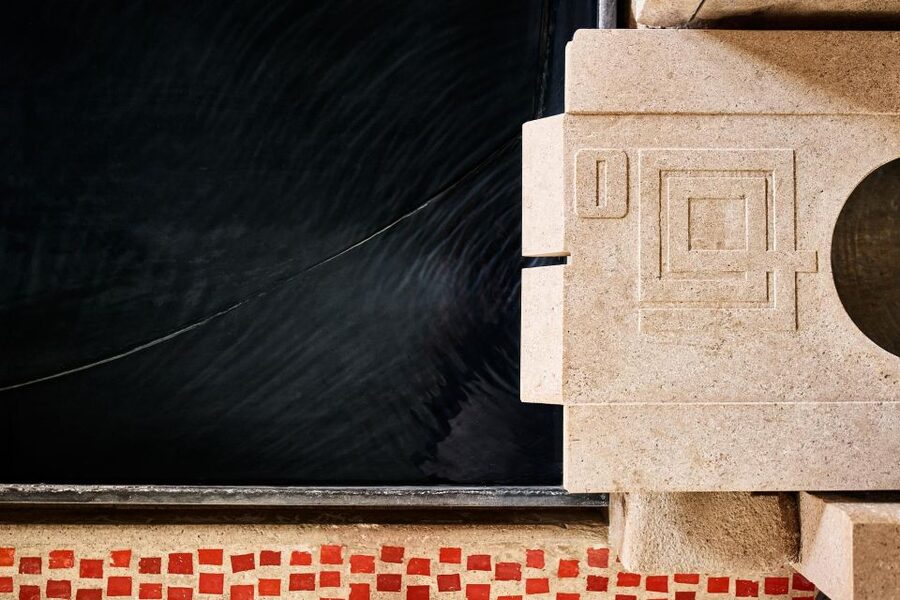
The materials help you read the design choices. The information you’ll receive points to luxurious, sophisticated surfaces—Aurisina marble and ebony are specifically mentioned. When you spot those materials in context, they stop being name-drops and become practical clues. Scarpa used them to create contrast and tactility, so you can understand the space through both visual and texture cues.
This is also where the conservation aspect shows up. A well-preserved interior lets design details keep their intention. You can better appreciate the edges, transitions, and small decisions that might be lost in a heavily restored or re-painted space. One short line of advice: don’t rush to see everything at once. In a small interior, your first walk-through sets the mental map; your second pass (if time allows) is when the details start to click.
Tickets, Entry, and Why the Room Size Changes Everything
Negozio Olivetti is limited in how many people can move through it comfortably. The activity is designed as a small group experience limited to 10 participants. That ceiling is exactly what you want here because the interior is compact.
Here’s the trade-off: a compact space means even small variations in entry timing can change the feel. One experience described a mismatch between a booked time and what happened during the visit—an additional group entered, filling the room and making it harder to move comfortably for the duration. The big takeaway for you: don’t plan on a quiet, private viewing. Plan on a calm visit, but give yourself flexibility.
What helps most is timing. Choose an entry time where you can arrive early and settle. Then, once you’re inside, let the audio guide set a relaxed pace. Flash photography is not allowed, and touching exhibits isn’t allowed either, so you’ll be relying on your eyes and your ears—another reason group flow matters.
If you’re sensitive to crowding, this is still worth doing because the architecture rewards patience. Just be realistic: you’re stepping into a small, protected interior, not a wide-open gallery.




Price Value: Why $11 Is Reasonable for This Kind of Design
At about $11 per person, this ticket price can feel surprisingly friendly—especially for a site connected to Carlo Scarpa and an original 1957–58 showroom setting. The value isn’t just the brand name. It’s what’s included and what the design space allows you to do.
You get an entrance ticket plus an audio guide in Italian and English. You’re also visiting a protected property of FAI (Fondo per l’Ambiente Italiano), with the site entrusted in concession by Assicurazioni Generali. That matters because it signals ongoing stewardship, not a one-off exhibit.
When you compare cost to experience type, this is strong value: a day-ticket experience that’s built around interpretation (audio guide) and around architecture you can study at close range. You’re also not paying extra for guided narration, which is a big deal when you want to control your pace.
So the real question isn’t whether it’s cheap. It’s whether you’ll enjoy a design-focused stop that asks you to slow down. If yes, the pricing feels fair.
Who Should Book (And Who Might Prefer Something Else)
You’ll likely love this visit if you:
- enjoy modern design and want to see it in an architectural setting, not just in photos
- like looking closely at materials, boundaries, and the way spaces shape behavior
- want a break from Venice’s bigger-ticket sights and prefer something small with meaning
You might skip it if you’re looking for something that feels like a classic walkthrough of lots of artifacts. This isn’t about volume of objects. It’s about the spatial idea: how Scarpa reorganized the room, how the showroom setting reads, and how the details still come through thanks to careful conservation.
One more practical fit check: if you’re traveling with kids, you’d want to judge based on your child’s patience for an audio-led architecture experience. The room’s rules—no touching and no food/drinks—keep it focused. That’s great for adults, but younger visitors might need more guidance than the audio provides.
If you’re a design nerd, you’re in the right place. If you’re just curious about why certain buildings feel calm or precise, you’re also in the right place.
Should You Book Negozio Olivetti?
Yes, I’d book it—especially if you care about architecture-as-experience. For the price, you get a small, thoughtfully preserved interior tied to Scarpa and Olivetti, with an audio guide that helps you actually understand what you’re looking at. The experience can feel crowded if timing slips or if entry numbers spike, but with a calm arrival and a small-group expectation, it’s still a strong use of time in Venice.
If you want a Venice moment that isn’t just scenery, this delivers. It’s not loud. It’s quiet, precise, and surprisingly moving once you start paying attention to how the room is built.
FAQ
Is an entrance ticket included?
Yes. The experience includes an entrance ticket.
Is an audio guide included, and what languages are available?
Yes. An audio guide is included, with options in Italian and English.
How big are the groups?
The group size is limited to 10 participants.
How long do I have to use the ticket?
The ticket is valid for 1 day. The exact starting times depend on availability.
Are food and drinks allowed inside?
No. Food and drinks are not allowed.
Can I take photos with flash?
No. Flash photography is not allowed.
What is the cancellation policy?
You can cancel up to 24 hours in advance for a full refund.
Is smoking allowed indoors?
No. Smoking indoors is not allowed.
More Tickets in Venice
- Venice: Doge’s Palace Reserved Entry Ticket
★ 4.6 · 42,716 reviews - Venice: La Fenice Opera House Entry Ticket with Audio Guide
★ 4.6 · 11,742 reviews - Venice: Leonardo Da Vinci Museum Entrance Ticket
★ 4.5 · 3,560 reviews - Venice: St. Mark’s Basilica & Doge’s Palace Tour with Ticket
★ 4.7 · 3,375 reviews - Venice: Palazzo Contarini del Bovolo Entrance Ticket
★ 4.3 · 1,991 reviews - Doge’s Palace & St. Mark’s Basilica Tickets + Tour Options
★ 4.5 · 1,841 reviews
More Tour Reviews in Venice
- Venice: Doge’s Palace Reserved Entry Ticket
★ 4.6 · 42,716 reviews - Venice: Grand Canal Gondola Ride with App Commentary
★ 4.1 · 23,020 reviews - Venice: Grand Canal Gondola Experience with Live Commentary™
★ 4.2 · 16,504 reviews - Boat Trip: Glimpse of Murano, Torcello & Burano Islands
★ 4.3 · 15,699 reviews - Venice: La Fenice Opera House Entry Ticket with Audio Guide
★ 4.6 · 11,742 reviews - Murano & Burano: Boat Tour with Guide & Glass Factory Visit
★ 4.3 · 10,716 reviews
Fresh Off the Vaporetto: New Venice Reviews


Tickets, compared.
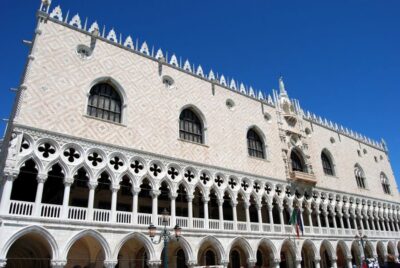
 ★ 4.6Doge’s Palace Reserved Entry TicketFrom $4142,716 reviews
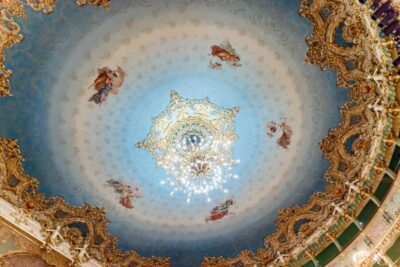 ★ 4.6La Fenice Opera House Entry Ticket with Audio GuideFrom $1411,742 reviews
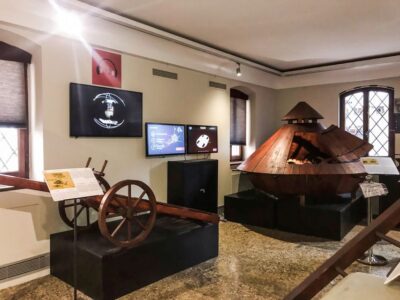 ★ 4.5Leonardo Da Vinci Museum Entrance TicketFrom $103,560 reviews
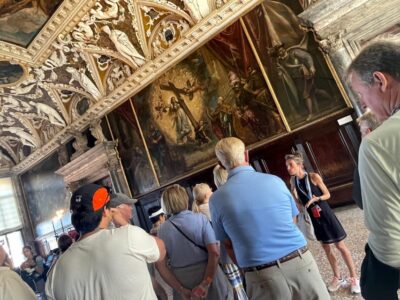 ★ 4.7St. Mark’s Basilica & Doge’s Palace Tour with TicketFrom $943,375 reviews
 ★ 4.3Palazzo Contarini del Bovolo Entrance TicketFrom $101,991 reviews
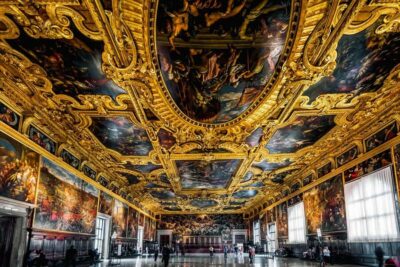 ★ 4.5Doge’s Palace & St. Mark’s Basilica Tickets + Tour OptionsFrom $811,841 reviews
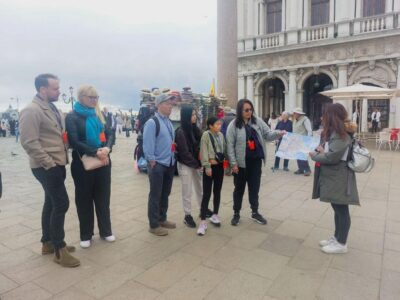 ★ 3.4St. Mark’s Basilica Ticket with Audio GuideFrom $361,645 reviews
 ★ 4.0Doge’s Palace Skip-the-Line Ticket with GuidebookFrom $511,196 reviews