
Venice hides in plain sight. This 2-hour walking tour with a native Venetian guide steers you away from the loud routes and into quieter, more traditional neighborhoods where the city feels lived-in.
I like the way the walk builds a clear story arc: Venetian Republic secrets and legends that connect street corners to the 1400s, then lands you at places tied to everyday Venetian craft. I also like the practical bonus of a map with local tips so you can keep using what you learn after the walk.
One thing to weigh: Venice streets can be tight and uneven, so this tour isn’t a good fit if you have limited mobility. It’s also rain or shine, so your shoes matter.
Key highlights
- Cannaregio canals and legends in a part of Venice that feels more local than postcard
- 1400s Venetian Republic stories that turn ordinary passages into context
- Rialto Bridge from the trade-center angle, not the usual photo-stop view
- San Polo and the mascareri tradition, where Carnival mask-making is still working
- A native guide’s local tips map, useful for the rest of your trip
- English, French, Russian, Spanish, or Italian options, plus private group availability
In This Review
- Entering a Less-Touristy Venice: Cannaregio, Rialto, and San Polo
- Where the Tour Starts: Hotel Antiche Figure Meet-Up
- Cannaregio’s Small Canals and Legends That Sound Like Local News
- Rialto Bridge as a Trade Center, Not Just a Photo Stop
- San Polo and the Mascareri: Carnival Craft Still Working
- The Native Venetian Guide Factor: Stories With Local Texture
- What’s Included: The Map That Keeps Working After the Tour
- Price and Value: Why $46 for 2 Hours Can Make Sense
- Pacing, Timing, and What to Bring (Especially for Rain)
- Who This Tour Fits Best (And Who Should Rethink It)
- Quick Reality Check: Language Coverage and Group Style
- Should You Book This Venice Walking Tour?
- FAQ
- FAQ
- How long is the Venice walking tour?
- What is the price per person?
- Where do I meet the guide?
- What’s included in the tour?
- Is food or drinks included?
- What languages are available for the live guide?
- Does the tour run in bad weather?
- Is this tour suitable for people with mobility impairments?
- Can I cancel for a full refund?
Entering a Less-Touristy Venice: Cannaregio, Rialto, and San Polo
If you’ve only seen Venice from the main thoroughfares, this route helps you “see” the city differently. The tour focuses on neighborhoods where daily life doesn’t sync to cruise-ship schedules, so the pace feels more human. You’ll be walking through areas with smaller canals, older lanes, and that specific Venice feeling of things being close together because they have always been close together.
What I like most is that the tour doesn’t treat Venice like a museum of statues. It treats Venice like a place with neighborhoods, trades, and traditions—still practiced. That’s why stops like Rialto and San Polo feel more meaningful here than they do as quick photo moments.
There’s also a good balance between story and place. You’re not just handed dates. You’re shown why the city’s layout and old power centers mattered, and then you end up at working corners of culture like Carnival mask-making.
Where the Tour Starts: Hotel Antiche Figure Meet-Up
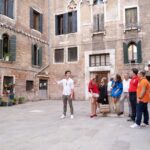
You’ll meet in front of HOTEL ANTICHE FIGURE, next to San Simeon Piccolo Church. Plan to arrive 10 minutes early, which matters in Venice because meeting points can hide behind bends in the streets and signboards.
This start location is useful because it puts you in the right rhythm for the walk: you’re already in the “real city” zone, not sprinting across Venice from one big landmark to another. From here, the guide can set expectations early and get you moving before the busiest crowds fully lock in.
You’ll also spot your guide with a board showing the tour name. If you’re arriving from a vaporetto stop or from your hotel, give yourself a little extra buffer for getting turned around—Venice loves to do that to people who rush.
On foot over the bridges, more routes
- Venice: Doge’s Palace and St Mark’s Basilica Walking Tour★ 4.4 · 6,291 reviews
- Venice: San Marco to Rialto Walk & Spritz Like a Local★ 4.2 · 3,651 reviews
- Venice Walking Tour and Gondola Ride★ 3.5 · 3,630 reviews
- Private 3 hrs Venice Tour: St Mark’s, Walking tour & Boat tour★ 4.0 · 3,372 reviews
Cannaregio’s Small Canals and Legends That Sound Like Local News
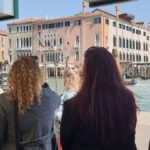
Cannaregio is where the tour’s tone shifts into quieter, more traditional Venice. Expect small canals and scenes that feel closer to neighborhood life than the postcard centers. This is the part of Venice where it’s easier to imagine daily routines continuing around you, not just visitors passing through.
The guide’s job here is to connect what you see with why it matters. You’ll hear legends and secret stories that tie back to the time of the Venetian Republic. The tour is designed to take you back toward the 1400s, so streets and buildings start to feel like witnesses rather than background.
A practical reason this stop is valuable: it changes how you walk. After Cannaregio, you’ll notice details you would otherwise miss—small references, subtle street turns, and local textures that don’t fit the big-monument timeline. You’ll be able to look at Venice and understand the city’s “neighborhood logic,” not just its skyline.
Rialto Bridge as a Trade Center, Not Just a Photo Stop
Most people hit Rialto Bridge and treat it like a dramatic backdrop. This tour nudges you to see it as something else: a piece of Venice’s commercial engine. The guide helps you view the old trade center from a different perspective, which is a smart way to understand why this area became so important.
Why that matters: Venice wasn’t just beautiful; it was strategic. When you connect the bridge area to trading activity, you start to grasp how geography supported power. The bridge becomes less of a single viewpoint and more of a node in a larger system.
In a short 2-hour tour, Rialto can become the “anchor” stop—the place where the guide’s stories click into focus. If you’re the type who likes history but hates being stuck in a lecture, this angle works well because you’re standing where commerce happened, not just reading about it.
San Polo and the Mascareri: Carnival Craft Still Working
San Polo is where the tour gets especially hands-on in spirit. You’ll explore the area with attention to mascareri, the creators of Carnival masks. The key point here is that this isn’t just a historical costume story—it’s tied to working tradition, with people continuing centuries-old practices.
That changes the feel of Carnival. Instead of thinking of masks only as a one-week festival product, you understand them as craft culture passed down through generations. It also gives you a different way to spend time in Venice if you like art, trade skills, and making things with your hands.
This part of the walk also tends to bring stories that blend the practical with the legendary. You’ll hear histories, legends, and secrets from the Venetian point of view, and the mask-making tradition helps those stories feel grounded instead of abstract.
The Native Venetian Guide Factor: Stories With Local Texture
A native guide is more than a language advantage. In Venice, it affects the level of detail you get—how stories fit the street, which corners you notice, and what you’re guided to pay attention to.
This tour runs with live guides in several languages (English, French, Russian, Spanish, and Italian), so you can expect explanations to be made for real conversation. And in the human side of the experience, the guide energy matters. Names like Nicolas, Nicoló, and Sebastiano come up in the guide line-up people have encountered, and the common thread is a knack for making Venice feel both historical and funny in the way real locals talk.
If you want local tips, this matters because you’ll get more than generic “go see” advice. You’ll learn how locals think about neighborhoods, what areas to linger in, and how to move through Venice more comfortably.
Venice at walking pace, more of the calli
What’s Included: The Map That Keeps Working After the Tour
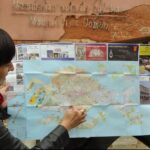
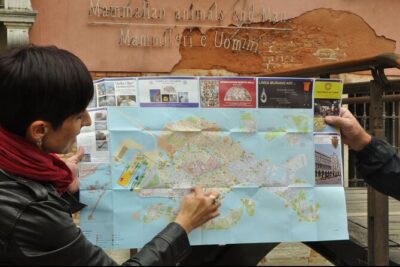
One included item is surprisingly useful: a city map per person with the best local tips. That matters in Venice because even well-made guidebooks can feel too broad. A map designed around what you saw on the walk helps you keep your bearings fast and choose your next stops with more confidence.
Think of it as a “debrief tool.” When you’re back in your hotel room or wandering later, the map helps you connect what you remember—Cannaregio canals, Rialto’s role, and San Polo craft—to what you’re about to do next.
Price and Value: Why $46 for 2 Hours Can Make Sense
At $46 per person for a 2-hour walk, you’re paying for a few things at once: a native guide, a focused route, and the included tip map. In Venice, where many walking experiences are either too short to explain anything or too long to feel personal, two hours is a workable middle.
You’re also paying for the tour’s angle. This isn’t a generic “big sights” circuit. The value comes from the choice of neighborhoods and the stories tied to them—especially the focus on off-the-beaten-tracks areas and traditions like the mascareri.
If your goal is to walk away with practical local context, this price can feel fair. If your goal is only to tick off landmarks quickly, you might choose a different format. But if you want Venice to make more sense in fewer stops, this structure is built for that.
Pacing, Timing, and What to Bring (Especially for Rain)
This tour lasts 2 hours, and it’s designed to be a steady walking experience rather than a sit-down museum tour. You’ll want to plan for frequent steps, turns, and time outside.
Bring comfortable shoes. Venice is famous for uneven surfaces, and this kind of neighborhood route makes that more noticeable than it would on a straight-line stroll.
Also, plan for the weather: the tour happens rain or shine. That means you should dress for wet conditions and still be comfortable walking. In winter or shoulder season, you’ll be glad you brought layers rather than only a stylish jacket.
Who This Tour Fits Best (And Who Should Rethink It)
This is a great fit if you want Venice to feel like a real city with working neighborhoods, not just scenery. It also works well if you enjoy local stories—legends, Republic-era intrigue, and Carnival craft—told in a way that connects directly to where you’re standing.
If you’re traveling with kids, note that one guide experience included adapting structure and wording for younger participants. That doesn’t make it kid-exclusive, but it suggests the guide can adjust.
If you have mobility impairments or limited mobility, you should skip this one. The tour is not recommended for people with limited mobility and is stated as not suitable for people with mobility impairments. Narrow lanes and older street surfaces are part of the deal here.
Quick Reality Check: Language Coverage and Group Style
The tour is offered with live guides in English, French, Russian, Spanish, and Italian. So even if you’re not speaking Italian, you can still follow the stories and understand why each stop matters.
There’s also private group availability. If you prefer a quieter pace, want flexibility with questions, or are traveling with a small circle, private can make the storytelling feel more personal.
Should You Book This Venice Walking Tour?
Book this tour if you want Venice to feel local fast. You’ll get a native guide, neighborhood focus in Cannaregio, a more meaningful Rialto Bridge perspective, and San Polo exploration tied to Carnival mask tradition. Add the included tip map, and you’ll leave with ideas you can actually use later.
Don’t book it if walking uneven, historic streets could be a problem for you. This isn’t built for mobility needs, and the rain-or-shine schedule means you’ll be out in it.
If your time is short and you’d rather understand Venice through neighborhoods and traditions instead of nonstop landmarks, this is a strong choice.
FAQ
FAQ
How long is the Venice walking tour?
It lasts 2 hours.
What is the price per person?
The price is $46 per person.
Where do I meet the guide?
Meet in front of HOTEL ANTICHE FIGURE, next to San Simeon Piccolo Church. The guide will have a board with the tour name, and you should arrive 10 minutes early.
What’s included in the tour?
You get 1 city map per person that includes all the best local tips.
Is food or drinks included?
No. Food and drinks are not included.
What languages are available for the live guide?
The live tour guide is available in English, French, Russian, Spanish, and Italian.
Does the tour run in bad weather?
Yes, it takes place rain or shine.
Is this tour suitable for people with mobility impairments?
No. It is not recommended for people with limited mobility and is not suitable for people with mobility impairments.
Can I cancel for a full refund?
Yes. You can cancel up to 24 hours in advance for a full refund.
More Tours in Venice
- Murano & Burano: Boat Tour with Guide & Glass Factory Visit
★ 4.3 · 10,716 reviews - Doge’s Palace & St. Mark’s Basilica with Terrace Access Tour
★ 4.7 · 10,697 reviews - Venice: Burano, Torcello & Murano Boat Tour w/Glassblowing
★ 4.4 · 10,245 reviews - Murano, Burano and Torcello Half-Day Sightseeing Tour
★ 3.5 · 7,928 reviews - Murano & Burano Islands Guided Small-Group Tour by Private Boat
★ 4.5 · 7,580 reviews - Venice: Doge’s Palace and St Mark’s Basilica Walking Tour
★ 4.4 · 6,291 reviews
More Tour Reviews in Venice
- Venice: Doge’s Palace Reserved Entry Ticket
★ 4.6 · 42,716 reviews - Venice: Grand Canal Gondola Ride with App Commentary
★ 4.1 · 23,020 reviews - Venice: Grand Canal Gondola Experience with Live Commentary™
★ 4.2 · 16,504 reviews - Boat Trip: Glimpse of Murano, Torcello & Burano Islands
★ 4.3 · 15,699 reviews - Venice: La Fenice Opera House Entry Ticket with Audio Guide
★ 4.6 · 11,742 reviews - Murano & Burano: Boat Tour with Guide & Glass Factory Visit
★ 4.3 · 10,716 reviews
Venice on Foot, Continued
- Venice: Doge’s Palace and St Mark’s Basilica Walking Tour
★ 4.4 · 6,291 reviews - Venice: San Marco to Rialto Walk & Spritz Like a Local
★ 4.2 · 3,651 reviews - Venice Walking Tour and Gondola Ride
★ 3.5 · 3,630 reviews - Private 3 hrs Venice Tour: St Mark’s, Walking tour & Boat tour
★ 4.0 · 3,372 reviews - Venice: City Center Historical Guided Walking Tour
★ 4.2 · 1,873 reviews - Venice: Walking Guided Tour of the City Must-See Sites
★ 4.7 · 1,095 reviews
Fresh Off the Vaporetto: New Venice Reviews

Venice Backstreet Walking Tours, compared.
 ★ 4.4Doge’s Palace and St Mark’s Basilica Walking TourFrom $1016,291 reviews
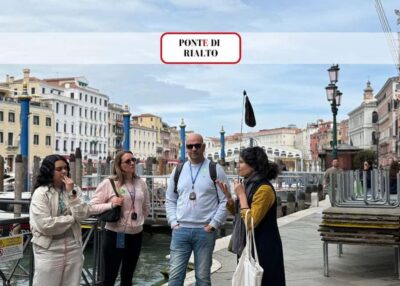 ★ 4.2San Marco to Rialto Walk & Spritz Like a LocalFrom $143,651 reviews
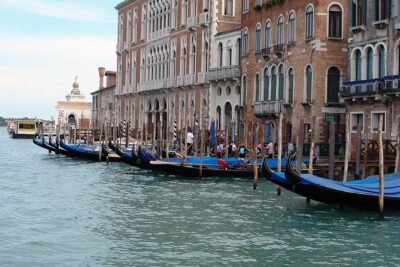 ★ 3.5Venice Walking Tour and Gondola RideFrom $723,630 reviews
 ★ 4.0Private 3 hrs Venice Tour: St Mark’s, Walking tour & Boat tourFrom $4803,372 reviews
 ★ 4.2City Center Historical Guided Walking TourFrom $141,873 reviews
 ★ 4.7Walking Guided Tour of the City Must-See SitesFrom $441,095 reviews
 ★ 4.0Private Best of Venice Walking Tour with St Mark’s BasilicaFrom $2421,063 reviews
 ★ 4.5Venice Sightseeing Small Group Walking Tour with a Local GuideFrom $48887 reviews
Browse the lists this tour appears in