
Review · MUSEUMS
Da Vinci Interactive Museum Venice Scuola di San Rocco
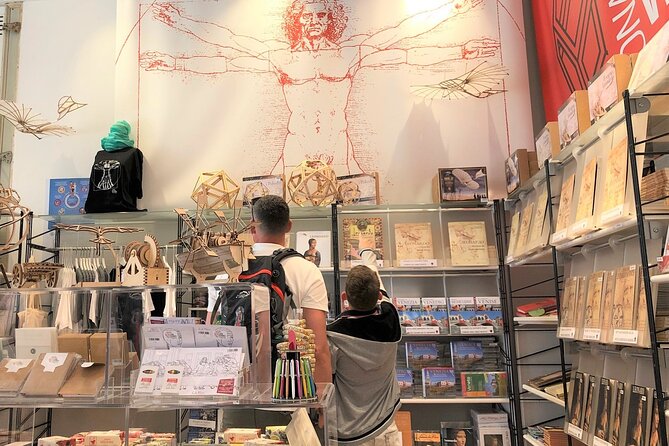
Leonardo in action, in miniature. In Venice, this museum turns da Vinci’s ideas into working replicas and backlit paintings you can really study during opening hours. It is a straightforward stop that feels more like a hands-on science room than a quiet gallery.
I particularly liked the touch-and-operate exhibits and the way the displays connect engineering with art and anatomy. The layout moves through Earth, Water, Air, and Fire, so you always have a clear theme while you explore.
One drawback to plan for: it is a small museum (often doable in about an hour), and most “art” here is high-resolution reproduction rather than original masterpieces. If you expect a big, immersive art experience, you may feel let down.
In This Review
- Key highlights at a glance
- Entering the da Vinci Workshop Feeling
- Finding It Near Campo San Rocco (and Pairing It with a Classic)
- Tickets, Hours, and the Best Time to Go
- How the Museum Is Organized: Earth, Water, Air, Fire
- The Interactive Models: Where the Fun Actually Comes From
- Backlit Painting Copies and Anatomy Studies
- Multimedia, Film, and Explanations in Multiple Languages
- What the Experience Really Feels Like (Small, but Packed)
- Shop Smart: The Bookshop and Take-Home Value
- Value for $10.21: Worth It or Too Tiny?
- Who Should Book This Museum
- Should You Book the Da Vinci Interactive Museum in Venice?
- FAQ
- FAQ
- How long does the Da Vinci Interactive Museum Venice take?
- What are the opening hours?
- Is there a guide included with the ticket?
- Is the ticket mobile, and is English available?
- Are the exhibits interactive?
- Is the museum suitable for children?
- Is there audio support inside?
- Can I bring food or drinks into the exhibits?
- Are there any extra fees for day-trippers outside Venice?
Key highlights at a glance
- Working replicas of da Vinci’s fantastical machines built from his designs
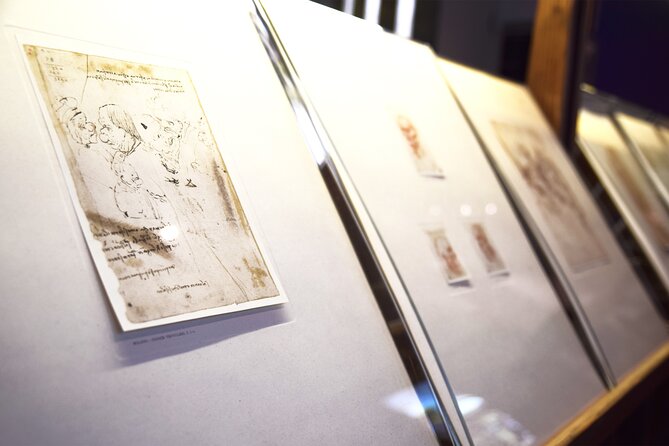
- Backlit, high-resolution painting copies designed for close viewing
- Earth, water, air, fire sections that make the museum easy to follow
- Interactive models that invite you to touch, test, and try to figure things out
- Multiple language support via descriptions and multimedia displays (English included)
- On-site audio guidance available free if you request it at the entrance
Entering the da Vinci Workshop Feeling
This museum has a simple promise: you will see how da Vinci thought, then you will test your way through it. Even if the space is not huge, the exhibits are packed with “how did he even imagine that?” moments.
You’ll spend roughly 45 minutes on average, but I’d treat that as a minimum. If you’re with kids, or if you like reading the explanations and trying the interactive parts more than once, build in extra time.
The vibe is friendly and family-ready. The museum is set up so adults get plenty of ideas, and children get enough hands-on moments to stay interested.
More gallery hours out of the sun
- Venice: Leonardo Da Vinci Museum Entrance Ticket★ 4.5 · 3,560 reviews
- Venice’s Best: Basilica, Doge’s Palace, Gondola & History Gallery★ 4.5 · 2,478 reviews
- Venice: Vivaldi’s Four Seasons Concert & Music Museum Visit★ 4.8 · 2,065 reviews
- Charming Gondola Ride on the Grand Canal & Gondola Gallery™★ 4.0 · 1,313 reviews
Finding It Near Campo San Rocco (and Pairing It with a Classic)
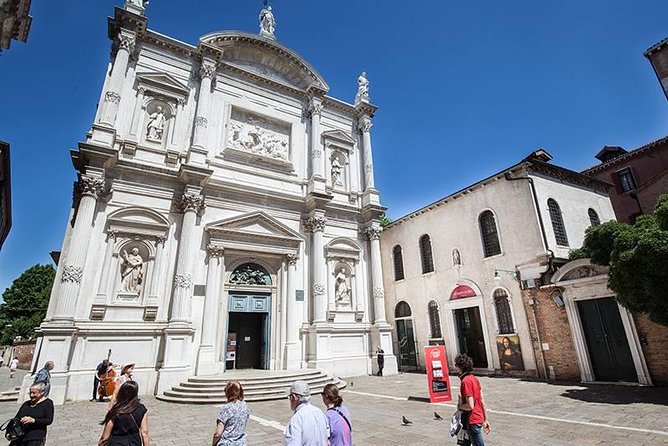
The Da Vinci Interactive Museum Venice is in the Scuola di San Rocco area, near public transportation. That is good news because Venice sightseeing can be a walking test, and you do not want to hunt for your stop for too long.
A practical note: the museum name can be easy to mix up with other da Vinci-themed places nearby. If you rely on maps, double-check you are going to Campo San Rocco. If you want to be extra safe, use the contact info listed on the museum site before you go, so you’re not paying twice in the wrong location.
This is also a smart “do it now” partner with the nearby Scuola Grande di San Rocco. After da Vinci’s machines, that adjacent landmark gives you the other side of the story: Venice’s art and human ambition.
Tickets, Hours, and the Best Time to Go
The museum runs daily from 10:30 AM to 4:30 PM, with the last entrance at 4:00 PM. Since entry is during opening hours, you don’t need a precise timed slot in your brain. Still, the last entrance matters if you’re planning a full day out.
Tickets are priced at $10.21 per person, and the booking is typically made about 19 days in advance. With a price like that, it feels like a low-risk add-on, as long as you’re on board with a smaller museum format.
You get a mobile ticket and the museum offers descriptions in English (along with several other languages). Service animals are allowed, and you’ll find the museum is close enough to transit that you can fit it between other stops without turning it into a mission.
How the Museum Is Organized: Earth, Water, Air, Fire
Inside, the museum is organized into four sections: Earth, water, air, and fire. That structure is more useful than it sounds. It helps you keep track of what you are seeing and why da Vinci might have grouped certain ideas together.
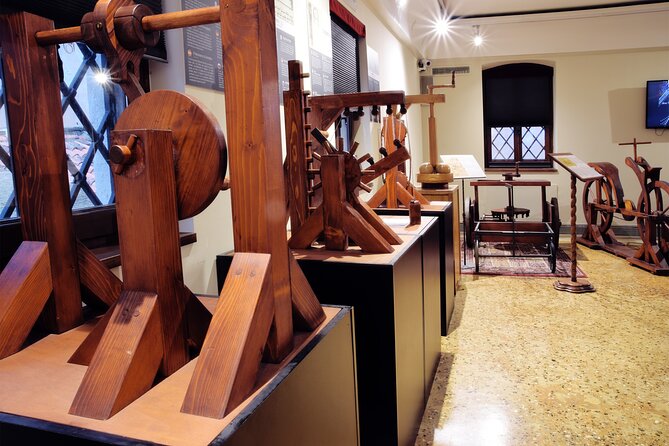
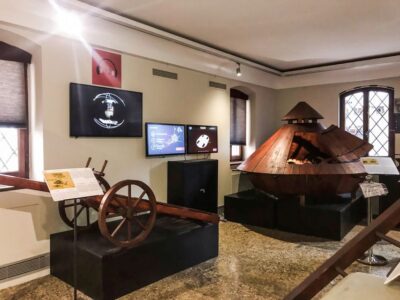
As you move through each section, you’ll see machines built according to Leonardo’s designs. The displays explain that the replicas were built using the original proportions unless adjustments were necessary.
This design choice matters for value. When something is clearly based on da Vinci’s real concepts (not just a vague “inspired by”), you’re not just watching props. You’re seeing how his mental models could work.
The Interactive Models: Where the Fun Actually Comes From
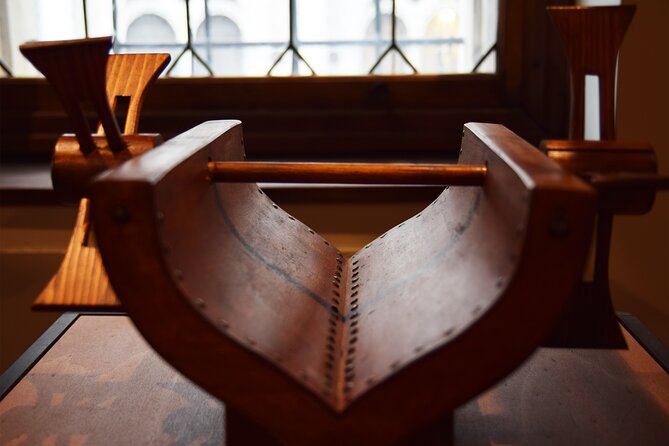
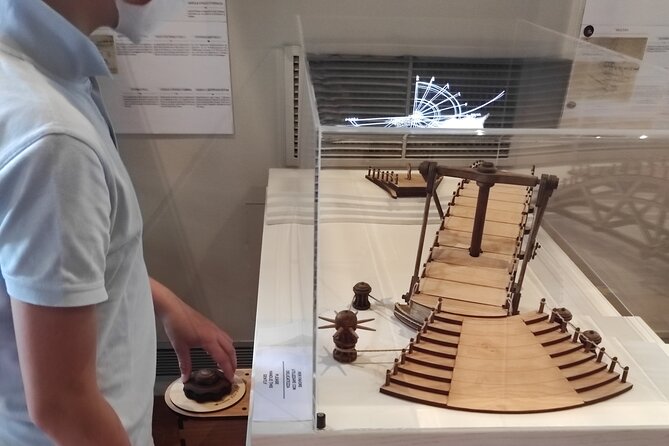
The headline here is interaction. The museum includes interactive models, and many exhibits are built so you can maneuver or operate parts of the inventions.
That is why families tend to have a great time: kids can do things rather than just look. But it also works for adults, especially if you like engineering logic, mechanical ideas, and solving little puzzles with your hands.
Do not expect every exhibit to feel like a full-blown science lab. The museum is compact. But what it does, it does directly—turning sketches and concepts into something you can try.





Backlit Painting Copies and Anatomy Studies
One of the most interesting parts is how the museum connects da Vinci’s art with his scientific curiosity. You’ll see high-resolution backlit replicas of his paintings, and you can study them more clearly than you would in a standard gallery setting.
You’ll also encounter major study material on anatomy. The museum wording points to the idea that you can explore his medical and artistic works together, and that pairing is what makes the exhibit feel different from a typical “machines only” da Vinci stop.
This is especially worthwhile if you already know da Vinci as a painter or as an inventor, because it shows how both sides were part of the same brain. The backlighting and close viewing help you slow down and actually look.
Multimedia, Film, and Explanations in Multiple Languages
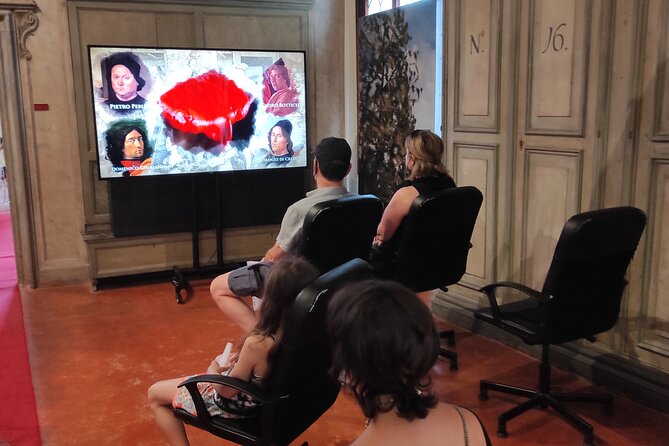
The museum uses multimedia displays to explain da Vinci’s life and work, plus you’ll find a short film introduction. The film is brief, so treat it as a warm-up rather than the main attraction.
Exhibit descriptions are available in Italian, English, French, German, Spanish, and Russian, so you’re not stuck if you’re not comfortable with English alone. That language spread is a real practical benefit in a Venice museum, where you’ll often be standing shoulder-to-shoulder with different groups.
Audio guidance is available too, and it’s worth knowing: if you want audio support, ask for it at the entrance. It is free of charge, but it may not be offered automatically when you present your online ticket.
What the Experience Really Feels Like (Small, but Packed)
Here’s the honest mental picture: this is a museum you can walk through without getting exhausted, but it still gives you enough variety to feel complete.
The upper areas include replicas and building-type equipment, while some content on lower levels can feel a bit drier. That doesn’t mean it is bad; it just means the exhibit energy is strongest where the interactive elements and mechanical replicas take the lead.
You should expect steps (the museum is on two floors), so if mobility is a concern for you, plan accordingly. Also, follow the on-site rules: food, chewing gum, and beverages are prohibited in exhibit areas.
Shop Smart: The Bookshop and Take-Home Value
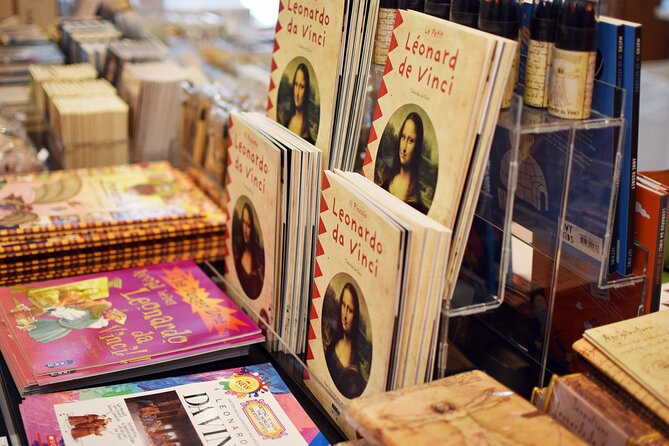
A well-stocked bookshop is part of the experience, with displays that help you keep learning after you leave. For a museum centered on ideas and designs, this matters more than a rack of random souvenirs.
If you’re the type who likes to go home and look up the specific machine you touched or the painting replica you stared at too long, this is the place to buy the matching reference book. It turns your visit into something you can revisit.
Value for $10.21: Worth It or Too Tiny?
This is where you should calibrate expectations.
At $10.21, it is priced like a fun, focused detour. And for that money, the museum delivers on its most important promise: interactive machines plus clear explanations in multiple languages.
But a few visitors feel the “art” side is mostly copies. That is fair. There are no original da Vinci paintings here, and you should not come expecting museum-grade originals or a massive gallery with deep collections.
My take: if your goal is to see da Vinci’s engineering mind in action and enjoy touchable learning, it’s great value. If your goal is only to see the biggest, most famous da Vinci artworks in original form, you may feel you could spend your time elsewhere.
Who Should Book This Museum
This museum is a good fit if you:
- want hands-on da Vinci concepts you can operate
- are traveling with kids and want them engaged without screens all day
- like engineering thinking: mechanisms, proportions, and how ideas translate to devices
- want a quick, low-cost stop that does not wreck your day schedule
It may be less satisfying if you:
- want a large, art-heavy exhibition experience
- expect a fully immersive, Hollywood-style presentation
- dislike “replica museum” formats in general
If you are comparing da Vinci stops in Venice, it helps to decide what matters most to you: machines and interactive science, or art and artist-focused displays.
Should You Book the Da Vinci Interactive Museum in Venice?
If you like hands-on learning and you want a short, meaningful break between Venice’s big sights, I’d book it. The price is reasonable, the museum runs a long afternoon window, and the interactive element is exactly what makes it memorable.
If you hate small museums, or you’re the type who needs original masterpieces to feel satisfied, I’d think twice. In that case, plan your time around Venice’s major art stops and treat da Vinci as a lighter, curiosity-based stop rather than the anchor of your day.
FAQ
FAQ
How long does the Da Vinci Interactive Museum Venice take?
It’s listed at about 45 minutes on average, though you may spend longer if you slow down for reading or want to repeat interactive exhibits.
What are the opening hours?
It is open daily from 10:30 AM to 4:30 PM, with the last entrance at 4:00 PM.
Is there a guide included with the ticket?
No. A professional guide is not included.
Is the ticket mobile, and is English available?
Yes, you get a mobile ticket, and the museum offers English.
Are the exhibits interactive?
Yes. The experience includes interactive models, and the exhibits are designed so you can try operating parts of the inventions.
Is the museum suitable for children?
Yes. It’s described as family friendly, and it’s set up to stimulate curiosity for adults and children alike.
Is there audio support inside?
Audio guidance is available for free if you request it at the entrance.
Can I bring food or drinks into the exhibits?
No. Food, chewing gum, and beverages are prohibited in exhibit areas.
Are there any extra fees for day-trippers outside Venice?
On certain dates, people staying outside Venice who visit for the day may need to pay a €5 access fee. Check the details and exemptions at https://cda.ve.it.
Indoors Done Well: Venice Galleries
- Venice: Leonardo Da Vinci Museum Entrance Ticket
★ 4.5 · 3,560 reviews - Venice’s Best: Basilica, Doge’s Palace, Gondola & History Gallery
★ 4.5 · 2,478 reviews - Venice: Vivaldi’s Four Seasons Concert & Music Museum Visit
★ 4.8 · 2,065 reviews - Charming Gondola Ride on the Grand Canal & Gondola Gallery™
★ 4.0 · 1,313 reviews - Venice: City Pass with Museums including Doge’s Palace
★ 4.1 · 1,020 reviews - Venice: Bell Tower & St Mark’s Square History Gallery Ticket
★ 4.3 · 910 reviews
More Tour Reviews in Venice
- Venice: Doge’s Palace Reserved Entry Ticket
★ 4.6 · 42,716 reviews - Venice: Grand Canal Gondola Ride with App Commentary
★ 4.1 · 23,020 reviews - Venice: Grand Canal Gondola Experience with Live Commentary™
★ 4.2 · 16,504 reviews - Boat Trip: Glimpse of Murano, Torcello & Burano Islands
★ 4.3 · 15,699 reviews - Venice: La Fenice Opera House Entry Ticket with Audio Guide
★ 4.6 · 11,742 reviews - Murano & Burano: Boat Tour with Guide & Glass Factory Visit
★ 4.3 · 10,716 reviews
Fresh Off the Vaporetto: New Venice Reviews



Museums, compared.
 ★ 4.5Leonardo Da Vinci Museum Entrance TicketFrom $103,560 reviews
 ★ 4.5Venice’s Best: Basilica, Doge’s Palace, Gondola & History GalleryFrom $1292,478 reviews
 ★ 4.8Vivaldi’s Four Seasons Concert & Music Museum VisitFrom $462,065 reviews
 ★ 4.0Charming Gondola Ride on the Grand Canal & Gondola Gallery™From $471,313 reviews
 ★ 4.1City Pass with Museums including Doge’s PalaceFrom $741,020 reviews
 ★ 4.3Bell Tower & St Mark’s Square History Gallery TicketFrom $44910 reviews
 ★ 3.9Venice Museum Pass & Doge’s Palace Entrance TicketFrom $41769 reviews
 ★ 5.0Basilica, Doge’s Palace, History Gallery & Bell Tower OptionFrom $116586 reviews
Browse the lists this tour appears in