
Review · VENETIAN CARNIVAL & COSTUME EXPERIENCES
Venice:Theatrical Walking Carnival Show & Casanova’s Secrets
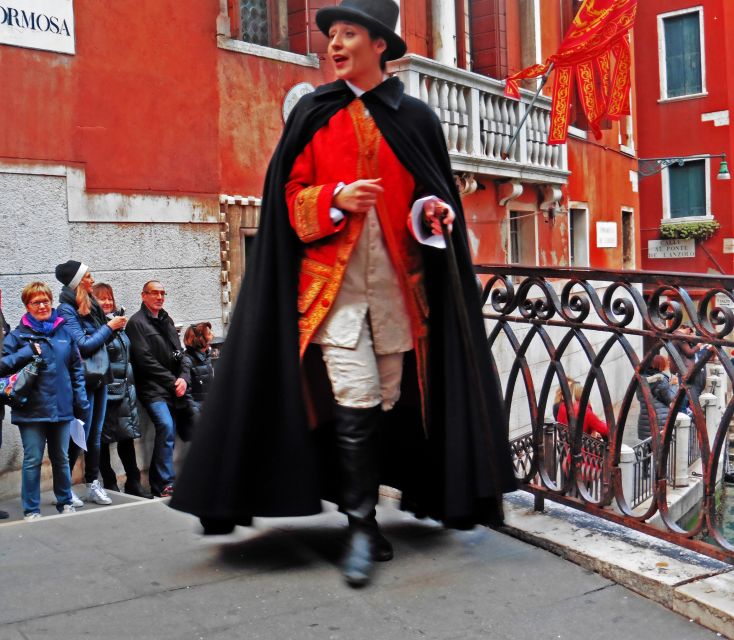
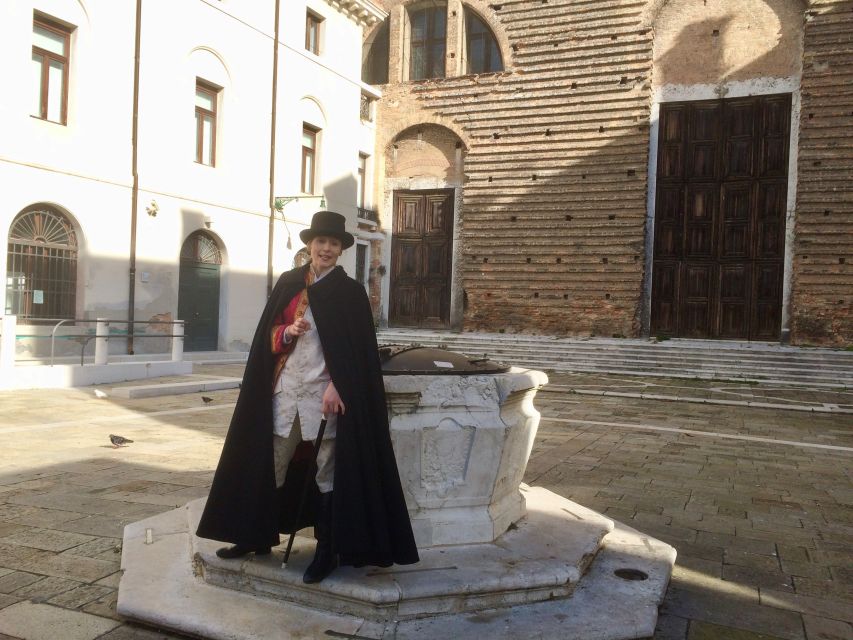
Venice has a knack for turning history into theater, and this walking show leans hard into that idea. You’ll follow an actor guide and a throwback character named Codega, hearing Carnival-flavored stories that mix legend, city life, and the funhouse rumors Venice is famous for.
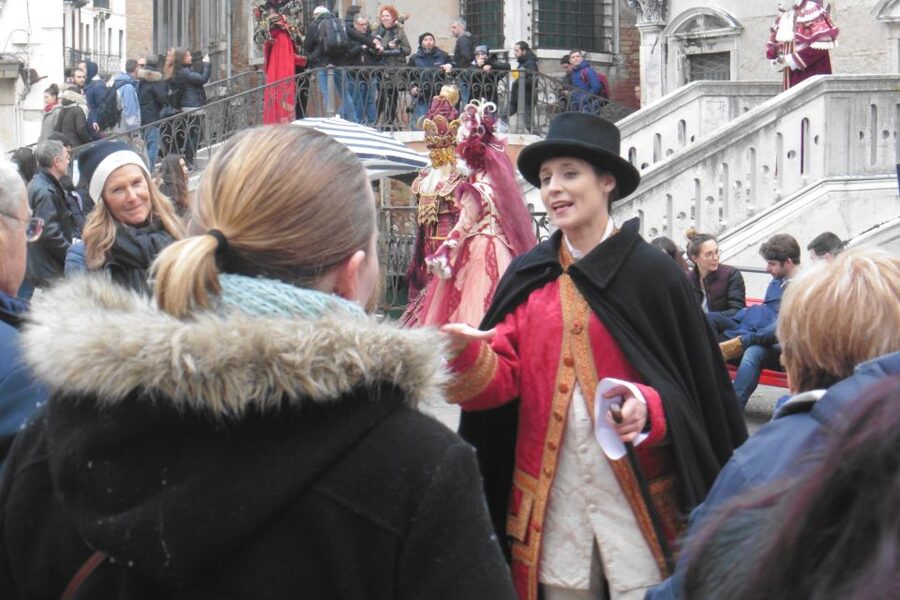
What I like most is the performer-led storytelling. Guides in full character (and with real comedic timing) make the route feel like a living script, not a lecture. The second big win is how it stays practical: it’s just 75 minutes, so you get the magic without burning half a day.
One thing to weigh: it isn’t for wheelchair users, and there’s no room for pets or large bags—so plan to travel light and keep it simple.
In This Review
- Key highlights before you go
- Why This Codega-Led Carnival Walk Works
- Where You Meet Near Piazza San Marco and Museo Correr
- The 15th-Century Storyline: Codega, Lantern, and Casanova Secrets
- Pantakin Actor Guide: How the Show Moves With You
- What You’ll See and Hear as You Walk (and When Carnival Takes a Back Seat)
- Timing, Duration, and What 75 Minutes Feels Like in Real Life
- Comfort, Pace, and Who This Tour Suits Best
- Practical Tips to Get the Most From the Show
- FAQ
- How long is the Venice Theatrical Walking Carnival Show
- Where do I meet for the tour
- What languages are available
- Is there a small group option
- What should I bring
- Are pets allowed
- Can I bring luggage or large bags
- Is the tour wheelchair accessible
- Is it good for families
- Can I cancel if plans change
- Should You Book This Carnival Walking Show?
Key highlights before you go
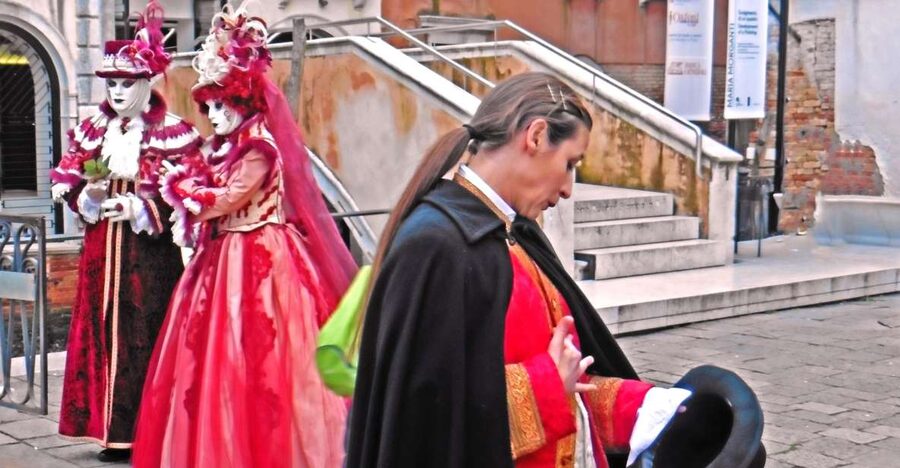
- Pantakin Company actor guides: real acting, not just narration.
- The Codega lantern concept: a mid-15th-century viewpoint that ties the whole experience together.
- Casanova secrets and side jokes: you’ll hear shameless bits of Venetian rumor and character.
- Carnival atmosphere built into the walk: the show happens as you move through central Venice.
- Family-friendly energy: it’s designed to work for adults and teenagers alike.
- Small group format: easier to stay with the guide and actually follow the story.
Why This Codega-Led Carnival Walk Works
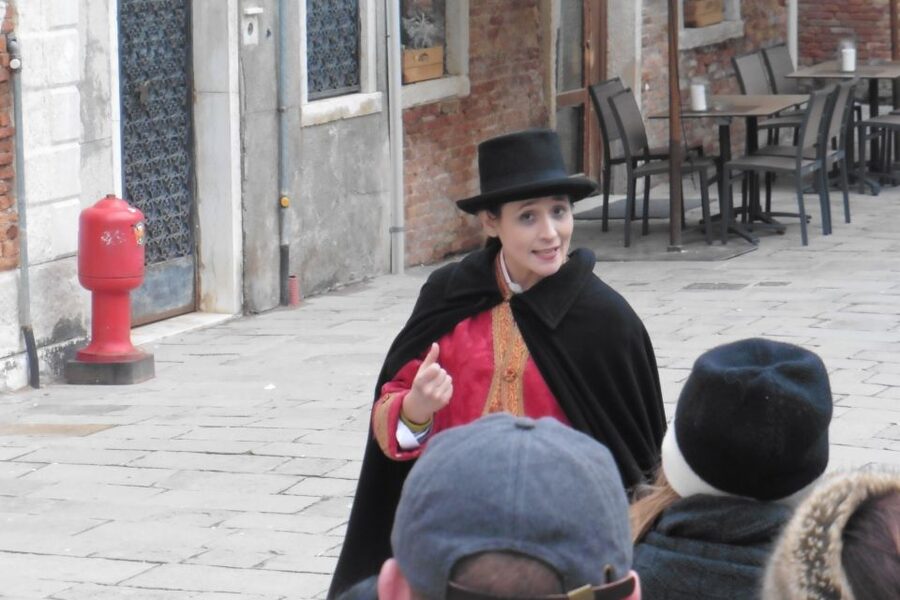
This is not the typical Venice “see St. Mark’s, then cross a bridge” tour. The hook is smart: you’re led through the city as if you’re part of the social machine of the Serenissima, where even the walk mattered. The character of Codega—a servant with a lantern who goes ahead of nobles—sets the tone immediately. You’re not just learning about Venice. You’re getting shown how Venice used to feel when reputation, ritual, and spectacle were part of daily life.
That’s why the show format matters. You hear legends and history through acting cues and little dramatic beats that happen while you’re walking. It’s a different way to absorb the city than reading a sign or following a map.
I also like that the stories lean into the weirdness Venice does so well. You’ll hear about a gondolier who became a priest and an elephant that supposedly found shelter in a church. Those aren’t dry facts—they’re the kind of tales that explain how rumors, faith, and civic pride all braided together in old Venice.
Cloak, tricorn and candlelight: more of old Venice
- Venice: 17-18th Century Dress-Up Experience★ 4.6 · 452 reviews
- Venice:Theatrical Walking Carnival Show & Casanova’s Secrets★ 4.5 · 319 reviews
- Carnival Dress Experience in Venice★ 5.0 · 24 reviews
- Venice Palazzo Mocenigo: History of Textile, Costume and Perfume★ 3.5 · 11 reviews
Where You Meet Near Piazza San Marco and Museo Correr
Start close to the action, but not inside a chaotic crowd at random. Your meeting point is anchored by clear landmarks.
With Piazza San Marco and the arches of Museo Correr at your back, face Poste Italiane (Post Office) in front of you. Go to the left and look for the Venice Tours Assistance Point: a big grey newsstand with souvenir items and newspapers. It sits between the Fendi Boutique and Poste Italiane, and it has a sign that reads VENICE TOURS – ASSISTANCE POINT.
If you want a map pin, the coordinates provided are 45.433502197265625, 12.337021827697754.
This matters because Venice tours can scatter you. Here, you’re given a concrete visual target, which saves time and reduces stress—especially during Carnival when the streets get noisier.
The 15th-Century Storyline: Codega, Lantern, and Casanova Secrets
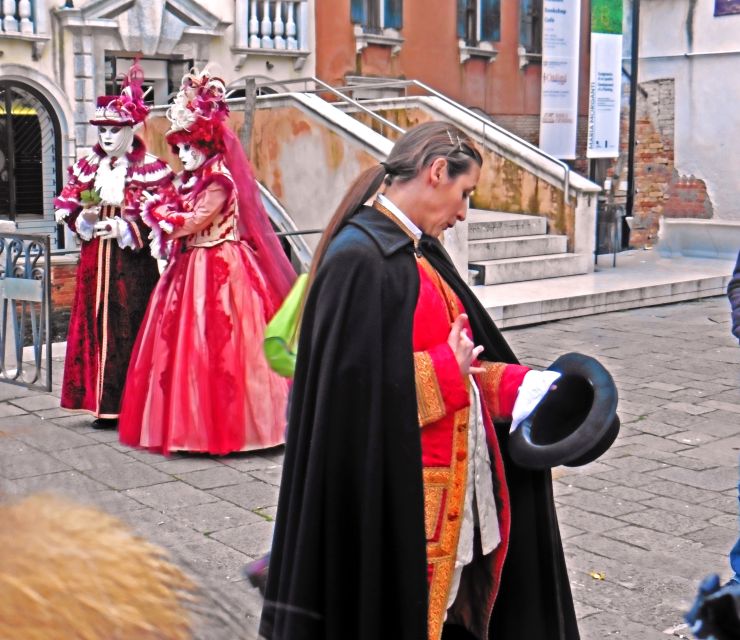
The entire experience runs off one guiding idea: you’re traveling back to Venice in the mid-15th century, when wealthy nobles were preceded by a servant called Codega. He carried a lantern to light the path, but he also carried stories—an entertaining mix of observation, gossip, and legend.
In practice, that storyline gives the guide an easy structure. As you walk, you’re repeatedly pulled into smaller scenes, where each story connects to the larger picture: the lagoon, the city’s myths, and the kind of theatrical public life that made Carnival such a perfect outlet.
And yes, Casanova is part of the flavor. Several guides bring in playful Casanova nods—little asides that keep the tone light even when the content is historical. It’s the sort of humor that works well when you’re traveling with teenagers too, because it doesn’t talk down to anyone.
Pantakin Actor Guide: How the Show Moves With You
The most important practical detail here is the type of guide. This is led by actors from the Pantakin theatre company, and the difference shows up in pacing and delivery.
You’ll join the actor guide for a moving, staged experience—think of it like a short walking performance with real characters, rather than a group march with commentary. Guides manage the group actively so you can follow along and stay in the scene.
From what you’re told to expect, there’s also a theme of discovering a maze of mysteries tied to the Venetian lagoon. Even when you’re not given minute-by-minute stop names, the show is built so the stories land where you’re standing. That’s the key: the narrative follows the street-level reality of Venice, not some separate “presentation room” away from the city.
In the past, guides like Ariana, Francesca, and Francesco have been singled out for being funny, engaging, and good at handling group energy. That’s exactly what you want for a 75-minute show. Too strict, and it becomes a chore. Too loose, and you lose the thread.
What You’ll See and Hear as You Walk (and When Carnival Takes a Back Seat)
Because this is a theatrical walk, you should mentally prepare for an experience that’s story-forward. The route is designed to feel like you’re moving through a sequence of scenes: anecdotes first, then reenacted moments, then another thread of mystery.
You’ll likely notice three recurring “types” of content:
1) Daily-life Venice dressed up as legend
That’s where you get tales like the gondolier-priest and the elephant shelter story. They’re memorable because they’re strange, but they also point to how Venice collected stories the way other cities collect souvenirs.
2) Carnival as an atmosphere, not just costumes
You’ll be in the heart of Carnival energy, and the atmosphere is part of why the show works. That said, if you’re hoping for a heavy, blow-by-blow Carnival history lecture, you might find the balance more weighted toward myths and the Codega storyline than pure Carnival specifics.
3) A sense of the lagoon as a character
The show’s “mysteries of the lagoon” angle gives Venice a bigger stage than just stone and bridges. Even with minimal factual bits, that perspective can help you see why the city’s geography and water culture shaped everything from trade to ritual.
As for the “where” of the experience: it’s described as happening in central Venice, starting near San Marco, and it should carry you beyond the immediate postcard lanes. One of the most helpful practical implications from the way it’s described: you’re not stuck looking only at the biggest landmarks. You’ll get a sense of other parts of the city too, as part of how the story travels.
Off the main drag: quieter Venice, a few more ways





Timing, Duration, and What 75 Minutes Feels Like in Real Life
The experience is 75 minutes. That length is a sweet spot in Venice.
Too short tours can feel like a tease. Too long ones turn into fatigue. At 75 minutes, you can do it even if you’ve already walked a lot that day. It also helps you keep your energy for after the show—spritz, gelato, and wandering without a plan.
The pace should be designed for a performance. If the guide is doing character work, you’ll want to stay close, listen at street corners, and be ready for quick scene changes. Wearing comfortable shoes is not optional advice—it’s the difference between enjoying the rhythm and feeling grumpy.
Also note the rules you’re given: no luggage or large bags. In Venice, bag straps snag. Wheel-turning trolleys do not.
Comfort, Pace, and Who This Tour Suits Best
This show is built for normal walking conditions. It’s not suitable for wheelchair users, so if mobility is an issue, you’ll need to choose something else.
For everyone else, the format fits well with a few common travel profiles:
- Families: it’s explicitly described as a captivating experience for the entire family. The mix of acting and approachable stories tends to keep kids and teens from zoning out.
- Teenagers and group travelers: the humor and character-driven style has worked especially well for younger listeners, because the guide can keep attention without turning it into homework.
- History lovers who don’t want lectures: if you like facts but you also like a sense of fun, this is a good match. The legends are history-adjacent, but the delivery makes them easy to remember.
It’s also a solid choice if you want something different from the standard “Venice checklist.” You’ll still be in the center of the city, but the experience is about storytelling as much as sightseeing.
Practical Tips to Get the Most From the Show
A short show still needs a smart setup. Here’s how you’ll get the most out of it:
- Wear shoes that handle uneven stone. Venice doesn’t do flat sidewalks.
- Travel light. You’re told no large bags, and you’ll move with the group through tight areas.
- Arrive at the meeting point with a little buffer. You don’t want to be late trying to locate the grey newsstand with the sign.
- Bring a flexible mindset. This is theater, so the “plot” matters more than checking off monuments.
If you’re multilingual, good news: the tour is offered in French, Italian, and English, so you can pick the language that makes the jokes land.
FAQ
How long is the Venice Theatrical Walking Carnival Show
It lasts 75 minutes.
Where do I meet for the tour
Meet at the Venice Tours Assistance Point, a big grey newsstand between Fendi Boutique and Poste Italiane (Post Office). It’s left of Poste Italiane when you have Piazza San Marco and the arches of Museo Correr behind you.
What languages are available
The live guide offers tours in French, Italian, and English.
Is there a small group option
Yes, it’s available as a small group.
What should I bring
Wear comfortable shoes.
Are pets allowed
No, pets are not allowed.
Can I bring luggage or large bags
No, luggage or large bags are not allowed.
Is the tour wheelchair accessible
No, it is not suitable for wheelchair users.
Is it good for families
Yes. It’s described as a captivating event for the entire family.
Can I cancel if plans change
You can cancel up to 24 hours in advance for a full refund.
Should You Book This Carnival Walking Show?
If you want Venice in a more playful, narrative way, I think you’ll like this. It’s short, 75 minutes, and led by Pantakin actors, so you’re paying for performance as much as information. The Codega lantern framing is memorable, and the Casanova-flavored humor helps keep it light even when the stories touch on history.
I’d skip it only if mobility is an issue or if you want a strictly informational Carnival history walk with no acting elements. Otherwise, it’s a smart value play: you’ll walk through central Venice while hearing stories that make the city feel like a stage—exactly what Carnival is for.
Venice on Foot, Continued
- Venice: Doge’s Palace and St Mark’s Basilica Walking Tour
★ 4.4 · 6,291 reviews - Venice: San Marco to Rialto Walk & Spritz Like a Local
★ 4.2 · 3,651 reviews - Venice Walking Tour and Gondola Ride
★ 3.5 · 3,630 reviews - Private 3 hrs Venice Tour: St Mark’s, Walking tour & Boat tour
★ 4.0 · 3,372 reviews - Venice: City Center Historical Guided Walking Tour
★ 4.2 · 1,873 reviews - Venice: Walking Guided Tour of the City Must-See Sites
★ 4.7 · 1,095 reviews
Quieter Corners of Venice
- Tour of The Real Hidden Venice
★ 5.0 · 2,006 reviews - Venice: Off the Beaten Path Private Gondola Ride
★ 4.3 · 703 reviews - Venice: Doge’s Palace Prisons & Secret Itineraries Guided Tour
★ 4.5 · 665 reviews - Secret Venice & Gondola Tour
★ 4.3 · 458 reviews - Venice: Doges Palace, Prison, and Secret Passageways Tour
★ 4.7 · 441 reviews - Venice Private Gondola Ride: Explore Hidden Canals and Sights
★ 4.0 · 334 reviews
Cloak and Candlelight: Old Venice
- Venice: 17-18th Century Dress-Up Experience
★ 4.6 · 452 reviews - Carnival Dress Experience in Venice
★ 5.0 · 24 reviews - Venice Palazzo Mocenigo: History of Textile, Costume and Perfume
★ 3.5 · 11 reviews - Venice: Casanova Charm Carnival Treasure Hunt
★ 4.5 · 9 reviews - Carnival Treasure Hunt & Mask Painting Workshop
★ 4.5 · 7 reviews - Historical Journey and Dress up Experience in Venetian Carnival
★ 5.0 · 5 reviews
Fresh Off the Vaporetto: New Venice Reviews





Venetian Carnival & Costume Experiences, compared.
 ★ 4.617-18th Century Dress-Up ExperienceFrom $88452 reviews
 ★ 5.0Carnival Dress Experience in VeniceFrom $9024 reviews
 ★ 3.5Venice Palazzo Mocenigo: History of Textile, Costume and PerfumeFrom $1811 reviews
 ★ 4.5Casanova Charm Carnival Treasure HuntFrom $1099 reviews
 ★ 4.5Carnival Treasure Hunt & Mask Painting Workshop7 reviews
 ★ 5.0Historical Journey and Dress up Experience in Venetian CarnivalFrom $1795 reviews
 ★ 4.5Carnival & Casanova Secrets, Theatrical Walking ShowFrom $373 reviews
Browse the lists this tour appears in